Introduction
Tom Samways was a farmer whose career was marked by steady progress and eventual success. This account presents his life chiefly as a narrative history, with analytical commentary where the evidence allows.
Childhood
Henry Thomas Samuel Samways was born on 7 October 1893 at Halstock, the son of George Henry Samway and his wife, Elizabeth Elgar Dodge.[1] His birth was registered under the name “Henry Thomas,” with “Samuel” added when he was privately baptised at Halstock church on 31 October 1893. He was usually known as Tom.
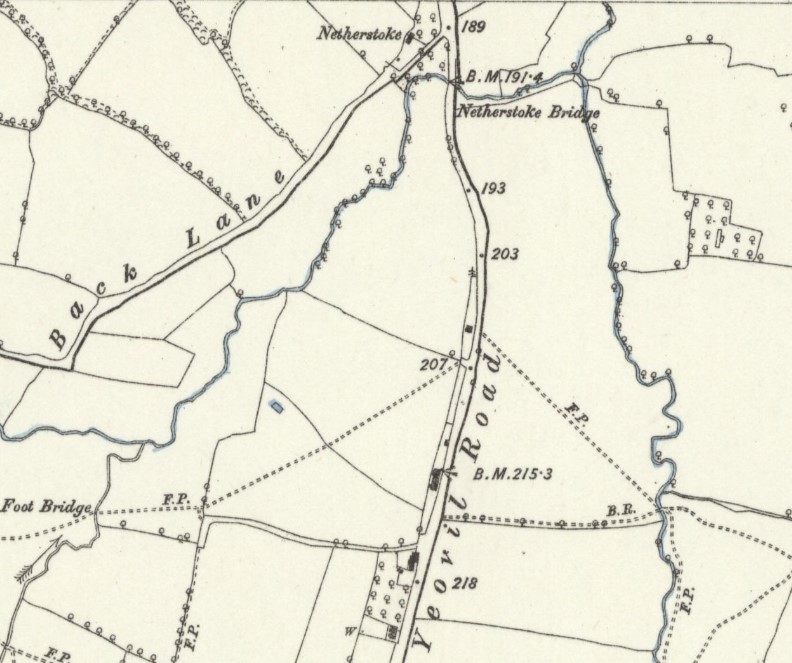
He was probably born in a four-room house at “Netherstock,” later known as “Netherstoke,” where the family lived in 1891. The household included his two older sisters, Ada Mary and Mabel Temperance, his half-brother, George, and his maternal grandmother, Sarah Dodge, who lived with the family until her death in March 1901.[2] Tom’s brother, Albert Elgar, was born three years later.[3]
Both of Tom’s parents came from insecure labouring backgrounds shaped by illegitimacy, parish mobility, and reliance on poor relief. A detailed family history is provided in Appendix A.
Move to Halstock Leigh
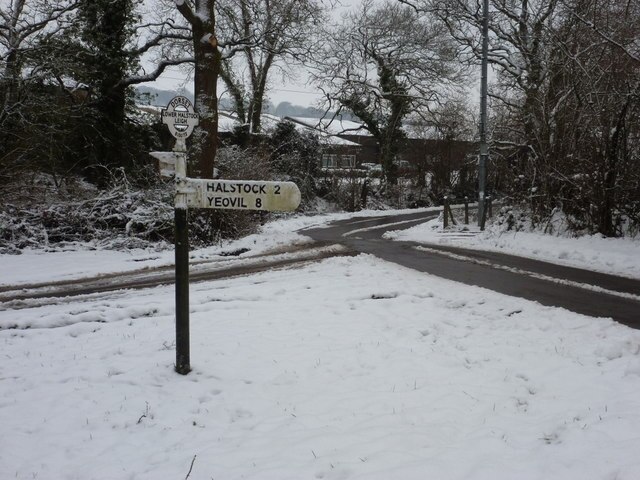
By March 1901, the family had moved to a property at Halstock Leigh, which was unnamed but identified in the 1911 census summary book as one of three cottages on Neville Farm. George began his own business, initially as a mixed farmer but later as a poultry specialist. The 1901 census described him as a farmer and dealer, while the 1911 census described him and his wife, Elizabeth, as poultry dealers.[4] A 1911 trade directory also listed George as a poultry dealer.[5] Although their business provided greater independence, it was labour-intensive and fraught with risks.
Initially, George ran the farm with the help of his stepson, George Junior. It is even possible that George Junior played a leading role in the startup phase. However, after George Junior married Rhoda Diment of Corscombe in 1902, the growing size of their family, coupled with his status as a stepson, probably contributed to their moving to Parkstone about five years later.[6] They may also have been prompted to move by Ada, who in 1911 was working as a cook in Bournemouth.[7] When Ada married Fred Cleal, a farm labourer, at Hampreston in 1912, George Junior was one of the witnesses.[8]
George Junior’s departure made way for George Senior’s own children. By 1911, Tom, Mabel, and Albert were all working in the family business, suggesting it was a significant concern.[9] In addition to selling eggs and birds locally, the family operated within reach of railway facilities at Crewkerne and Sutton Bingham, and later at Hardington Sidings, which opened in 1909.[10]
In 1911 or 1912, the family moved to Legg’s Farm (also known as Legg’s Living), a 32.5-acre farm previously owned by William White of Hardington. After White’s representatives sold the farm in 1906, Walter Barter lived there alone following his wife’s death in 1908.[11] The Halstock jury list of 1912 recorded George as a farmer at Legg’s Living, assessed at £26 15s in poor rates. This was the smallest assessment of all seventeen farmers and two innkeepers on the parish list. A trade directory of 1915 also listed him as a farmer.[12]
First World War
In February 1915, George Junior volunteered for service with the Royal Army Service Corps. He served in France and rose to the rank of sergeant. After being discharged in May 1919, he returned to Parkstone, where he worked as a driver for a road transport company and later as a garage hand.[13] When he died intestate in 1955, he left an estate valued at £138 4s 8d.[14]
Tom and his brother, Albert, do not appear in surviving service records, possibly because they were exempt from conscription as business partners of their father. The local agricultural committee would have overseen their business to ensure they maximised production.
In September 1917, George placed an advertisement for a lad aged between 14 and 15 to work on a small dairy and live with the family.[15]
By 1918, Ada was living in Yeovil, where her husband, Fred, worked as a gas stoker. They lived at 9 Clarence Terrace, just off Stars Lane. Sadly, she lost her life in the autumn wave of the influenza pandemic, dying at her home on 28 October at the age of 27.[16]
Post-war period
Soon after the war ended, the family’s circumstances changed significantly when George Senior died early in 1919 at the age of 55.[17] A few months later, his daughter, Mabel, married Henry Frank Davey and settled at Halstock Leigh.
The Halstock jury lists of 1920 and 1921 list Tom as the occupier of Legg’s Living. However, his mother and brother, Albert, still lived there. Later jury lists are unavailable to cast light on what happened subsequently.
1924 was a year of dramatic change, as both Tom and Albert got married. In the first quarter of the year, Albert married Reta Bessie Moore, a teacher and the daughter of a local farmer.[18] On 20 April 1924, Tom married Vera Horsey Trott at Halstock. Albert appears to have remained at the farmhouse, while Tom moved out.
In July 1924, the farmhouse suffered a devastating fire that destroyed many precious family possessions. Late one night, a smoking chimney ignited the thatch. The Yeovil Fire Brigade was called, but they soon realised there was little they could do other than prevent the fire from spreading. The occupants managed to save some furniture before the flames took hold, but most of it was lost. A newspaper report stated that the property was owned by “Mr Keetch” of the Wynyards Gap Inn and that it was understood to be insured.[19] This person was Thomas Keech (1869-1957).
At this time, fire was a constant threat to rural thatched houses, made worse by their remoteness from fire brigades and, in some cases, limited access to water. While insurance covered some of the damage, it did not compensate for the disruption, the loss of cherished items, or the psychological impact.
Albert remained at the farm for just a few more years. He held an auction sale on 12 September 1927, “owing to the landlord requiring possession”, followed by another one on 18 April 1929.[20] He then moved to Sherborne, where he worked as a labourer.[21]
Following Albert’s departure, his mother lived with her daughter, Mabel, at Halstock Leigh. She died there on 6 March 1931 from myocardial degeneration at the age of 69.[22]
Early married life
Tom’s wife, Vera, came from a farming background. Her father, Joel, was a dairyman who operated dairies in various locations in Somerset and Dorset, including Frampton, Hooke, Sutton Poyntz, East Chinnock, and Leigh. He died at Willow Tree Farm Leigh, on 24 July 1925, leaving an estate valued at £1,134 18s 2d.[23] Tom and Vera attended the funeral.[24]
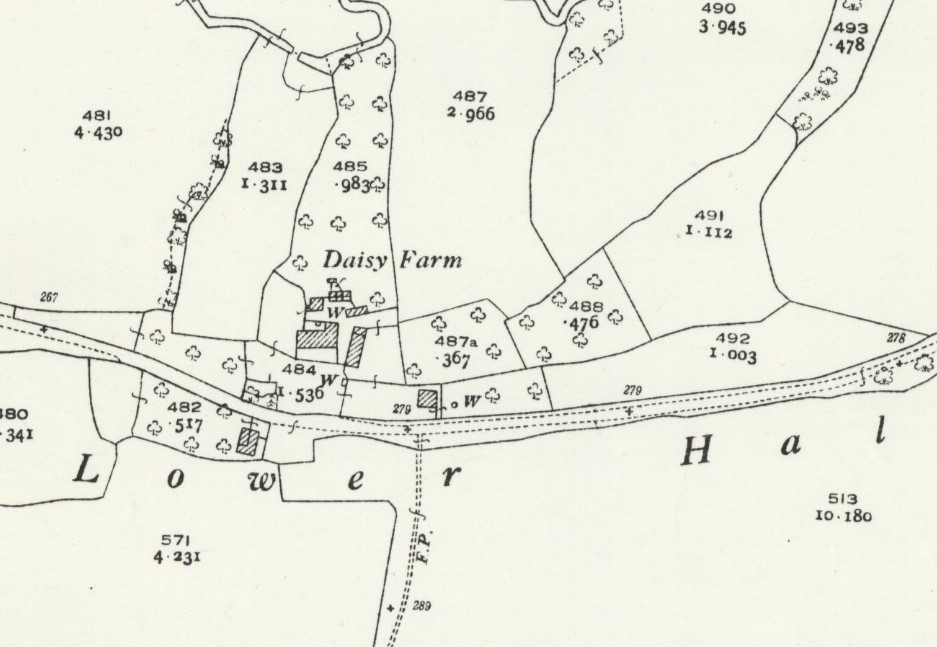
Initially, Tom and Vera lived at Daisy Farm, Halstock Leigh, where their first son, Thomas Joel, was born on 8 January 1930.[25] They may have specialised in poultry farming, as a fire at the farmhouse in 1934, during the next tenant’s occupancy, narrowly missed several hundred head of poultry penned nearby.[26] While living at Daisy Farm, Tom advertised cider for sale and a cottage to let.[27] He may also be the “Mr T. Samways” who entered six heifers in a sale at a nearby farm on 29 October 1929.[28]
In November 1931, Tom placed an advertisement in the Western Gazette seeking a pasture farm of 20 to 120 acres to rent from next Lady Day, adding “Rough not objected to if rough price.”[29]
Barwick
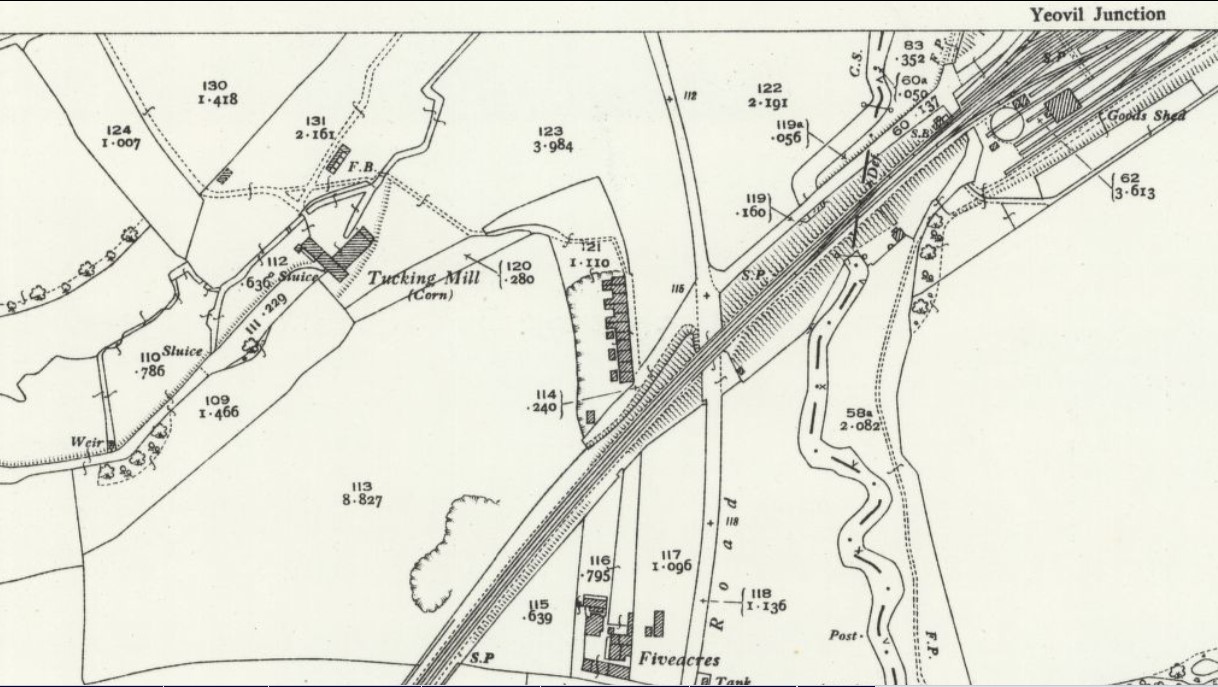
Soon after, Tom and his family moved to Tucking Mill Farm, Barwick. Denis George was born there in 1932.[30]
The records from Tom’s time there primarily consist of a few news items and numerous small advertisements. Although the farm’s size is unknown, it was a dairy farm in the early twentieth century.[31]
On the evening of 24 November 1937, while talking to another man at the entrance to his farm, Tom witnessed a fatal accident. A fourteen-year-old boy cycling home from work fell onto the road and fractured his skull after colliding with a pedestrian. Tom gave evidence at the inquest two days later.[32]
From 1944 to 1948, Tom often used the small ads in the Western Gazette to advertise items for sale, including pigs, cider, puppies, and kale plants.[33]
When Vera’s youngest sister, Edna, married Gunner George Donaldson at Barwick in April 1944, the reception was held at Tucking Mill Farm.[34]
An assault charge
In November 1943, Tom appeared in a Yeovil magistrates’ court, accused of assault. A neighbouring farmer, Harry Rew James of Newton Farm, Yeovil, accused Tom of hitting him viciously in the eye without warning and knocking him over. Tom, in turn, had lodged a cross summons accusing James of assaulting him. Both men were in their early fifties.
The dispute was over scarce wartime labour. James had telephoned Tom’s only worker, a man of 77, asking him to do some work for him. According to Tom, James threatened to report the worker if he did not agree.
Tom confronted James at the bottom of Silver Street on market day. According to one witness, Arthur John Westcott, a hawker in his early seventies, Tom said, “I have been waiting to show you up amongst your pals.” James claimed that Tom then hit him in the eye. He was unable to lift his arms up to defend himself because he had been mangel-pulling for a fortnight, and he suffered from rheumatism.
Tom told a different version of events. He said that when he heard about James’s phone call to his worker and the threat that “if he did not go threshing for he, he would make it hot for he, it went down devilish hard.” He testified that he had approached James and said, “What there is between you and I be best done under the open sky.” James had then lifted his stick and hit him on his right cheek. Tom pulled the stick away and accused James of taking away the only bit of help he had. According to Tom, the following then occurred.
“He was a sergeant-major in the last war and somehow he do still seem to have a sergeant-major touch about ’un. He was in a fighting attitude and I could do no more than defend myself. I went back into the road, but he still came on five or six times telling me he had plenty left. I thank God I didn’t hit him—if I had probably should have been in safe lodgings by now eating spam.”
In cross-examination, Tom denied that he hit James down, saying “he fell down in a bit of self-defence.” He added: “I had a good audience, I never run away from a man, but I was going to take my little packet on the cheek and say nothing. I didn’t want no trouble and he said he had plenty left.”
The magistrates found both men guilty and bound them over to keep the peace for twelve months.
The case merits attention because it highlights Tom’s manner of speaking and his sense of humour. Indeed, his personality and charm may have been crucial to the eventual outcome, as James presented Westcott and two local farmers as witnesses, and produced a letter from the labourer attesting that James had never threatened him. Tom, on the other hand, only had one witness to speak for him.
The case also reveals Tom’s combative sense of honour; he wanted to fight James “under the open sky.”
Hardington
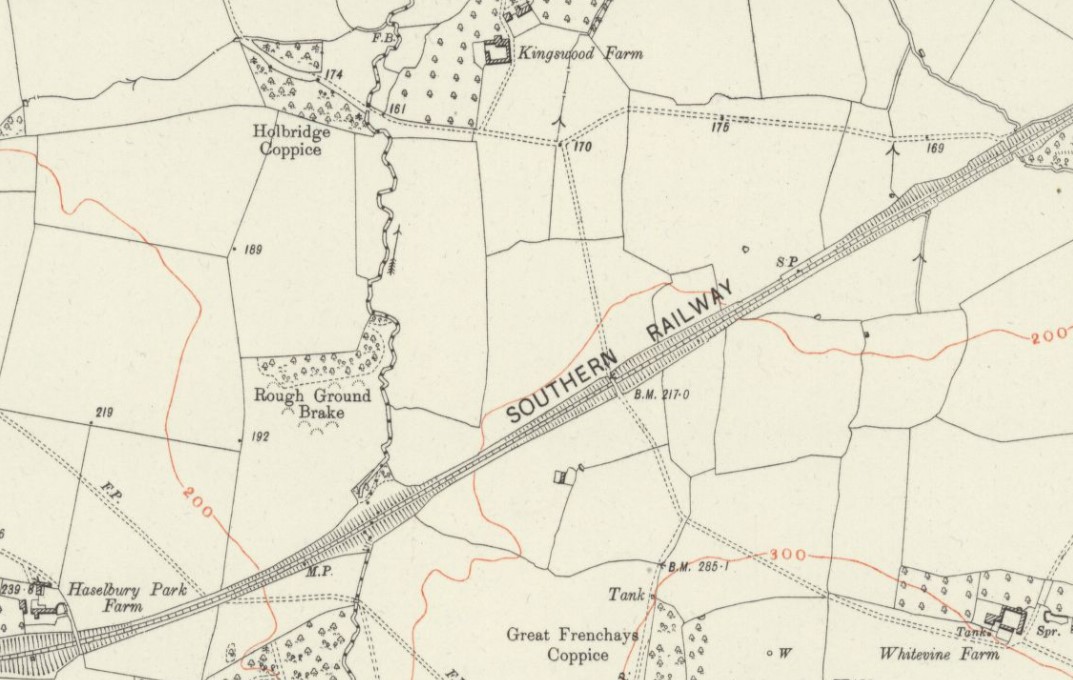
In 1948, Tom and his family moved to Kingswood Farm, succeeding Horace Leon Samuel Budden. The needs and aspirations of Tom’s two sons, aged 18 and 16 at the time, may have influenced the decision to relocate. In May 1948, Tom advertised saddleback gilts for sale, and in August 1950, he invited tenders to concrete the farmyard.[35]
In the late 1960s or early 1970s, Tom and Vera moved to a cottage at Claycastle, Haselbury, leaving their two sons to run the farm. Tom enjoyed travelling around the country lanes in a horse-drawn cart. He and Vera would also often travel on coach outings organised by Leonard Chester and, later, Margaret Danes.
Tom died on 28 November 1975 at the age of 82.[36] After his death, Vera moved to 17 Lang Road, Crewkerne, and later to Lindon House, The Park, Yeovil. She died at Summerlands Hospital on 21 December 1991 at the age of 91.[37]
Conclusion
Tom Samways achieved success in his chosen career, though it is difficult to identify the precise reasons for that success. The evidence suggests that his extensive experience, ability to seize opportunities, and deep interest in farming all contributed. His humour, ease of manner, and ability to engage effectively with others likely played an important role, especially in a rural economy where reputation and personal relationships were critical.
References
[1] Civil Registration Birth Index; 1939 Register.
[2] RG12, piece 1660, folio 20, p.10; Halstock burial register.
Mabel’s birth on 5 June 1892 was recorded in the Western Gazette on 1 July 892 p.8 under the address Yeovil Road, Halstock, which is consistent with Netherstoke. George and Elizabeth’s first child, Elizabeth Sarah, died in 1891 at age 2.
[3] Civil Registration Death Index; 1939 Register.
[4] RG13, piece 2009, folio 19, p.4; RG14, piece 12451.
[5] Kelly’s Directory of Dorset, 1911, p.102.
[6] Based on the recorded birthplaces of his children and the Halstock voters’ lists. George Samways Junior is on the 1907 list but not on the 1908 list.
[7]RG14. Piece 5862.
[8] Hampreston Marriage Register.
[9] RG14, piece 12451.
[10] Nicholas John, and Reeve, George, Main Line to the West: The Southern Railway Route between Basingstoke and Exeter-part Three, 2009, p.7.
[11] Western Gazette, 23 February 1906, p.1; Halstock Jury List. 1911; RG14, piece 12451; Civil Registration Death Index: Emily Eliza Barter, Beaminster Q4 1908.
[12] Kelly’s Directory of Dorset, 1915, p.100.
[13] British Army World War I Service Records; RG15, Poole, enumeration district 14, schedule 331; 1939 Register.
[14] National Probate Calendar.
[15] Western Gazette, 7 September 1917, p.4.
[16] Death certificate of Ada Mary Cleall. The certificate spells the surname with two ls, but it was usually spelt with one.
[17] Civil Registration Death Index: Beaminster Q1 1919.
[18] Civil Registration Marriage Index Yeovil Q1 1924. They could have been married in December 1923.
[19] Western Gazette, 18 July 1924, p.3.
[20] Western Gazette, 2 September 1927, p.1; 12 April 1929, p.2.
[21] 1939 Register,
[22] Death certificate of Elizabeth Elgar Samways.
[23] National Probate Calendar; Western Gazette, 31 July 1925, p.16.
[24] Western Gazette, 31 July 1925, p.4.
[25] Western Gazette, 24 January 1930, p.16.
[26] Taunton Courier and Western Advertiser, 27 June 1934, p.9.
[27] Western Gazette, 7 September 1928, p.9; 12 June 1931, p.9.
[28] Western Gazette, 25 October 1929, p.1.
[29] Western Gazette, 6 November 1931, p.8.
[30] Civil Registration Birth Index, Yeovil Q2, 1932.
[31] RG13, piece 2297, folio 34, p.10; RG14, piece 14380; RG15, enumeration district 1, schedule 101. The records of the 1941-43 National Farm Survey held at the National Archives would provide useful information.
[32] Western Gazette, 3 December 1937, p.7.
[33] Western Gazette, 24 May 1940; 14 August 1942 p.4; 28 August 1942 p.5; 30 October 1942 p.4;1 January 1943 p.4; 13 August 1943, p.5; 20 August 1943, p.5; 22 September 1944, p.5; 12 July 1946, p.5; 6 December 1946, p.7; 20 June 1947, p.5; 4 July 1947, p.5; 1 August 1947, p.4; 9 January 1948, p.5.
[34] Western Gazette, 28 April 1944, p.2.
[35] Western Gazette, 14 May 1948, p.5; 18 August 1950, p.7.
[36] National Probate Calendar.
[37] Western Daily Press, 24 December 1991, p.10.


Appendix A: Family history
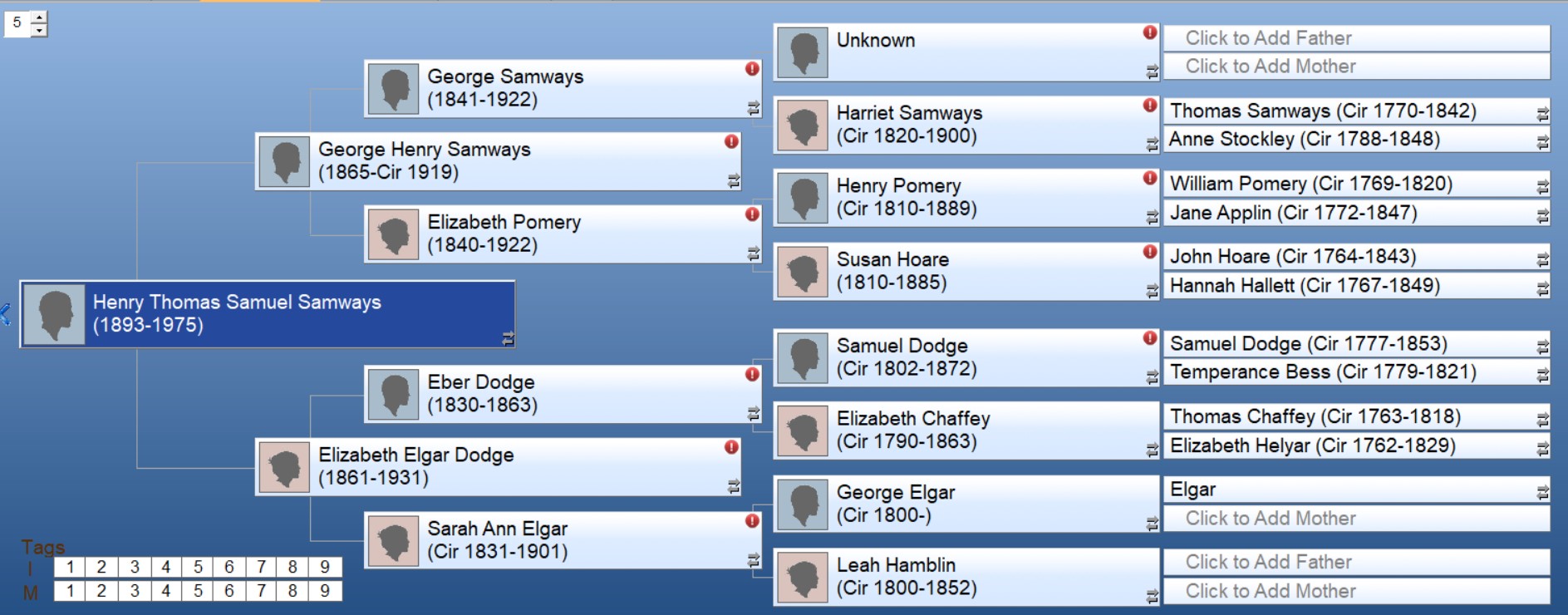
In about 1798, Tom’s great-great-grandfather, Thomas Samways, moved to Corfe Castle, where he married Anne Stockley. However, when he was unable to find work and lacked a legal settlement there, poor-law officials required the couple to return to his home parish of Wraxall.[1] They had a daughter, Harriet, who, in the 1830s, was admitted to Beaminster Union with her illegitimate son, George.[2] That son later settled in Beaminster and married Elizabeth Pomery, who came from a similar poor family.[3] Together, they had a son, George Henry, who was Tom’s father.
Tom’s mother, Elizabeth, also came from a humble background. Her father, Eber Dodge, was a shoemaker from East Coker who died when she was about two years old.[4] Her mother, Sarah Ann Elgar, worked as a general servant and later as a farm worker. Unusually, Sarah was born at Thatcham, Berkshire, and moved to Netherbury in the 1850s with her uncle, James Elgar, a Chelsea Pensioner. After her husband’s death in 1863, she raised Elizabeth, her only child, alone at Whitecross, Netherbury.
When Elizabeth was about seventeen, she had an illegitimate son, George Eber Caddy Dodge. He was brought up by his grandmother, Sarah, while Elizabeth found work as a domestic servant at Cotley Farm, Mapperton, a farm of about 300 acres, located two miles from her mother’s home.[5] While working there, she met George Henry Samway, a farm labourer from Beaminster, and they were married at Mapperton on 27 April 1886.[6]
References
[1] Dorset Heritage Centre, PE-COC/OV.
[2] HO107, piece 1860, folio 365, p.10.
[3] Beaminster marriage register.
[4] East Coker burial register.
[5] RG11, piece 2121, folio 70, p.4.
[6] Mapperton marriage register.