Introduction
Arthur Charles Edwards rose from agricultural labourer to owner-occupier. After establishing himself at Moor Farm, Hardington, in the years following the First World War, he later expanded his operations to the larger Prospect Farm. This transition from labourer to freeholder, and then to a substantially larger holding, marked two decisive stages in his advancement.
Childhood
Arthur was born on 2 October 1886 at West Pennard, a village three miles east of Glastonbury.[1] In 1881, the population stood at 741, with farming and agricultural work being the main sources of employment.[2] The Edwards family lived in the small hamlet of South Town.
His father, George Edwards, was a farm labourer who had moved to the village from North Wootton as a young man. When he died in 1915, his estate was valued at £170.[3] His mother, Ann, was the daughter of Sylvester Newport, a dairyman. George and Ann married in 1868, when he was 35, and she was just 16.[4] Arthur was the tenth of eleven children.
After attending the village school, Arthur became a farm labourer.[5]
Marriage
On 27 January 1913, Arthur married Ethel Emma Lawrence at West Pennard.[6] Ethel’s background was similarly rooted in agricultural labour. Her mother, Ann, had been born at West Pennard and married Richard Doney Lawrence, a Cornish farm labourer, at the Moravian Chapel, Baltonsborough, in 1889.[7] The couple settled at Devonport, where Ethel was born in 1890. After Richard’s death in 1894, Ann returned with her daughter to West Pennard to live with her unmarried brother, John Lester.[8]
Moor Farm, Hardington
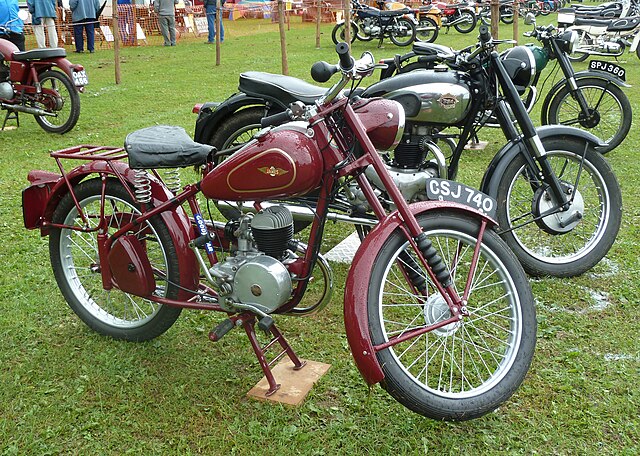
During or soon after the end of the First World War, Arthur and Ethel moved to Hardington, accompanied by Ethel’s mother, Ann. The earliest documentary evidence of Arthur in the village is an advertisement dated 11 April 1919, in which he offered a James 2¼-horsepower motorcycle for sale in perfect condition.[9] Given that such motorcycles typically sold for 35 guineas new, the advertisement suggests that Arthur had invested a significant amount in modern transport a little earlier.
He settled at Moor Farm, which had previously belonged to Abraham Genge and the trustees of George Genge. He may have purchased the property after Abraham’s death in February 1920. The Hardington rate book for 31 December 1923, recorded Arthur as the owner and occupier of Moor Farm together with several named plots, amounting in total to 41 acres, 1 rood, 24 perches.
In addition to his owned land, he rented extensively. When, in 1923, Arthur appealed against a poor rate assessment, he was recorded as occupying 150 acres.[10] A farm of that size would have required hired help. In 1921, George Eastment of North Lane worked for him, and in 1924, Arthur advertised three times for a farm worker.[11] His daughter, Betty, later assisted him on the farm.[12]
The farmhouse had eight rooms, which was large for a small family. Arthur and Ethel had two daughters: Betty Joan Doreen, born in 1922 and Nancy Patricia, born in 1925.[13] Nancy died in infancy and was buried at Hardington.[14] Ann Lawrence initially lived with them, but by 1939, she had moved to live with Ethel Purchase, about half a mile away. Arthur supplemented his income by letting part of the house; in 1924, his tenant was Brice Frost.[15]
During his time at the farm, Arthur’s livestock were often listed for sale at Yeovil market. He also won prizes at the annual Yeovil Christmas Fat Stock Show: third place for a fat calf in 1926, first prize for five porkers in 1937.[16]
In June 1924, he complained to the council about a diverted watercourse at Hardington. The council surveyor upheld his complaint and agreed to restore the watercourse to its original position.[17] In 1928, Arthur stood for election to the Yeovil Board of Guardians and District Council, but came third with 66 votes.[18]
Prospect Farm, Hardington
On 18 August 1944, Prospect Farm, also in Hardington, was put up for auction. The property comprised a small farmhouse, farm buildings, including stalls for 23 cows, a newly built dairy and piggeries, and 80 acres of land.[19] Arthur purchased the property and shortly after arranged the sale of Moor Farm.
On 22 September 1944, the farm was sold by auction at the Half Moon Hotel, Yeovil. Described as “a choice freehold property,” it comprised the farmhouse, outbuildings and 42 acres of pasture, arable and orchard land. Five days later, the livestock and equipment were sold at the farm in some 300 lots. Included in the sale was a small herd of Short-horn and cross-bred cattle, a field poultry house and young Sussex hens, a side rack, cider barrels, rick sheets, and a Blackstone engine.[20]
Arthur’s time at Prospect Farm was marked by personal loss and several outbreaks of fire. His mother-in-law, Ann Lawrence, died at the farm on 31 October 1948 at the age of 82.[21] The following year, his wife died there on 15 December at the age of 59.[22]
During the 1950s, the farm suffered a series of fires. Lightning ignited a stack in the early part of the decade, and an electric cooker later caught fire.[23] In April 1953, the farmhouse was severely damaged when the thatch roof caught fire. A passing motorist raised the alarm, and firefighters were on the spot, tearing blazing thatch from the roof while Arthur and Betty were working in a field, unaware of what was happening. The firemen battled the fire for six hours, while neighbours stacked furniture in undamaged outbuildings and set up a canteen service. Following the fire, Arthur, Betty, and Betty’s three young children had to stay with neighbours for a time.[24] Lastly, in January 1957, a five-ton rick of straw caught fire, and Yeovil firemen worked for two hours to prevent it from spreading to a nearby hayrick and cowstalls.[25] Such incidents were a constant hazard on a farm with straw, thatch and other combustible materials.
Final years and estate
In 1959, Arthur was admitted to Musgrove Park Hospital, Taunton. He made his will there on 15 December 1959 and appointed Robin Brutton of Hill End, Hardington, and Eric Morgan Beddoe of Bristol as his executors and trustees. Arthur died on 10 January 1960 at the age of 73, leaving an estate valued at £9,097 3s 1d.[26] This figure is consistent with ownership of land, livestock and equipment. Born into a labourer’s household, he died as the proprietor of a substantial farm.
References
[1] Civil Registration Birth Index; 1939 Register; RG12, West Pennard, ED10, piece 1916, folio 51, p.31.
[2] Kelly’s Directory of Somerset, 1889, p.302-303.
[3] National probate calendar.
[4] Ditcheat marriage register. The register recorded her age as 19.
[5] RG13, West Pennard, ED16, piece 2317 folio 92, p.15.
[6] West Pennard marriage register.
[7] Lawrence family tree on Ancestry, accessed 23 February 2026.
[8] Civil Registration Death Index; RG13, West Pennard, ED16, piece 2317, folio 93, p.18; RG14, West Pennard, ED14, piece 14547.
[9] Western Gazette, 11 April 1919. p. 7
[10] Western Chronicle, 5 January 1923, p.10.
[11] RG15, Hardington, ED5, schedule 52; Western Gazette, 22 February 1924. P.6; 2 May 1924, p.6; 1 August 1924, p.6.
[12] 1939 Register.
[13] Civil Registration Birth Index.
[14] Memorial in Hardington churchyard.
[15] Western Chronicle, 8 February 1924, p.5.
[16] Western Gazette, 17 December 1926, p.6; 17 December 1937, p.16.
[17] Western Chronicle, 20 June 1924, p.7.
[18] Langport & Somerton Herald,14 April 1928, p.8.
[19] Western Gazette, 28 July 1944, p.1.
[20] Western Gazette, 27 October 1944, p.7.
[21] Western Gazette, 12 November 1948, p.8.
[22] Western Gazette, 30 December 1949, p.8.
[23] Bristol Evening Post, 28 April 1953, p.5.
[24] Bristol Evening Post, 28 April 1953, p.5.
[25] Bristol Evening Post, 7 January 1957, p.8.
[26] The will of Arthur Charles Edwards, dated 15 December 1959, proved in Bristol on 4 July 1960.