Introduction
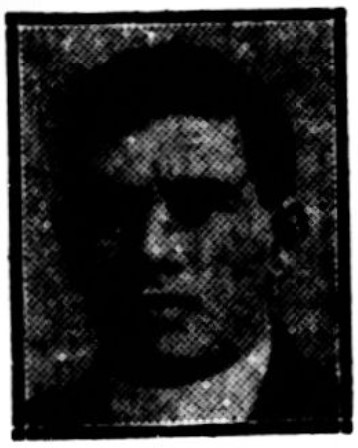
John Morgan Beddoe was born into a Welsh-speaking, Calvinistic family but received an education modelled on that of the English middle and upper classes. He became a priest in the established church and served as a curate in five Welsh parishes. In 1915, he became the rector of Hardington Mandeville, where he served for eleven years. In 1926, he exchanged livings with the Rev. John Herbert Satchell of St Werburgh’s in Bristol. In 1947, he resigned his benefice and went to live near Portishead.
Early life
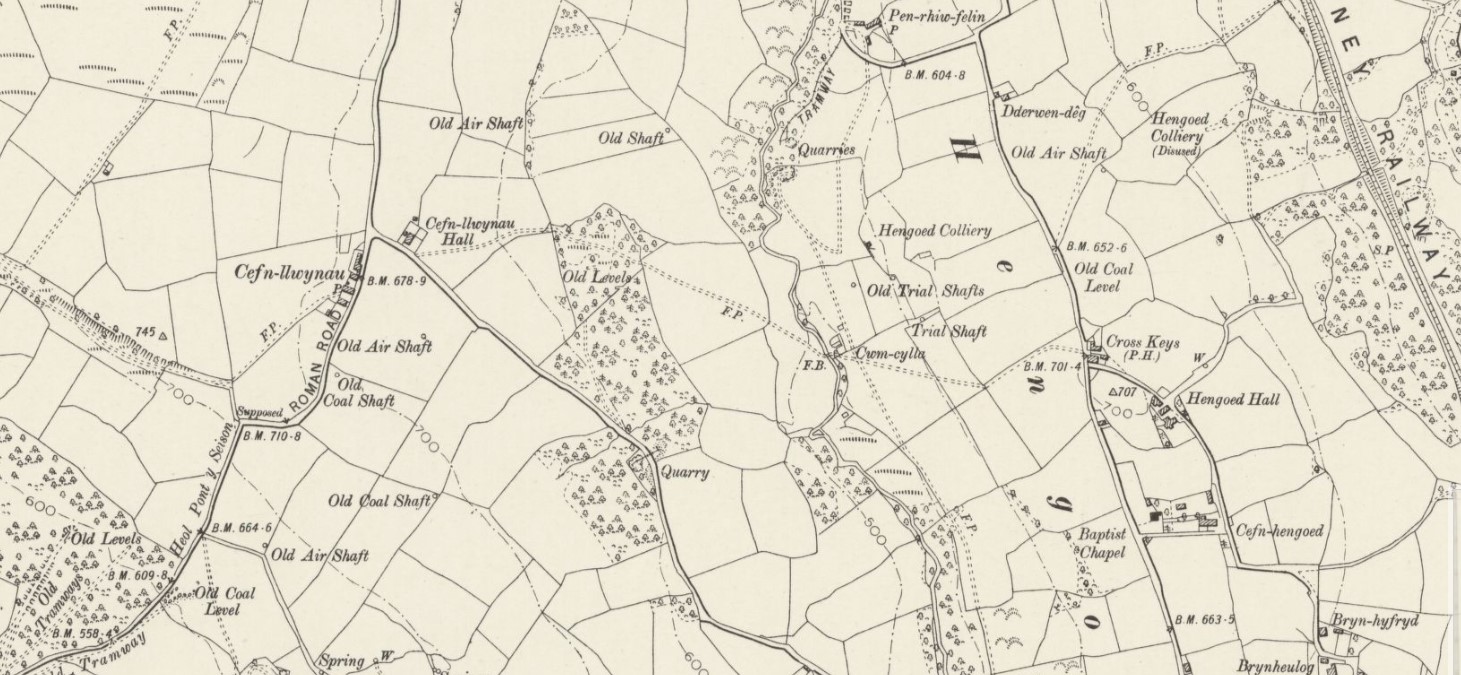
John Morgan Beddoe was born on 18 July 1882 at Gelligaer, Glamorganshire.[1] His father, William Coslett Beddoe, was a colliery owner and his mother, Elizabeth (née Morgan), was the daughter of a coal and mine contractor.[2] The family lived at a farm called “Cefn Llwyna” (which means “Back of Bushes”). William and Elizabeth had lived there since their marriage in January 1880, taking over from William’s father, who was also a colliery owner.[3] Until the sinking of the Penallta Mine in 1905, the farm lay in a secluded rural location, surrounded by fields and woodland, though old air shafts and other signs of mining activity marked the landscape.[4]
William worked as a mining engineer and surveyor in the family business. In 1889, William played a major role in finding a valuable seam of coal at the Wingfield Colliery, which he owned with his father.[5] Three years later, he and his father dissolved their partnership, and William pursued an independent career.[6]
William was a staunch Methodist and a member of the Ebenezer Welsh Calvinistic Methodist Church, where he served as a senior deacon for over twenty years.[7] He and his family spoke both Welsh and English.[8]
John was the second of five children. He had an older sister, Margaret Mary, and three younger siblings, Alfred Coslett, Rachel Hannah and Elizabeth Jane.
William invested heavily in his eldest son’s education, sending him to Monkton House School, Cardiff, a private school founded in 1870 by Henry Shewbrooks BA, a former pupil of Taunton College, and run like an English public school.[9] The school adopted rugby early on, and Shewbrooks claimed to have introduced the game to Wales.[10]
At the age of seventeen, John demonstrated his commitment to the Anglican Church by being baptised at Gelligaer parish church on 29 September 1899, which was a significant step for a young man raised in a Calvinistic Methodist household.[11]
The 1901 census recorded John as a “Student at school” resident at Cefn Llwyna.[12] By June 1903, he was taking examinations at St David’s College, Lampeter, where he achieved a third-class pass in Responsions.[13] He studied for an ordinary or pass degree, which generally required students to demonstrate knowledge across several subjects, including classics, divinity, history, and mathematics. In December 1904, he sat his Moderations and achieved a third-class grade, and in June 1906, he graduated with a second-class Bachelor of Arts degree.[14]
On 4 May 1905, while home from Lampeter for the holidays, John chaired a sacred music concert at Bryn Seion Congregational Chapel, standing in for his father. He began by explaining to the audience that this was his first experience as a chairman and that he had agreed to take on the responsibility only because his father had had a very hard day.[15]
After leaving university, John travelled in Turkey, Northern Italy, Romania and Russia.[16] The journey resembled, on a smaller scale, the traditional ‘Grand Tour’ wealthy young men undertook to complete their education.
Clerical training and first curacy
From October 1906 to June 1907, John attended St Michael’s College, Aberdare, an Anglican theological training college.[17] In May 1907, he was ordained as a deacon at St Asaph’s Cathedral and licensed as a curate to Bistre in Flintshire, where he assisted the vicar, the Rev. O. D. Williams, MA.[18] In June 1908, John was ordained as a priest at Bangor Cathedral.[19] In 1909, he left Bistre to serve briefly as a curate at Bangor-on-Dee.[20]
Curate at Pontypool and marriage
In October 1909, the Bishop of Llandaff licensed John as a curate to Trevethin, a suburb of Pontypool.[21] While at Trevethin, John married Susanna Helena Edwards at Gelligaer parish church on 19 July 1910.[22] Susanna lived at Gelliargwellt Isaf, a farm near Cefn Llwyna. Her father had died in November 1896 at the age of forty-six, leaving the farm to his widow, Elizabeth, for her lifetime.[23] He was buried at Hegoed Welsh Baptist chapel.[24]
In April 1911, John and Susanna lived in a seven-roomed house at Bushy Park, Pontypool, a road lined with terraced houses on a hill overlooking the town. Their first son, Arnold Lewis Terry (known as Terry), was born on 18 October 1911.[25] By November 1911, they had moved to “Oaklands”, British School Lane, Pontypool.[26]
On 1 January 1914, John and Susanna attended a dance at the Ambulance Hall in Pontypool.[27] By this time, they were planning to leave the town, and just a week later, they advertised their villa as available to let from February.[28] At his presentation party, held at St John’s Church, Wainfelin, on 23 February, the vicar, the Rev. E. Morgan, MA, called John a very faithful and loyal curate, while the churchwardens praised his excellent work and genial personality. A local businessman presented him with a 14-day mahogany-inlaid, three-quarter chime clock, a pair of silver candlesticks, and a pair of electro-plated vases. The clock was inscribed: “Presented to Rev. J. M. Beddoe, B. A., by the congregation of St John’s Church, Wainfelin, Pontypool, as a token of their regard; 23rd February 1914.”[29]
Curate of Creigiau and Whitchurch
John’s new appointment was as curate-in-charge at Creigiau, a growing hamlet within the ancient parish of Pentyrch, near Cardiff. On 20 March 1914, the Bishop of Llandaff officially recognised John’s appointment by licensing him as a curate to Pentyrch.[30] John and Susanna’s second son, Eric Morgan, was born at Pentyrch on 10 June 1914.[31]
On 4 November 1914, the Bishop of Llandaff licensed John as a curate at Whitchurch, Glamorgan.[32] This parish was in the Taff Vale, between Cardiff and Radyr. While serving at Whitchurch, John became a special constable, and on 4 April 1915, he preached at a special church service for police officers and special constables at Tongwynlais church, a chapel of ease in Whitchurch parish.[33]
Rector of Hardington Mandeville
After less than a year at Whitchurch, John accepted a new position. In September 1915, the Bishop of Bath and Wells announced his intention to institute John to the benefice of Hardington Mandeville, vacant after the death of the Rev. H. H. T. Cleife.[34] In anticipation of the move, on 8 October 1915, Susanna advertised for a strong, reliable servant with cooking skills to work at Hardington rectory.[35]
John’s induction took place at Hardington Church on the afternoon of Thursday 28 October 1915. The rural dean, the Rev. G. G. Monck, led the well-attended service. The rector of East Chinnock, the rector of Barwick, and Hardington’s curate, the Rev. C. R. Milligan, also attended. During the ceremony, the churchwardens, the sacristan, John and the Rural Dean processed to the main door of the church, where the Rural Dean placed John’s hand on the door handle and formally declared him in possession of the church and its rights. John then tolled the church bell before proceeding to the font, prayer desk, lectern, pulpit and Holy Table.[36]
The newspaper account of the induction states that Mrs Cleife, the widow of the previous rector, offered John the living, which had a net yearly value of £300 and included 108 acres of glebe.
The Rev. Milligan had been a curate at Hardington since 1913, assisting the Rev. Cleife, who was in his mid-sixties and not in good health.[37] At just thirty-three years old, John did not need a curate, and early in 1916, Milligan moved to Stoke-sub-Hamdon to cover for the Rev. Monck, who was unwell.[38]
John quickly became involved in village affairs. On 26 November 1915, he attended a School Managers’ meeting and was elected as the school’s foundation manager and correspondent.[39]
At this time, raising money for the war was a dominant theme in village life. On 13 February 1917, John presided over a meeting at which two gentlemen from Yeovil explained how War Loans and War Certificates worked, and he became secretary of a village War Loan committee that met at the Parish Room every Saturday night.[40] On 26 November 1917, he delivered a speech at an event in the school room to promote War Savings.[41] He also contributed money personally to the war effort, donating one guinea to the British Farmers’ Red Cross Fund in December 1915 and eight guineas in November 1917.[42]
In about 1916, John’s eldest son, Terry, was admitted to the village school.[43] The following year, his third son, Edward Ivor, was born on 29 March.[44]
John cultivated the garden at the Rectory and kept livestock. In May 1916, he advertised for a man or boy to live in and help tend the garden and milk.[45] In March 1922 he entered a cow or heifer in a sale at Yeovil.[46] In April 1924 he advertised for a man to assist with farm and gardening work.[47] His interest in farming also led him to attend a Farmers’ Union meeting in Yeovil in January 1925 about farm wages.[48]
John also took an interest in local politics. He stood against the sitting member, James Saint Partridge, in the Yeovil Rural District Council elections in April 1919. Partridge won by 81 votes to John’s 31. His victory probably reflected his local popularity, as he also topped the poll in the Parish Council election held at the same time.[49]
John conducted several notable funerals, including that of Henry Hinks of Bridge Close Farm on 15 October 1916, at which the deceased’s coffin was transported to the church on a farm waggon pulled by his favourite horse, “Bluebird.” He also officiated at the funeral of Willie White, who died in December 1922 from scarlatina at the age of twenty-one.[50]
John also attended two notable funerals to pay his respects: that of Mary Vassall at Martock on 8 August 1918 and Leonard Caplen and Sidney Webber at East Coker, on 1 December 1921, two friends killed in a motorcycle accident.[51]
The most visible surviving testament to John’s time at Hardington is the war memorial whose inscription begins, “This tablet was erected during the rectorate of the Rev. J. Morgan Beddoe, B.A. to the honoured memory of Hardington men who were killed in action or died of wounds in the Great European War 1914-1918.”
John served on the committee responsible for raising funds and installing the memorial. He conducted the service held on 25 July 1919 to unveil the memorial, and his wife performed the actual unveiling, standing in for Herbert Bartlett, the first Baronet of Hardington, who was unable to attend due to illness. After the service, select guests, including former soldiers who fought in the war, were invited to the rectory for tea.[52]
Death of father and other family events
On 4 May 1926, John’s father, William, died at his home at Cefn Llwyna, and he was laid to rest in the graveyard of Hengoed Welsh Baptist Chapel.[53] The family requested that only gentlemen attend the funeral.[54] One newspaper reported that the funeral was well attended, but it did not list any mourners.[55] John almost certainly attended.
William left a will valued at £8,209 0s 11d, which was administered by his widow and his children, John and Elizabeth. He bequeathed his personal and household effects, his farming business, and the tenancy of Cefn Llwyna to his widow, Elizabeth, expressing a wish for her to maintain the home for as long as any of their children wished to live with her there. He left all his Welsh books to the Calvinistic Methodist Church at Nelson. William left his children, Alfred and Elizabeth, his interest in the partnership in the Cefn Llwyna Drift Colliery as tenants in common in equal shares absolutely. The remainder was to be held on trust for his widow during her lifetime and then divided into five equal shares. John, Elizabeth, and Alfred were to receive their shares absolutely, while Margaret’s and Rachel’s shares were to remain in trust for their benefit unless two consulting physicians confirmed that either was capable of managing her own affairs, in which case the trustees could transfer all or part of her share to her.[56] At that time, both Margaret and Rachel were patients at Parc Gwyltt, part of the Glamorgan County Mental Hospital, where they would remain for the rest of their lives.
Rachel had been sexually assaulted when she was eighteen, an experience that may have contributed to her later mental illness. The attack occurred in November 1906 in a field near her home. Police suspected a twenty-six-year-old married man was responsible, although Rachel could not identify him in a lineup. He was charged with indecently assaulting Rachel, aged eighteen, as well as two other young girls, aged eleven and sixteen, earlier in the same year. At Caerphilly Police Court, her father testified about Rachel’s distress when she returned home, adding that she had not been the same since.[57] At the Assizes, the accused was found guilty of one indecent assault and sentenced to twelve months’ imprisonment with hard labour. [58] In August 1915, Rachel was admitted to an asylum. While it is unclear if the attack caused a mental breakdown, it is notable that just two months before the assault, she had been awarded two distinctions in a Senior Certificate examination at Hengoed Girls School.[59]
In Margaret’s case, her hospitalisation was due to epilepsy, which she had suffered from since she was about sixteen. When she reached her forties, her family found her condition unmanageable, and she was admitted to Parc Gwyltt.[60] She died there on 16 April 1927 at the age of forty-six. Obituary notices referred to her as an active member of Gelligaer Parish Church. In later life, her condition may have worsened, as her death certificate refers to epileptic insanity. She was buried at Cefn Hengoed Welsh Baptist chapel, and John and Alfred were the chief mourners.
Rector of St Werburgh’s
Soon after his father’s death, John began planning to leave Hardington. He discovered that the rector of St Werburgh’s in Bristol was willing to exchange livings with him, leading to negotiations that included valuing farming livestock and equipment.[61] The exchange was announced in September 1926.[62] John continued at Hardington until the end of the year and was officially inducted at St Werburgh’s on 3 January 1927.[63] The rectory was located at 63 Ashley Hill.[64] This move brought him closer to his widowed mother and also provided his sons with greater access to educational and professional opportunities in Bristol.
John retained ties to Hardington. In October 1927, he advertised six fields near the Rectory to let by tender. Their Ordnance Survey map numbers were 99, 100, 101, 105, 115 and 116.[65] The fields were advertised to let again in August 1928.[66] In March 1927, John served as the sole executor of Edward Rendell‘s will. At that time, his responsibilities were minimal as Edward left his estate to his wife for her lifetime. However, after her death in July 1929, he had to sell the family cottage and divide the proceeds as stipulated in the will.[67] Other ties may have existed as well, as in December 1959, Arthur Charles Edwards, a Hardington farmer, appointed John’s son, Eric, as one of his executors.[68]
In August 1929, John officiated at the wedding of his sister, Elizabeth, to Arthur Morris of Nelson at Gelligaer Church. Alfred gave her away.[69]
Living in Bristol suited the professional training of John’s two older sons. On 14 October 1932, Terry registered as a medical student at Bristol University and around the same time Eric began training to become a solicitor.
In February 1933, John advertised for a young, single, Evangelical priest to assist him in the parish.[70] Three years later, he placed a similar advertisement and added the requirement that the candidate be “good with young people”.[71]
On 21 March 1933, John’s mother died at Cefn Llwyna at the age of seventy-four. John and Susanna travelled from Bristol to attend her funeral at Cefn Hengoed Welsh Baptist chapel, and Alfred and Elizabeth also attended. In reporting the funeral, the Merthyr Express commented that “It is interesting to recall that her husband was a staunch Welsh Methodist and an officer in Ebenezer Welsh C. M. [Calvanistic Methodist] Church, Nelson, while the son, Rev. John Morgan Beddoe, entered Holy Orders, and is now Rector of St. Werburgh’s, Bristol.”
John’s mother left an estate valued at £5,543 17s 11d. She bequeathed her clothing, jewellery and certain personal and household effects to her daughter Elizabeth Jane, and divided the residue into four equal shares: one each for John, Elizabeth and Alfred, and one held in trust for Rachel during her lifetime, with the remainder passing to the other children in equal shares.[72]
The combined inheritances from his father and mother increased John’s financial security. In January 1934, he made his own will.[73]
In September 1934, eighteen months after Elizabeth Beddoe’s death, Alfred married Miss Maud Howells, a well-known Swansea Valley singer, at St Paul’s Church, Swansea, and John’s son, Eric, was the best man.[74] Although tangential to John’s life story, Alfred’s late marriage at forty-nine, coupled with Elizabeth’s at thirty-nine, may reflect the extent to which both their lives had been centred on their parents and Cefn Llwyna.
In the early 1930s, John took up golf. He often played for Shirehampton Golf Club, and in June 1936, he played in a golf match between Bath and Bristol clergy.[75]
In February 1939, Alfred died at Cefn Llwyna on 19 February 1939 at the age of fifty-four, and John, Eric and Terry attended his funeral at the Hengoed Welsh Baptist chapel.[76] Alfred appointed Eric and Terry as the executors of his will.[77] Shortly after, Alfred’s widow and young son left the farm, and Arthur Morris and Elizabeth succeeded them, remaining there until at least 1950.[78]
While at St. Werburgh’s, John devoted himself to developing a junior church. In January 1940, the Bishop of Bristol dedicated the side chapel and children’s corner at the church.[79]
In August 1947, John resigned as rector due to illness. At a well-attended gathering in the parish rooms, church members presented John with a wallet, pipes, and a cheque, while Susanna received a handbag, umbrella, and writing desk.[80]
Retirement and death
John and Susanna retired to “Uplands,” Cadbury Camp Lane, Clapton-in-Gordano.
John died at the Homoeopathic Hospital, Bristol, on 16 July 1959 at the age of seventy-six, leaving an estate valued at £4,930 13s 6d.[81]
After John’s death, Susanna moved to a housing estate at Manor Farm, Horfield Common, Horfield, Bristol, leaving Ivor at the Cadbury Camp Lane property.
Susanna made her will on 5 November 1964. She divided her estate equally between her three sons, Terry, Eric and Ivor. Terry and Eric were to receive their shares outright, while Ivor was to receive £300, with the remainder of his third used to purchase an annuity. Susanna explained that this arrangement was intended to provide Ivor with a continuous income for the rest of his life.[82]
Susanna died on 26 May 1966 at the age of seventy-nine, leaving an estate valued at £3,208 7s 0d.[83]
Conclusion
John’s life was powerfully shaped by his upbringing in the Rhymney Valley, in a household that combined farming with coal mining, Welsh with English, and religious Nonconformity with an education that led him into the established church. His clerical career took him to Somerset and Bristol, but family connections kept drawing him back to South Wales throughout his life.
[1] Civil registration birth index: 1939 Register.
[2] Elizabeth’s parents, John Morgan and Mary Lewis, were married at Bedwellty on 6 January 1859 and lived there in 1861 (RG9, Bedwellty, ED 45, piece 4005, folio 16, p.260). John Morgan died between 1861 and 1871.
[3] 1939 England and Wales Register, Bristol 319/6.
[4] O. S. six-inch map, second edition 1901, Glamorgan sheet XX. SW.
[5] South Wales Daily News, 25 June 1889, p.3.
[6] Western Mail, 24 August 1892, p. 7,
[7]Western Mail, 14 May 1926, p.7.
[8] 1891 census of Gelligaer, RG12/piece 4432/folio 83, p.22.
[9] Cardiff Times, 15 January 1870p.4; South Wales Daily News, 11 October 1895, p.6; Pontypool Free Press, 27 February 1914, p.13; Western Chronicle, 29 October 1915, p. 5.
[10] Western Mail, 16 November 1954, p.9.
[11] Geligaer baptism register.
[12] RG13, Gelligaer, ED11, piece 5022, folio 92, p.15.
[13] Aberystwyth Observer, 2 July 1903, p.2.
[14] Y Lan, 23 December 1904, p.8; Y Lan, 29 June 1906, p.1.
[15] Bargoed Journal, 6 May 1905, p.5.
[16] Western Chronicle, 29 October 1915, p.5.
[17] Bargoed Journal, 11 June 1908, p.2; Bristol Evening Post, 18 July 1959, p.1.
[18] The Record, 31 May 1907, p.18; Crockford’s Clerical Directory, 1932, p.87; Cheshire Observer, 27 July 1907, p.10.
[19] Manchester Courier, 12 June 1908, p.9; Crockford’s Clerical Directory, 1932, p.87.
[20] Pontypool Free Press, 27 February 1914, p.13.
[21] Western Mail, 18 October 1909, p.6.
[22] Gelligaer marriage register.
[23] South Wales Daily News,17 November 1896, p.4; the will of Richard Edwards, dated 3 October 1896, proved at Llandaff, 22 February 1897.
[24] South Wales Daily News,17 November 1896, p.4.
[25] Civil registration birth index; 1939 Register.
[26] Trevethin baptism register; Kelly´s Directory of Monmouthshire, 1914,p.200.
[27] Pontypool Free Press, 2 January 1914, p.9.
[28] Pontypool Free Press, 2 January 1914, p.9.
[29] Pontypool Free Press, 9 January 1914, p.1.
[30] Western Mail, 21 March 1914, p.6.
[31] Civil registration birth index; 1939 Register.
[32] Western Mail, 11 November 1914, p.10.
[33] Western Mail, 5 April 1915, p.5.
[34] Western Chronicle, 3 September 1915, p.6.
[35] Western Chronicle, 8 October 1915, p.1.
[36] Western Chronicle, 29 October 1915, p. 5.
[37] Western Chronicle, 12 December 1913, p.7; Crockford’s Clerical Directory, 1932, p.897.
[38] Western Chronicle, 18 February 1916, p.5; Western Chronicle, 10 March 1916, p.2; Western Gazette, 21 April 1916, p.10; Western Chronicle, 28 April 1916, p.5.
[39] Western Chronicle, 26 November 1915, p.6.
[40] Western Chronicle, 16 February 1917, p.5.
[41] Western Chronicle, 26 November 1917, p.5
[42] Western Chronicle, 24 December 1915, p.1; 23 November 1917, p.2.
[43] Hardington School admissions register.
[44] Civil registration death index.
[45] Western Gazette, 26 May 1916, p.4.
[46] Western Gazette, 10 March 1922, p.1.
[47] Western Gazette, 11 April 1924, p.6.
[48] Western Gazette, 16 January 1925, p.14.
[49] Western Chronicle, 18 April 1919, p.11.
[50] Western Gazette, 20 October 1916, p.3; Western Chronicle, 8 December 1922 p.3; death certificate OF William George White.
[51] Western Chronicle, 8 August 1918, p.7; 1 December 1921, p.6
[52] Western Chronicle, 1 August 1919, p.9.
[53] Western Mail, 7 May 1926, p.1
[54] Western Mail, 7 May 1926, p.1.
[55] Western Mail, 14 May 1926, p.7.
[56] The will of William Coslett Beddoe, dated 1 June 1923, proved in London on 23 August 1926.
[57] Bargoed Journal, 25 April 1907, p.3; Merthyr Express, 27 April 1907, p.5.
[58] Cambria Daily Leader, 25 July 1907, p.8.
[59] Merthyr Express, 22 September 1906, p.12.
[60] Death certificate of Margaret Mary Beddoe.
[61] Somerset Heritage Centre: D/P/hard.m/23/3.
[62] Clifton and Redland Free Press, 23 September 1926, p.3.
[63] Western Daily Press, 4 January 1927, p.7.
[64] Western Mail, 10 February 1933, p.2.
[65] Western Gazette, 14 October 1927, p. 9.
[66] Western Gazette 31 August 1928, p. 9.
[67] The will of Edward Rendell, dated 7 March 1921, proved at Taunton on 23 March 1927.
[68] The will of Arthur Charles Edwards, dated 15 December 1959, proved at Bristol on 4 July 1960.
[69] Western Mail, 23 August 1929, p.9.
[70] Western Mail, 10 February 1933, p.2.
[71] Western Mail, 17 March 1936, p.2.
[72] Western Mail, 5 July 1933, p.10.
[73] The will of John Morgan Beddoe, dated 16 January 1934, proved at Bristol on 13 April 1960.
[74] South Wales Daily Post, 24 September 1934, p.10.
[75] Western Daily Press, 4 December 1933, p. 3; Bath Chronicle and Weekly Gazette, 27 June 1936, p.26; Western Daily Press, 31 August 1936, p. 3; Bristol Evening Post, 25 July 1939, p.19.
[76] Merthyr Express, 4 March 1939, p.20.
[77] The will of Alfred Coslett Beddoe, dated 20 August 1938; proved at Bristol on 22 January 1940.
[78] By September 1939, Elizabeth Maud Beddoe and her son were living with her parents at 21 Brook Street, Clydach; Western Mail, 22 April 1950, p.4.
[79] Western Daily Press, 29 January 1940, p.5.
[80] Western Daily Press, 16 August 1947, p.3; Western Daily Press, 12 January 1948, p.3.
[81] National Probate Calendar.
[82] The will of Susanna Beddoe, dated 5 November 1964, proved at Bristol on 7 October 1966.
[83] National Probate Calendar.