Introduction
Albert George Marsh belonged to a generation that came of age as the motor industry was transforming rural life. After serving an apprenticeship with a Yeovil coachbuilder that had successfully adapted to the age of the motor car, he found employment as a driver in Wiltshire. His promising career was cut short at the age of twenty-three when he drowned while swimming at Fonthill Park.
Early life
Albert was born on 21 August 1905 at Hardington, the second of five children born to Albert Marsh and his wife, Emma Jane Axe (née Garrett).[1] His father worked as a farm labourer, and the family lived in the High Street.
On 7 September 1908, Albert entered Hardington School at only three years of age. His childhood was disrupted when his father enlisted during the First World War, leaving the family while he served in the army for more than three years. The prolonged absence of the family’s principal breadwinner must have placed additional responsibilities upon those who remained at home.
By the time of the 1921 census, Albert had begun a coach painter’s apprenticeship with Hill & Boll of Kingston, Yeovil, while his elder brother Frederick worked as a bricklayer for another Yeovil firm. Hill & Boll began in the nineteenth century as builders of horse-drawn carriages but successfully adapted to changing times by manufacturing bespoke bodies for motor vehicles. Albert, therefore, entered a skilled trade closely associated with one of the fastest-developing industries of the period.
Move to Tisbury and his tragic death
Sometime around August 1927, Albert left Somerset to become a motor driver for James Henry Bartlett of The Mills, Tisbury, about thirty miles from his home village. This move suggests a willingness to seek opportunities beyond Hardington, as motor transport created new forms of employment in the countryside.
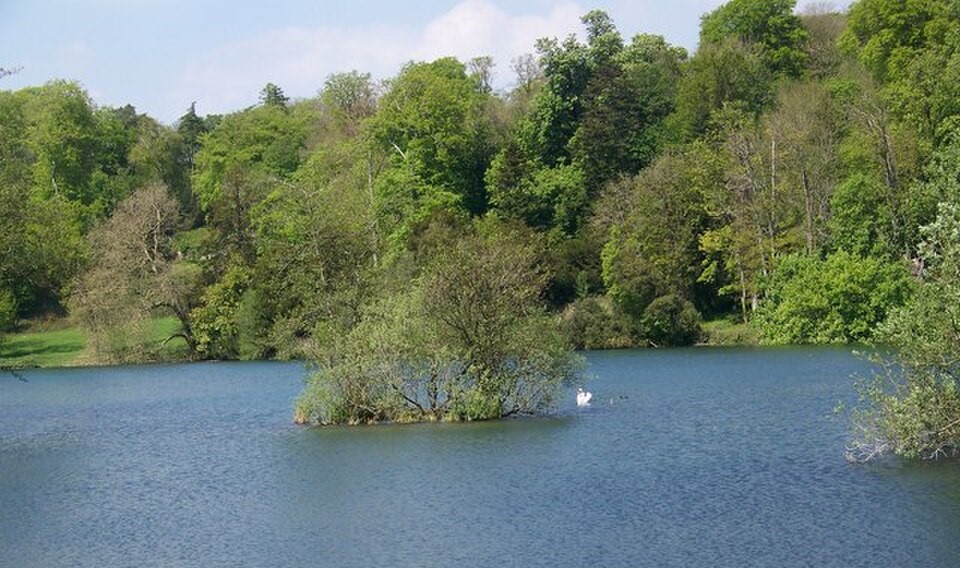
On the evening of 4 September 1928, Albert and three companions went bathing in the lake at Fonthill Park, a well-known local beauty spot that attracted many swimmers. After spending about fifteen minutes in the water, several of the party swam out to a nearby island and returned safely. Albert then attempted the crossing himself but encountered difficulties about halfway back and called for assistance.
Eric Green, one of his companions, immediately swam to his aid and urged him to dog paddle while he supported his head. Although Albert briefly responded, he soon panicked and repeatedly dragged Green beneath the surface. Two other swimmers joined the rescue attempt, but Albert’s desperate struggles endangered all three men. Exhausted and unable to keep him afloat without risking their own lives, they were eventually forced to let him go.
Help was summoned without delay, and a police officer recovered Albert’s body from approximately eighteen feet of water using grappling irons. Although artificial respiration was continued for about forty-five minutes, he could not be revived.
At the inquest, held the following day at the Tisbury Poor Law Institution, Albert’s father explained that his son had learned to swim only eighteen months earlier at the public baths in Yeovil and, so far as he knew, had never previously swum in open water. The jury returned a verdict of accidental death.[2] Albert’s body was brought back to Hardington, where he was buried in the parish churchyard.
Conclusion
Albert’s life reflects the wider changes taking place during the 1920s, when many young men in rural areas found opportunities in occupations connected with the rapidly expanding motor industry. His apprenticeship and subsequent employment away from his native village suggest a promising beginning to adult life. That promise ended abruptly with his accidental death, leaving a career that had scarcely begun.
References
[1] British Army World War I Service Records, 1914-1920: service record for Albert Marsh; family reconstitution.
[2] Western Gazette, 7 September 1928, p.6.