Introduction
Arthur Adams was born and raised at Coker Hill, a part of West Coker that overlooks the parish of Hardington Mandeville. Like several members of his family, he left Somerset for South Wales in search of work in the coal industry. By early 1921, however, he had returned to Hardington, where he established himself as a smallholder, remaining there for the rest of his life.
Childhood
Arthur was born on 1 February 1876 at Coker Hill, West Coker, the fifth child of George and Jane Adams.[1] His father worked as a shepherd and remained at Coker Hill for most of his life, dying in 1899 at the age of 54. Of the couple’s seven sons, two died relatively young: Henry in 1884 at the age of 12, and Charles in 1903 at the age of 19.
South Wales
In the early 1880s, George’s brother, Henry Adams, moved to Mountain Ash in South Wales, where he found work as a boiler stoker at a colliery. He married locally and settled there, providing a foothold for other family members.
By 1891, Arthur’s brother, Thomas, was living with Henry and working as a yard labourer. Another brother, Frederick, moved to Ystradyfodwg in Glamorganshire after marrying Edith Swain at Odcombe in 1890. In 1901, he was employed as a labourer in a coal pit. Frederick appears to have remained in South Wales into the 1920s, while Thomas returned to Somerset after only a few years.
Arthur himself was working as a labourer by the age of fifteen, but at some point thereafter, he followed his brothers to South Wales. By his early thirties, he was employed at Llwynypia, one of the principal mining districts of the Rhondda.[2]
Marriage
Arthur maintained links with his home parish and married Ann Elizabeth Reynolds at Hardington church in 1909. He was 33 and she 27.
Ann was the eldest daughter of Arthur Reynolds, an insurance agent and assistant overseer who had lived at Coker Hill before moving to Bulshay, just off the High Street in Hardington in the late 1890s. He died in 1905 from splenic anaemia.[3] Before their marriage, Ann worked as a housemaid for a clergyman’s widow at Martock.
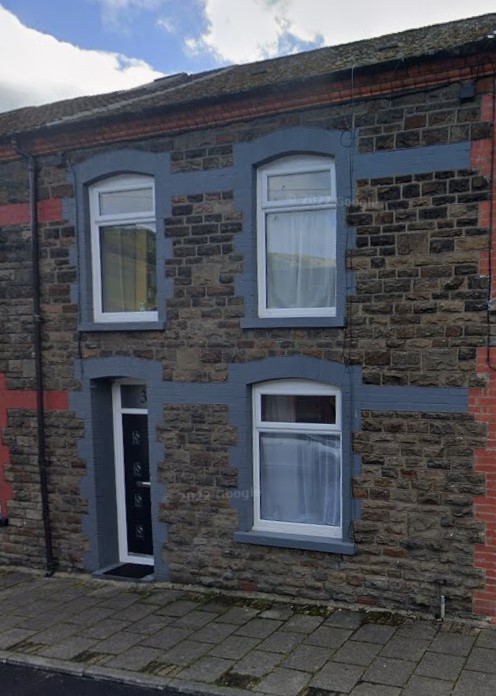
After their marriage, Ann joined Arthur at Llwynypia, where they lived at 3 Turberville Street in a seven-room house. The 1911 census recorded Arthur as a banksman working on the surface. Their only child, Daisy Lilian, was born on 26 April 1911.[4]
Crisis
The stability of Arthur’s life in South Wales began to break down in early 1921, even before the national dispute in the coal industry reached its height. By 7 March 1921, his wife Ann was living at Rectory Lane, Hardington, where she witnessed the will of Edward Rendell, a neighbour, indicating that the family had already returned to Somerset by that date.[5]
Later that month, on 31 March 1921, government control of the coal industry ended, and the mines were handed back to private ownership. The following day, colliery owners locked out over one million miners after the Miners’ Federation refused to accept substantial wage reductions. The dispute continued until 4 July 1921, when the miners returned to work.
Despite his physical return to Somerset, the census taken on 19 June 1921 still recorded Arthur as a coal mine banksman employed by the Glamorgan Coal Company at Llwynypia. This may indicate either that he continued to define himself by his former occupation or that he retained hopes of returning to the coalfield. In the event, he remained in Hardington and did not resume work in the industry.
Later life
In 1933, Daisy married Sidney Walter White, a local carpenter. By 1939, they were living in Birmingham, but later returned to the village.
In April 1934, Arthur made his will. He left his wife his household effects, farming stock, ready money, and any sums due to him absolutely, directing that the remainder of his estate be sold and invested by his trustees, with the income paid to his wife for life and the capital passing to his daughter thereafter. The reference to his “real and personal estate” suggests that he owned property, probably including his house.[6]
Kelly’s Directory of 1939 listed him as a smallholder. However, he may have ceased his smallholding activities in 1938, as he advertised a pony, a float, a tip putt, and two sets of harnesses for sale in May of that year, stating that they would suit as a smallholder.[7] The 1939 Register described him as a gardener’s handyman.
Death
Arthur died on 2 March 1951 at the age of 75, leaving an estate valued at £1,677 15s 3d. His wife Ann died on 12 August 1963, at the age of 81, leaving an estate valued at £498 13s 8d, which she bequeathed to their daughter.[8]
Conclusion
Arthur Adams spent much of his adult life in the coalfields of South Wales but returned to Somerset by early 1921, before the full impact of the national lockout was felt. Although the timing suggests that worsening conditions in the industry may have influenced his decision, the exact reasons for his return remain unclear. The census of June 1921 still described him as a coal mine banksman, indicating either a continued identification with his former occupation or the possibility that he had not yet entirely abandoned the idea of returning to it. In the end, he remained in Hardington, where he established himself as a smallholder. The modest value of his estate and the careful structure of his will suggest that his resources were limited and managed with caution.
References
[1] Civil registration birth index; 1939 Register.
[2] Arthur has not been found on the 1901 census.
[3] Death certificate of Arthur Reynolds.
[4] Civil registration birth index; 1939 Register.
[5] The will of Edward Rendell, dated 7 March 1921, proved at Taunton on 23 March 1927.
[6] The will of Arthur Reynolds, dated 18 April 1934, proved at Bristol on 13 June 1951.
[7] Western Gazette, 27 May 1938, p.9.
[8] The will of Ann Elizabeth Adams, dated 18 July 1951, proved at Bristol on 20 March 1964.