Introduction
Dr Edward Turton was a physician who practised in Hull in the early twentieth century. In addition to his distinguished medical career in civilian life, he held significant medical roles in the Second Boer War and the First World War. He and his wife briefly lived at Hardington at the start of the Second World War.
Childhood
Edward was born on 6 March 1876 at Howden in Yorkshire, where his father Thomas Coates Turton had his own dental practice.[1] His mother, Betsey, was the daughter of John Mitchinson, who farmed over 500 acres at Camerton Hall, Camerton.[2]
The family ethos was rooted in the professions, freemasonry and public service. Of the six sons who reached adulthood, one became a doctor, three became dentists, one became a bank manager, and one, who died young, worked as a bank assistant.[3] Thomas and five of his sons were Freemasons, and Thomas served as chairman of the Urban District Council.[4]
In 1889, his family relocated to Goole, which is four miles south of Howden.[5] In December of that year, Betsey died at the age of 43.[6] Six years later, Thomas married Emily Tallents, the widow of a Primitive Methodist minister.[7]
Edward attended Drax Grammar School, where he displayed early promise in his studies. In 1892, won both a County and an Akroyd Scholarship, each worth £30 per annum for two years.[8] He then attended Victoria University, where he studied medicine, qualifying in 1898 with degrees of Bachelor of Medicine and Bachelor of Surgery. He also became a member of the Royal College of Surgeons and a Licentiate of the Royal College of Physicians.¹[9] After qualifying, Edward worked as an assistant surgeon at Ripon.[10]
Second Boer War
In February 1900, Edward volunteered as a civilian surgeon in the Second Boer War and later became a Captain in the Medical Service Corps.[11] Initially, he served as regimental surgeon to the 2nd Battalion Norfolk Regiment.[12] His letters home, published by local newspapers, express a strong desire to get close to the enemy and see combat.[13] Soon after his arrival, however, he was hospitalised for four weeks due to enteric fever.[14] In 1901, he returned home for several months before going back to South Africa.[15]
Hull
After his wartime service, Edward became a practising physician with his surgery located at 1 Albion Street, Hull.[16] He pursued further qualifications, writing a dissertation on defective house drainage and its influence on the aetiology of typhoid fever and diphtheria, which helped him obtain his M. D. in 1903.[17] He also earned a second-class B.Sc. in December 1903.[18] In 1904, he was elected a Member of the Royal College of Physicians of London, marking his admission to the senior ranks of the profession. In October 1907, he was appointed Honorary Physician to Hull Infirmary, a post he held for twenty years.[19] In June 1909, he acted as best man at the wedding of the Under-Sheriff of Hull, indicating his close connections with the city’s professional elite.[20]
First World War
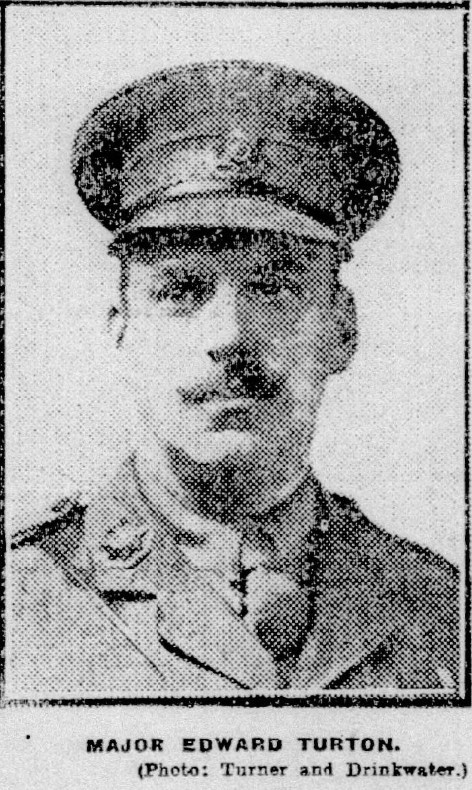
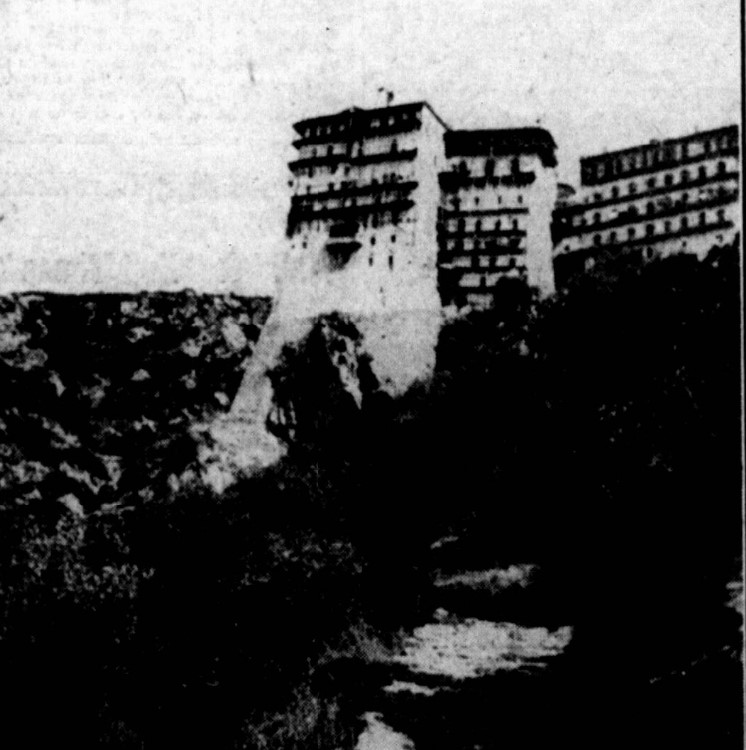
At the start of the First World War, Edward was a Captain in the 5th (Cyclist) Battalion of the East Yorkshire Regiment, a Territorial Force Infantry battalion. In June 1915, he resigned his commission and was appointed Major in the Royal Army Medical Corps, tasked with commanding the 1st Northumbrian Field Ambulance.[21] At this time, the Hull Daily News published a picture of him looking very smart in his moustache, cap and uniform.[22] As was common for medical officers, his rank rose rapidly upon transfer to the RAMC, and the following September, he was promoted to Lieutenant-Colonel.[23] For three years, he was in charge of the principal military hospital at Stavros, located about fifty miles from Salonika, during which time, he visited the monks at Mount Athos.[24]
Even before Edward became a Major, his youngest brother, Lewis Cuthbert, was already fighting with the Auckland Mounted Rifles in the Dardanelles as part of the New Zealand Expeditionary Force. Lewis was wounded and died in the military hospital at Valletta, Malta, on 28 August 1915.[25]
Postwar period
After the war, Edward returned to his life in Hull. In addition to his medical interests, he was an active member of Hull Literary and Philosophical Society, where he served as secretary and was twice elected president.[26] In January 1920, he delivered a lecture to the society about his experiences at Mount Athos.[27]
In April 1921, Edward’s father died, leaving an estate valued at £6,335 16s 7d.[28] Edward served as an executor of the estate, but the amount of his inheritance is unknown.
In 1927, he retired as honorary physician to the Hull Royal Hospital and became an Honorary Consulting Physician.[29] Around this time, he passed his private practice to Dr Louis Levine.[30] The Medical Directory of 1930 listed him as retired and gave his address as Eastcroft, North Ferriby, a village ten miles west of Hull.[31] This property later became the home of Edward’s brother, Charles, who was a lifelong bachelor.[32]
Following his retirement, Edward became an enthusiastic traveller. In August 1928, he was aboard the Orient Liner Otrano bound for the Norwegian Fjords when it collided with a Japanese steamship near the mouth of the Humber.[33] Passenger lists suggest extensive travel during this period, possibly including a world cruise.[34]
Until the late 1920s, Edward was closely connected with his family. The 1911 census recorded him living in a large fourteen-room house at 1 Albion Street with his brother, Thomas, while another brother, Arthur, operated his dental surgery at 25 Albion Street.[35] However, in the late 1920s, he met Doreen Margaret Kiver of New Zealand. In 1930, she travelled to England, and the couple married at St Charles Church in Hull on 23 August 1930. Edward was fifty-four, and Doreen was twenty-five. One of the bridesmaids was Aroha Clifford, a New Zealand pilot.[36]
They initially settled in London, living at 20 Eyre Court, Finchley Road.[37] However, they continued travelling, sailing to New Zealand in 1937.[38]
The final years
The 1939 Register recorded them living at Grass Hill, Hardington Mandeville, which coincided with the wartime evacuation of many London residents. They later moved to the Paddock, West Hill, Ottery St Mary, Devon, where their son, Edward Charles, was born in 1941. [39] In August and September 1941, they advertised for a general servant, stating that West Hill was a safe area.[40]
In 1945, Edward was admitted to the Kent and Sussex Hospital, Tunbridge Wells, where he died on 22 December at the age of 69, leaving an estate valued at £9,600 1s 1d.[41] In 1949, Doreen returned to New Zealand with their son, where she died in 1973 at the age of 68.[42]
Conclusion
Edward Turton’s life shows a clear division between his years in active medical practice and his later retirement. While the former was structured around professional and military service and largely centred on Hull, the latter was marked by travel, marriage and fatherhood. Taken together, his career and retirement suggest a life that, though modest in scale, encompassed a wide range of professional and personal experiences.
References
[1] Civil Registration Birth Index; 1939 Register.
[2] Hull Packet, 7 July 1871, p.8.
[3] Family reconstruction.
[4] Hull Daily Mail, 18 April 1921, p.6,
[5] Howdenshire Gazette, 4 January 1889, p.4.
[6] Isle of Axholme & Thorne Advertiser, 13 December 1889.
[7] York Herald, 10 October 1895, p.4.
[8] Selby Times, 8 July 1892, p.4.
[9] The Medical Directory, 1925, p. 1077.
[10] Ripon Gazette, 12 May 1900, p.5.
[11] Yorkshire Evening Post, 2 March 1900, p.3; Hull Daily Mail, 16 June 1915, p.3.
[12] Ripon Gazette, 12 May 1900, p.5.
[13] Ripon Gazette, 12 May 1900, p.5.
[14] Ripon Gazette, 12 July 1900, p.5.
[15] Hull Daily Mail, 1 November 1901, p.3.
[16] Medical Directory,1905, p.989; Kelly’s Directory of N & E Ridings of Yorkshire, part 2, 1913, p. 414.
[17] Ripon Observer, 4 June 1903, p.4; Manchester Evening Post, 12 June 1903, p.2.
[18] Manchester Courier, 18 December 1903, p.6.
[19] Hull Daily Mail, 11 October 1907, p.5; Medical Directory (London: Churchill, 1925).
[20] Yorkshire Post and Leeds Intelligencer, 3 June 1909, p.9.
[21] Hull Daily News, 16 June 1915, p.3.
[22] Hull Daily News, 16 June 1915, p.3.
[23] Hull Daily News, 13 September 1915, p.3.
[24] Hull and East Yorkshire Times, 24 January 1920, p.8.
[25] New Zealand, World War I Service Records, 1914-1920; Leeds Mercury, 8 September 1915, p.2.
[26] Hull Daily Mail, 22 December 1945, p.4.
[27] Hull and East Yorkshire Times, 24 January 1920, p.8
[28] National Probate Calendar.
[29] Hull Daily Mail, 22 December 1945, p.4.
[30] Hull and East Yorkshire Times, 31 August 1940, p.10.
[31] Medical Directory,1930, p.1155.
[32] National Probate Calendar.
[33] Leeds Mercury, 13 August 1928, p.1.
[34]Passenger lists.
[35] RG14, piece 28729; Holy Trinity, Hull, marriage register; National Probate Calendar.
[36] Hull and East Yorkshire Times, 30 August 1930, p.14.
[37] Voters’ Lists.
[38] Passenger lists.
[39] Hull Daily Mail, 29 May 1946, p.2; Civil Registration Birth Index (the birth of Edward Charles Turton was registered in the Exeter district in Q4, 1941.
[40] Western Morning News, 30 August 1941, p.4; 1 September 1941, p.1.
[41] National Probate Calendar; Hull Daily Mail, 29 May 1946, p.2.
[42] Passenger lists; New Zealand, Cemetery Records, 1800-2007.