Introduction
Frances Helena Axe’s life exemplifies the continuity often seen in the lives of rural women during the late nineteenth and early twentieth centuries. Born into an agricultural labouring family in East Chinnock, she spent most of her life in her home parish, except for a period spent in domestic service that led to her marriage. During her married years in Hardington, she contributed to the household economy by working as a glove machinist, combining paid employment with family responsibilities.
Childhood
Frances was born on 9 May 1878 at East Chinnock, the seventh of ten children born to Stephen and Sarah Axe.[1] Her father was a farm labourer. The 1871 census recorded the family living at The Hill, but by 1881, they had moved to New Buildings. At that time, Frances was recorded as a nurse, probably assisting with childcare or domestic duties within a household.
Domestic Service and Marriage
As a young woman, perhaps following her father’s death in 1898, Frances left the village to work in domestic service. The 1901 census recorded her as a general domestic servant living at Highgrove Farm, East Stour. It was probably during this period that she met Joseph Sidney Daniel Alford, known as Sidney. Born at Mere, Wiltshire, in 1875, Sidney initially worked as a farm servant before moving to Ebbw Vale, where by 1901 he was employed as a coal miner. He later returned to the West Country and resumed agricultural work. The couple married in the Shaftesbury area in 1904.
Early married life
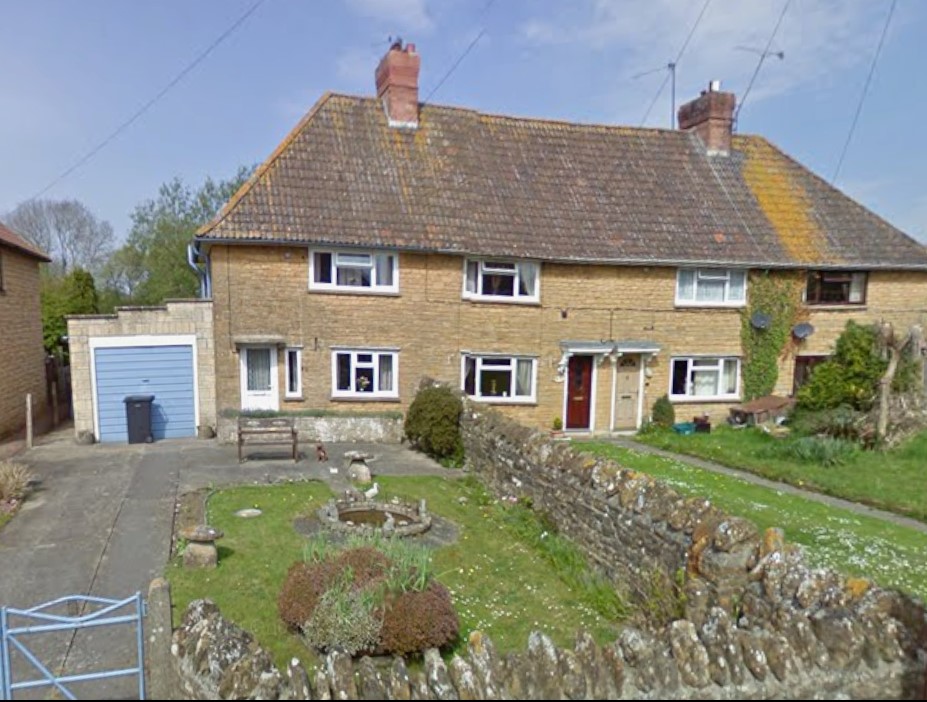
After marrying, Frances returned with Sidney to East Chinnock, where their first child, Ellen Grace, was born in 1907. By April 1911, the family had moved to a five-room house at Hardington Marsh, where they lived until 1919. During these years, Frances gave birth to three more children: Thomas Victor, Florence Elizabeth and Frances Gladys.
To supplement the family income, Frances worked as a glove machinist at home, likely on a piecework basis. This type of work was part of a broader rural industry in South Somerset and neighbouring areas, allowing married women to earn money while remaining within the household.
Later married life
In 1919, the family returned to East Chinnock and settled in Weston Street. Sidney worked for Edward James Beaumont at Fordhay Farm until 1925, when Beaumont sold most of the farm.[2] In October of that year, Sidney advertised for a new position as a farm labourer, describing himself as experienced in all types of farm work and noting that he had worked at his previous place for six years.[3] He eventually found other local employment, and by 1939, the family was living at 12 Fordhay Terrace. Their youngest child, Lena Kate, was born in 1921. In 1921 and 1924, the eldest child, Ellen, passed scripture examinations while a member of the village’s Wesleyan Sunday School, suggesting that the family attended the Wesleyan chapel.[4]
Final years
The four oldest children married during the late 1930s, and Lena married in 1943. Only Florence moved away from the immediate area, settling for a time at Wokingham in Berkshire before returning later. Sidney may have retired around 1940, although wartime labour shortages could have prolonged his working life.
Sidney died in 1954 at the age of seventy-eight. Frances survived him by fifteen years, dying in 1969 aged ninety. Her long life, spent largely within a small geographical area, reflects the stability characteristic of many West Country labouring families whose security depended upon steady agricultural employment supplemented by earnings generated at home.
References
[1] Her birth was registered under the name “Frances Helena,” but the 1881 census listed her as “Frances Isabella ”, while the 1911 census and the Civil Registration Death Index recorded her as “Frances E.”
[2] Western Gazette, 28 August 1925. P.2.
[3] Western Gazette, 2 October 1925, p.8.
[4] Western Chronicle, 17 June 1921, p.2; Western Gazette, 13 June 1924, p.4.