Introduction
George Henry Hamlin was a gardener at Hardington rectory from about 1912 to 1915. His life before and after those years was centred in his native Devon, where he worked almost entirely within the world of domestic and private gardening.
Childhood
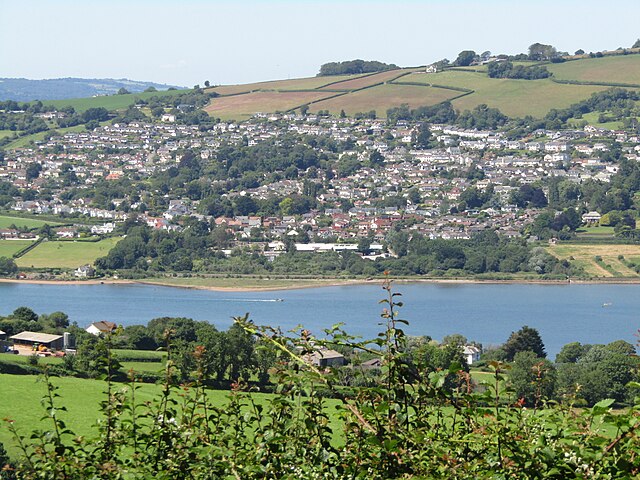
George was born at Bishopsteignton on 4 May 1875, as the first of five children to Alfred Charles and Eliza Hamlin.[1] His father had been a domestic gardener in the village even before his marriage, while his mother had been employed as a housemaid at St Marychurch.The 1881 census shows the family living at 18 Radway Hill, while the 1891 census shows them living at 2 The Terrace.Their circumstances suggest modest but steady employment.
Sadly, George’s younger brother, Ernest Mardon, passed away in June 1887 at the age of seven. By the age of fifteen, George had begun working as an undergardener, a natural progression for someone raised in a gardening household.
Ashburton
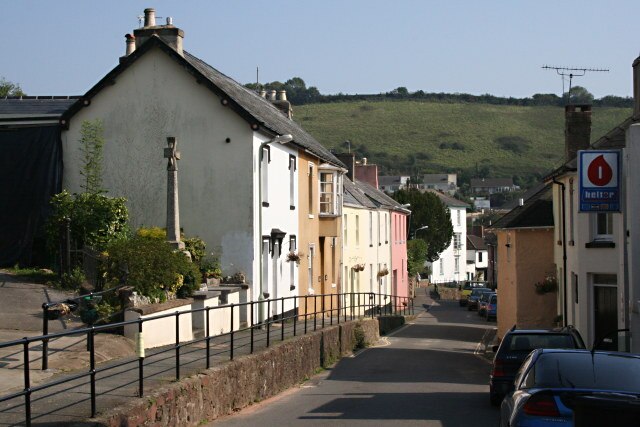
By March 1901, George had moved to Ashburton, where he lodged with a groom and his family in East Street, while working as a gardener. He married Louisa Skinner at St Andrew’s Church on 6 April 1903.[2] Louisa, born on 15 May 1880, was the daughter of Joseph Skinner of North Mill, who worked in saddlery, and later wood dealing and road-contracting. At the time of her marriage, Louisa was employed as a housemaid for a gentleman in West Street.
George and Louisa remained at Ashburton until at least February 1909, during which time they had two children: Alfred Charles and Muriel Pennington.
The family suffered a sad blow in early 1910 when Louisa’s father died in tragic circumstances. On the evening of Saturday, 15 January, he went to the Constitutional Club to await election results. When he failed to return home, his wife raised the alarm, and his son set out to search for him. As day was breaking, he discovered his father’s body in the stream near North Street. The inquest suggested that, in the darkness, he had slipped from the footpath and fallen some seven feet into the water below, striking his head on a rock.[3]
Lyme Regis
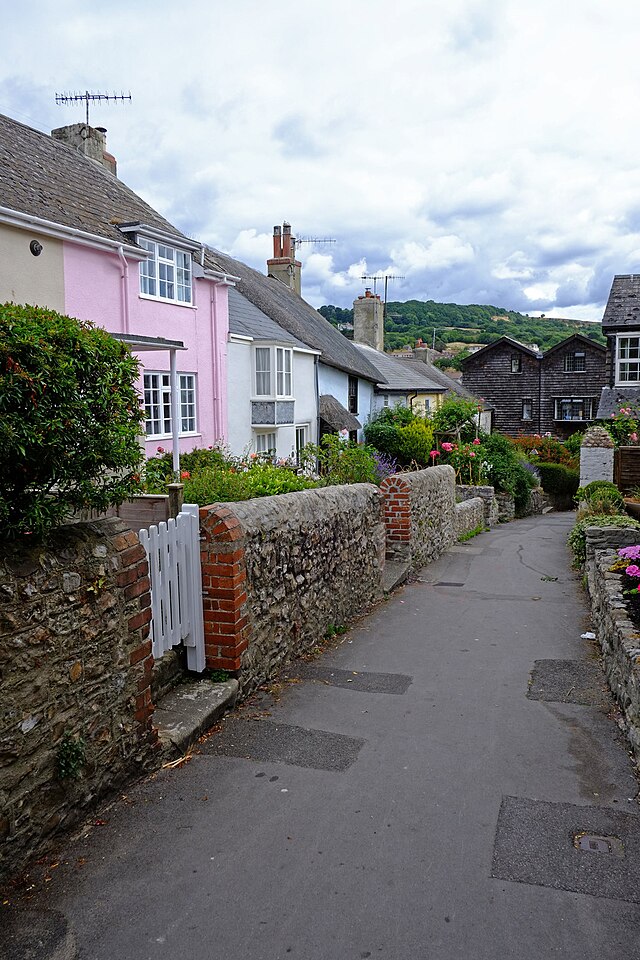
By April 1911, the family had moved to 40 Sherborne Lane, Lyme Regis, a five-room house on one of the steep medieval lanes descending from Broad Street towards the River Lym. While George’s specific duties during his time in Lyme Regis are not recorded, the move may have been prompted by the availability of gardening jobs in the local hotels and seaside villas.
Hardington
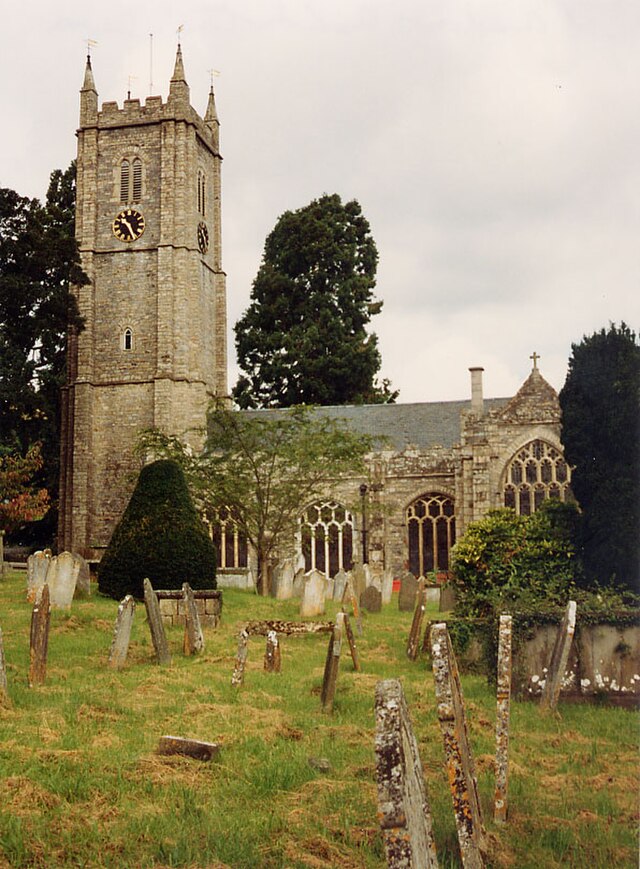
Sometime between 1911 and spring 1912, the family moved to Hardington, where George became the head gardener at the rectory. He assisted in decorating the church for Easter Sunday on 7 April 1912.[4]
The large walled garden produced vegetables and flowers for both the rectory and the church. George regularly decorated the church for Easter, Harvest, Thanksgiving, and Christmas, sometimes with the help of his wife and, during Christmas 1913, his eldest son.[5]
George also joined in the small social world of parish workers. On 5 December 1913, he proposed a vote of thanks to Mrs Cleife when she presented a wedding gift to Albert and Alice Chester, and on 7 July 1914, he helped at a Sunday School tea held in the rectory grounds.[6]
A third child, Aubrey Ronald Skinner, was born at Hardington on 19 October 1913.
In 1914, George served as a bearer at two significant parish funerals: Rev Charles Godfrey MacCarthy in January 1914 and Rev H. H. T. Cleife in December 1914.[7]
Following Cleife’s death, the staff at the rectory was reduced, prompting George to return to Devon.
Chagford
By 1916, the family had moved to Chagford, where their youngest child, Heather Kathleen, was born on 12 October of that year. Given Chagford’s many villas and gentlemen’s residences at the time, it is possible that George found work in one of them, although no direct evidence survives.
Military service
On 7 August 1918, George enlisted in the Royal Marine Light Infantry at the age of 43.[8] Recruitment at this late stage of the war typically involved men serving in home service, reserve duties, or specialised labour rather than frontline deployment.
Torquay
By 1921 the family were living at Hill Cottage on Upper Braddons Hill Road in Torquay, and George worked as a private gardener at Ben Vue, one of the town’s many large villa residences. The expanding hotel and villa economy in Torquay created steady demand for skilled gardeners, making it a natural place for George to settle. By this time, his eldest son Alfred Charles had left home to train as a teacher.
By September 1939, George. Louisa and their two daughters were living at 1 Normount Cottage, Little Newbery Road, Torquay.
Death
Louisa died in August or September 1954 at the age of 74. Her funeral was held at St John’s Church, Torquay, where she had worshipped for nearly forty years, and she was buried at Ashburton.[9] George lived until 1958, dying at the age of eighty-two, and was buried beside Louisa.
References
[1] Civil registration birth index; 1939 Register.
[2] Totnes Weekly News, 11 April 1903, p.5. The marriage announcement describes George as “of Liskeard,” presumably because his parents lived there by then.
[3] Morning Post, 17 January 1910, p.9; Western Times, 18 January 1910, p.6; 21 January 1910, p.3.
[4] Western Chronicle, 12 April 1912, p.6.
[5] Western Chronicle, 20 September 1912, p.6; 3 January 1913, p.5; 28 March 1913, p.6; 26 September 1913, p.5; 2 January 1914, p.6.
[6] Western Chronicle, 12 December 1913, p.7; 10 July 1914, p.5.
[7] Western Chronicle, 6 February 1914, p.6; 18 December 1914, p.3.
[8] Royal Marines Registers of Service Index, 1842-1925.
[9] Torbay Express and South Devon Echo. 8 September 1954 p.5.