Introduction
Harold George Marsh belonged to a generation whose working lives were shaped by new industries and greater mobility. Born into a labouring family at Hardington Moor, he trained in motor engineering at a time when motor vehicles were still a relatively recent innovation. His skills eventually took him from rural Somerset to north London, where he spent the remainder of his life.
Early life
Harold was born at Hardington on 22 May 1904, the third of four sons born to John Marsh and his wife, Beatrice Selena (née Partridge). His father worked as a general labourer, including in the building trade, while his mother had been employed as a domestic servant at the rectory before her marriage.
The family lived at Hardington Moor in a cottage later known as Weavers’ Cottage. John rented the property for many years before purchasing it in the Hardington estate sale of 1920.
Harold began his education at Hardington School on 11 May 1908.[1] He grew up in a family of working men. His two elder brothers served during the First World War before returning to civilian life in the building trade, while his younger brother, Harvey Charles, became a painter and decorator.
Unlike his brothers, Harold pursued a career in engineering. By the time of the 1921 census, he was employed as an apprentice motor smith with Hill and Bolt Motor Builders of Kingston, Yeovil. The firm had been involved in motor vehicle manufacture since the closing years of the nineteenth century. As a motor smith, Harold would have been trained in the fitting, construction and repair of mechanical components, acquiring skills that were increasingly in demand as motor transport expanded during the early twentieth century.
Marriage
In 1930, Harold married Dorothy Kate Rodd of Odcombe. He was twenty-six years old, and she was twenty-five.
Dorothy was the only daughter of Edwin Rodd and his second wife, Kate (née Hiscott). Her father had served with the 39th Brigade during the 1880s before becoming a rural postman at Templecombe by 1891.[2] He died in October 1904, five months before Dorothy’s birth. Following his death, Kate returned to her native parish of Odcombe and in 1915 married Walter Cyril Gard, a general labourer.
Life in London
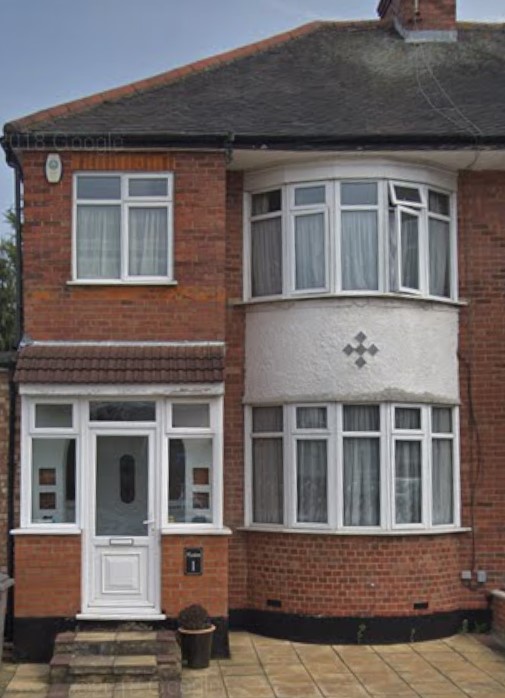
After their marriage, Harold and Dorothy left Somerset and settled in north London. By 1931, they were living at 130 Sheaveshill Avenue, Hendon, with Alfred William Worby and his wife, Ida Alice, who may have owned the property.[3] Alfred was a former piano tuner and First World War veteran whose health had been damaged by gas exposure during the war. When he died in 1935, Harold and Dorothy attended his funeral, suggesting that the two households had formed a close relationship. [4]They remained at Sheaveshill Avenue with Ida for several years before moving to Grove Crescent, Wembley, by 1939.[5]
The 1939 Register described Harold as an engineer’s fitter and maintenance electrician. His occupation suggests that he continued to build upon the engineering skills acquired during his apprenticeship, working in the maintenance and repair of industrial or commercial equipment.
Harold and Dorothy had two children, Brian Harold J., born on 3 June 1937, and Jennifer P., born in 1945 or early 1946.
In July 1946, Harold’s mother died intestate, leaving an estate valued at £295 11s. 3d. As his father had predeceased her in 1939, Harold was among her surviving children at the time of her death.
Harold appears to have remained in the London area for the rest of his life. He died in late 1972 or early 1973 at the age of sixty-eight. Dorothy survived him by more than a decade and died in February 1987, aged eighty-one.
Conclusion
Harold’s life illustrates the opportunities that industrial and technological change created for young men from rural Somerset during the early twentieth century. While many Hardington men continued to find work in agriculture or the building trades, Harold entered the developing motor engineering industry and used those skills to establish a life in north London. His story reflects the growing mobility of the period and the widening range of occupations available beyond the village.
References
[1] Hardington School Admissions Register.
[2] Royal Hospital Chelsea Pensioner Soldier Service Records, 1760-1920.
[3] Hendon Voters’ Lists.
[4] Hendon & Finchley Times, 3 January 1936, p.16.
[5] 1939 Register.