Introduction
Henry Albert White formed part of the religious and cultural life of Hardington in the early twentieth century. He provided music at social gatherings and served as the Sunday School Superintendent. Despite a challenging upbringing, he maintained stable employment and was able to save enough money to purchase his own cottage,
Childhood
Henry was born at Hardington on 20 July 1867 to Mary White (nee Marsh).[1] Mary had married Charles White, a labourer, at Hardington on 24 June 1860, and gave birth to a daughter, Elizabeth, in 1861. Charles is absent from later records, and Mary subsequently had four children outside marriage: Henry Albert in 1867, William George in 1871, Ann Elizabeth in 1874, and Arthur Charles in 1876. Ann and Arthur died before they reached their second birthday.
Henry’s birth certificate names Albert Chapman as his father, but this entry has been struck through. If accurately identified, this Albert Chapman was probably the Hardington labourer who, in 1861, was serving as a gunner at Portsea and died in 1877 at the age of 40. The reason for the cancellation of the entry remains unclear.
During her life, Mary lived in various cottages in the village: in the High Street in 1871, Eastfield in 1881, and Rose Cottage in 1891. Initially, she worked as a glover, but by 1891, she was a laundress.
Elizabeth married Samuel Curtis, a cowman, in 1883 and later lived at West Coker and Pilton. William married Fanny Mountstephen Legg in 1894 and moved to Sutton Bingham.
Marriage and later life
Henry remained at Hardington. In February 1895, Bessie Larcombe of Haselbury obtained an affiliation order against Henry for 2s 6d a week.[2] They married in 1897, and their daughter, Blanche Maud, was born in February 1898.[3] The registration of an earlier child, implied by the affiliation proceedings, has not been located. Bessie not been reliably identified in census returns, and although Henry described himself as married in 1901 and widowed in 1911, no death registration for her has been found. The circumstances remain obscure.
By 1901, Henry lived in a four-room cottage at Hardington Moor with his daughter and mother, who lived with him until her death between 1911 and 1921.
Local newspapers provide glimpses of Henry’s life. In January 1901, his bicycle, valued at £3, was stolen from outside his home.[4] He played music at various village events: a temperance fete in August 1906, a Sunday School party at the Rectory in January 1909, a Liberal gathering in Abraham Genge’s barn in January 1912, and a party for church workers in January 1914.[5] Although the specific instrument is not named, these references are consistent with the role often taken by village violinists at such gatherings. He also helped at a Sunday School treat at the Rectory in June 1912.[6] He served as the Superintendent of the Sunday School from at least 1909 to 1914.[7]
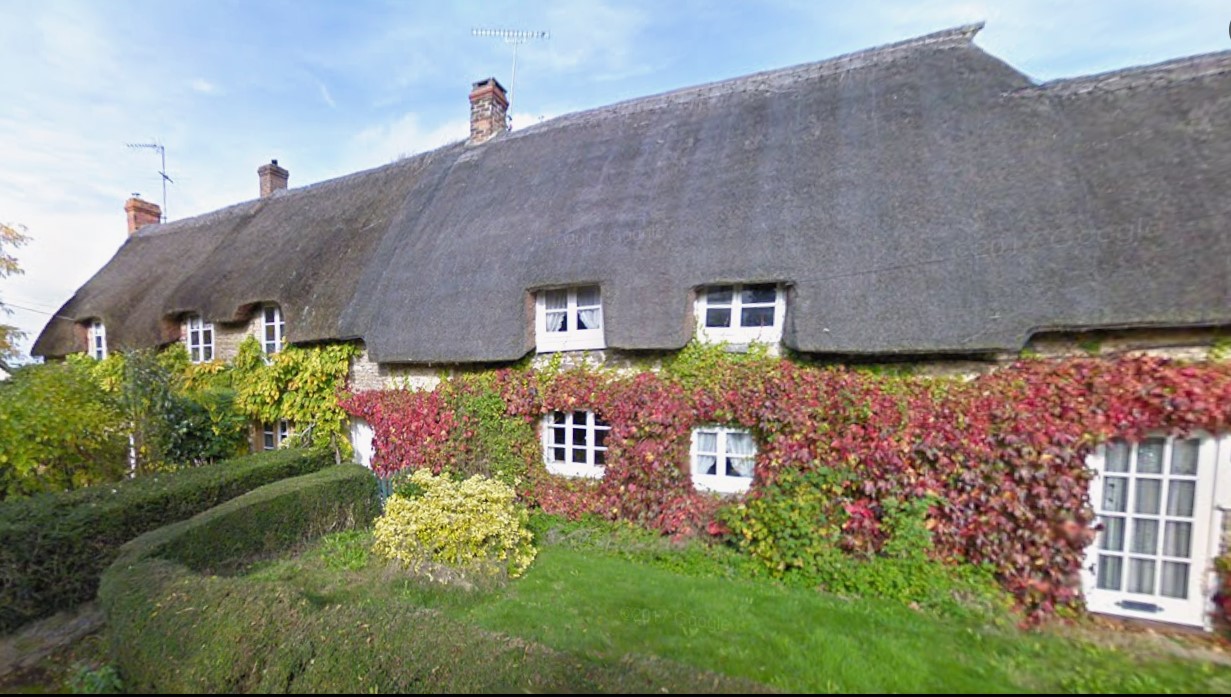
In the 1920 estate sale, Henry purchased the cottage he had been renting as a sitting tenant, the second from the east in a block of four dwellings.[8] For a man born into illegitimacy and domestic instability, owning a house represented a significant form of security. The following year, the census listed him as a roadman employed by Yeovil District Council.
On 10 January 1933, Henry made his will, leaving his cottage and all his belongings to Blanche.[9] Shortly after, she married Thomas William James Stidson from Chippenham. The following year, on 10 July 1934, Henry died at the age of 66.
Conclusion
Henry White’s life was quiet but steady. Despite uncertain beginnings, he established himself as a reliable labourer, a modest property owner, and a dedicated figure in the religious life of his village.
References
[1] Birth certificate of Henry Albert White.
[2] Western Chronicle, 22 February 1895, p.5.
[3] Birth certificate of Blanche Maud White.
[4] Western Gazette, 8 February 1901, p.6.
[5] Western Chronicle, 24 August, p. 6; 8 Jan 1909, p. 6; Western Gazette 12 January 1912, p. 6; Western Chronicle, 23 January 1914, p. 5.
[6] Western Chronicle, 5 July 1912, p. 6.
[7] Western Chronicle, 8 Jan 1909, p. 6; Western Chronicle, 23 January 1914, p. 5.
[8] Portman estate sale catalogue.
[9] The will of Henry Albert White, dated 10 January 1933, proved at Bristol on 13 October 1980.