Introduction
The life of Henry John Genge illustrates the gradual pull of Yeovil as a source of employment for young men from Hardington. Although his family had lived in the village for many generations, his work as a stonemason drew him to the town, and eventually to a council house at West Coker, where he remained in a rural setting but within easier reach of regular work and transport.
Childhood
Henry was born on 21 April 1900 at Hardington, the only child of John Genge and his wife, Emily (née Higgins).[1] The family lived in the High Street, and John worked as a general labourer on the Portman estate, later becoming an under-gardener at the rectory and then a farm labourer.
Henry entered the village school on 8 May 1905.[2] When he turned eighteen in April 1918, he was liable for conscription unless unfit or in a reserved occupation. No record of his military service has been found, which may indicate that he was exempt due to his work in the building trade. By 1921, he was recorded as a 21-year-old stonemason employed by Bird & Pippard of Yeovil.
At that time, the family were living at Rydon Cottage near Broadstone, which John had purchased as the sitting tenant at the 1920 estate sale. In 1937, he sold the property to William Keen.
Marriage
In 1928, Henry married Dorothy Heal, who lived with her parents at Coker Bridge Cottage, Coker Hill, West Coker. Her father, Josiah Heal, was a carpenter and joiner originally from Parkham in Devon. After completing an apprenticeship in Bideford, he worked in Walthamstow before marrying Annie Parkhouse at the Bible Christian Chapel, Bideford, in March 1902.[3] He then became a foreman at the estate sawmills at Haselbury and, during the First World War, secured a position at the Westland Aircraft factory.
Before her marriage, Dorothy worked at home as a glove machinist for Giles and Clothier of Yeovil. Henry and Dorothy had four children: Olive Emily, Stanley, Ronald Frank and Margaret A.
West Coker
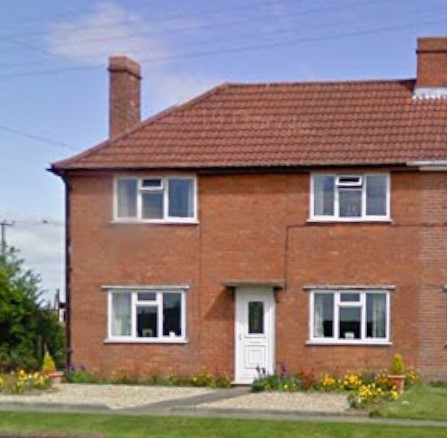
By 1939, the family was living at 8 Uplands Terrace, West Coker, one of a row of council houses built after the First World War. At that time, Henry was working as a journeyman bricklayer.
Death
Henry died in 1959, and his death was registered in the Bristol district at the age of 59. Dorothy died in 1977 in the Yeovil registration district, at the age of 71.
Conclusion
Henry’s working life in the building trade was centred on Yeovil. However, he successfully balanced that with living in West Coker, where he became a council house tenant. Although his death was registered in Bristol, this may indicate that he died in a hospital rather than suggesting he had left the area.
References
[1] Civil registration birth index; 1939 Register.
[2] Hardington School admissions register.
[3] North Devon Journal, 3 April 1902, p.8.