Introduction
Horace John Budden combined farming with a high level of religious and public activity. Like many Nonconformist farmers of his generation, he was closely involved in chapel life, temperance organisations and Liberal politics. In 1934, he left the community in which he had lived for more than three decades and moved to Kingswood Farm, Hardington, where he spent the final years of his life.
Early life
Horace was born at Wick Farm, Wattesford, on Christmas Day 1876, the youngest child of James Budden and his wife, Prudence (nee Oxford).[1] His father was already fifty and his mother forty-four when he was born. By that time, his two brothers, Thomas and Frank, had married and left home, leaving Horace to grow up mostly with his sisters, Lily and Florence, neither of whom married until their thirties.
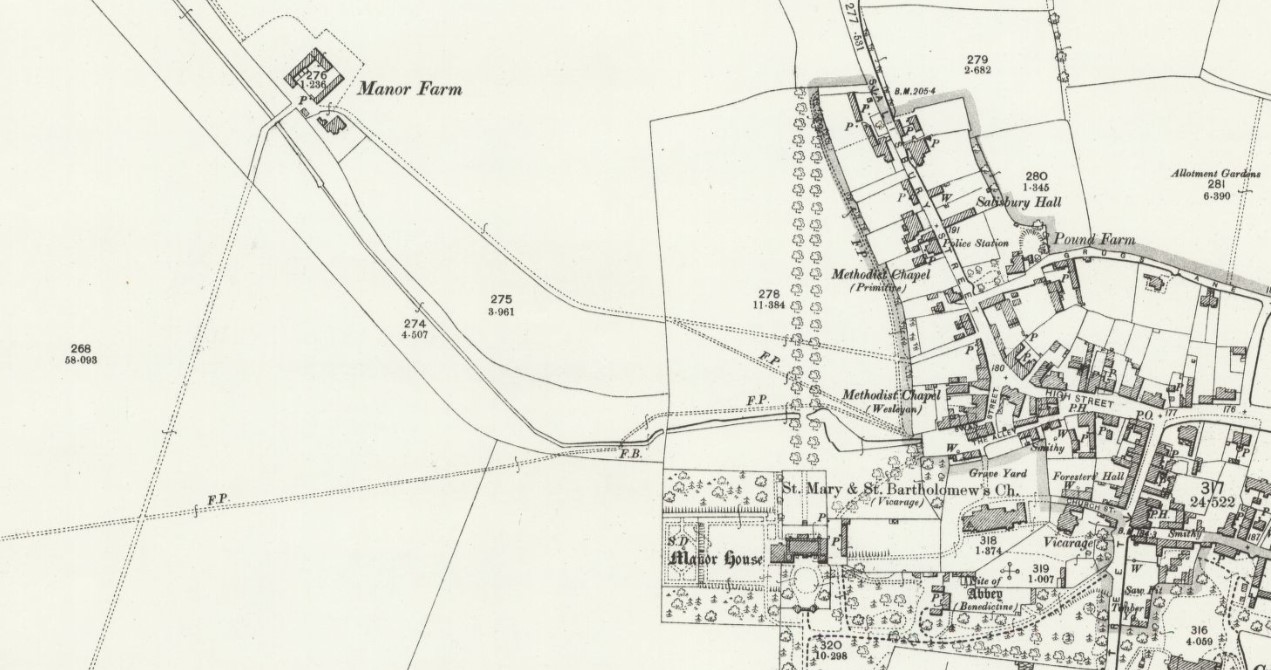
After leaving school, he worked for his father on a succession of farms in West Hampshire and East Dorset. These included West Hurn Farm at Hurn, a farm at Avon in the parish of Sopley, and, from 1897, Manor Farm, Cranborne.[2] The latter became the centre of Horace’s life for thirty-seven years.
James Budden died in February 1904 at the age of seventy-eight, leaving an estate valued at £778 12s.[3] Horace continued farming at Manor Farm with his mother, who remained there until her death in 1917, at the age of eighty-six. Her estate was valued at £1,460 16s 6d, and she left £400 each to Thomas and Frank, and £500 each to Lily and Florence, with the remainder going to Horace.[4] The pecuniary legacies thus exceeded the value of her estate, leaving nothing for Horace.
During his twenties, Horace became increasingly involved in Nonconformist religion, temperance and local affairs—activities that would become important aspects of his public life.
Marriage and family background
Through his religious connections, Horace met Elizabeth Chamberlin, whom he married in 1911. She was the youngest daughter of Samuel Thomas Chamberlin, a Congregational minister who served churches at Verwood and Three Cross from 1874 to 1901.[5] Chamberlin’s career illustrated considerable social mobility. Born in Winchester in 1822 as the son of a shoemaker, he began working in the same trade before becoming a farmer of about 200 acres by 1861, probably through marriage to a farmer’s daughter.[6] His second wife, Ann Marsh, was the daughter of a builder.[7]
Elizabeth was born on 10 November 1876 at Ringwood, probably at Westover Farm, a holding of 170 acres.[8] In the 1880s, the family moved to Plumley Farm, Harbridge, four miles north of Ringwood.[9] Samuel died there in April 1903, at the age of 81, leaving an estate valued at £502 5s 0d.[10] His widow died in 1910, after which the estate was divided equally among their children, James, Annie, Alfred, and Elizabeth.[11]
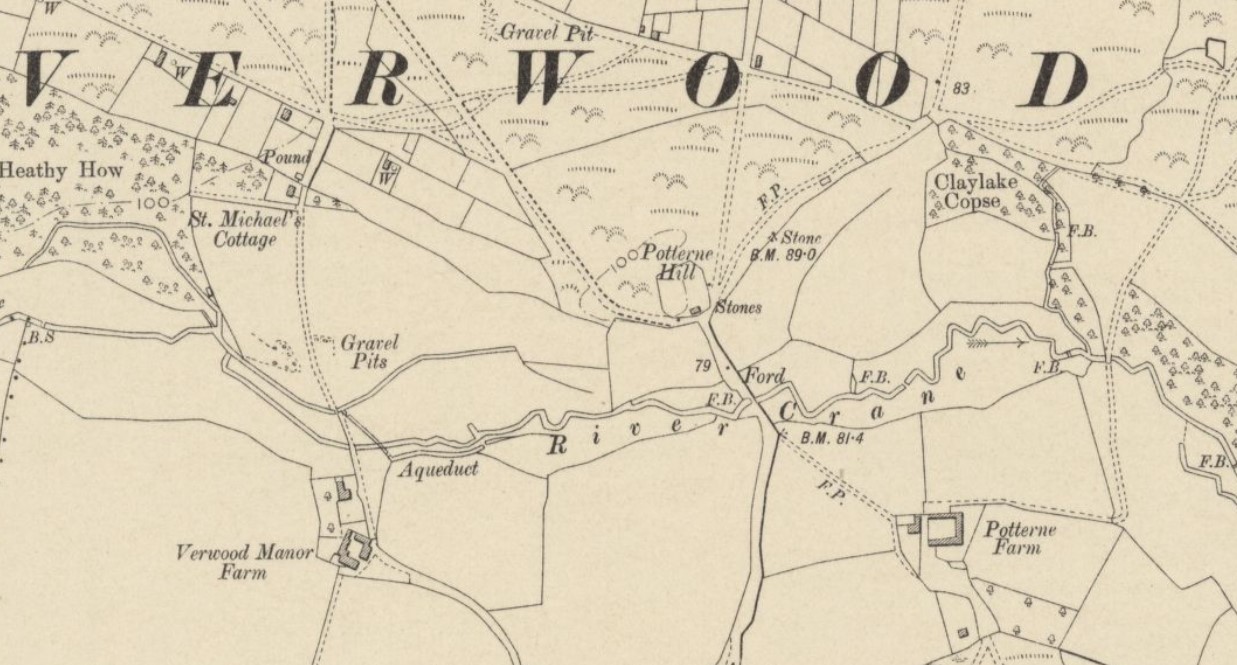
Horace may first have met Elizabeth at a wedding in May 1907, when her sister, Annie, married Frank Thorne of Potterne Farm, Three Cross. Horace was the best man, and Elizabeth was a bridesmaid.[12] However, it was four years before they married. During this time, Horace pursued his various interests while Elizabeth worked as an assistant teacher.[13] Frank Thorne died in January 1909, and Elizabeth’s mother died in December 1910.[14] By April 1911, Elizabeth was living at Potterne Farm with her widowed sister, Annie.[15]
Horace and Elizabeth married at Verwood Congregational Chapel on 14 September 1911.[16] They were both 34 years old. The couple settled at Manor Farm with Horace’s mother and had two children: Marion Chamberlin, born on 10 July 1912, and Horace Leon, born on 8 March 1917.[17] Leon was born a month before Horace’s mother, Prudence, died, marking a significant generational transition.
Marion was given her mother’s maiden name as a middle name, signifying her connection with a local family of some prominence. The 1921 census recorded Marion boarding with her aunt, Annie Thorne, and Annie’s half-sister, Emily Mary Barrett, at Three Cross, indicating that Elizabeth’s family remained closely connected with the household.[18]
Religion and temperance
Following his marriage, Horace became a lay preacher.[19] This role required him to speak regularly before chapel congregations, and his later activities in temperance organisations and Liberal meetings suggest that he was a confident and experienced public speaker. Although his background was Congregationalist, his activities were not confined to a single denomination. While living at Cranborne, he primarily supported the Congregational chapels at Verwood and Cripplestyle, Alderholt. In 1905, he donated £1 towards a new chapel at Verwood, and the following year, he represented the chapel at a general meeting of the Dorset Association of Congregational Churches.[20] He participated in celebrations marking the centenary of the Cripplestyle chapel in both 1905 and 1926.[21] However, he also assisted Methodist congregations in the area.[22] For example, in September 1915, he presided over a Harvest Thanksgiving service at the Wesleyan Chapel at Horton Heath.[23] After moving to Somerset, he became a lay preacher on the United Methodist circuit and frequently preached at Hardington chapel.[24]
His religious commitment was closely linked to the temperance movement. From 1906, he was active in the Independent Order of Rechabites, a friendly society that promoted total abstinence from alcohol and had a strong presence in Nonconformist communities.[25] He served as the District Inspector of Juvenile Tents (a “tent” was a branch) and as the District Chief Ruler.[26] When he retired from the executive in March 1918, he was presented with an illuminated emblem in recognition of his work.[27] He remained connected with the organisation afterwards, acting as an auditor in 1921 and attending a conference at Salisbury in 1924.[28] His work with the Rechabites formed part of a broader pattern of public engagement that also included local government and Liberal politics.
Local government and Liberal politics
In addition to his religious and temperance activities, Horace became deeply involved in local government and Liberal politics. He served on the Cranborne parish council and held the chairmanship for many years.[29] In 1919, he was elected to the Dorset County Council, where he remained a member for eighteen years.[30] During that time, he served as the chairman of the valuations committee and vice-chairman of the East Dorset assessment committee.[31] In 1927, he chaired a county conference on valuations and ratings at the Shire Hall in Dorchester and in 1929, he was elected to a Public Assistance Committee.[32]
Horace’s political sympathies were firmly aligned with the Liberal Party. He attended meetings and fundraising events to support Liberal candidates and served on the North Dorset Liberal Executive.[33] In November 1922, he and his wife entertained the newly elected Liberal MP John Emlyn-Jones at Manor Farm.[34] In February 1926, he chaired a meeting at Blandford addressed by David Lloyd George on land reform.[35]
Education was also an area of interest for him. He served as a manager for both Cranborne Church School and the Undenominational School at Three Cross.[36]
The 1934 prosecution
In April 1934, Horace appeared before magistrates charged with failing to report that one of his cows was suffering from tuberculosis. A veterinary surgeon testified that he had examined the animal in August and September the previous year and found no signs of the disease. He explained that the infection could have been dormant and only manifested after the cow caught a chill, noting that as many as forty per cent of cows in the district might carry the disease in a dormant state. Despite this evidence, Horace was fined £1 plus costs of £2 17s.[37]
Within eight months, Horace gave up the tenancy of Manor Farm and left Cranborne. Although there is no direct evidence to prove that the prosecution caused this move, the timing suggests it may have been a contributing factor. For a farmer actively involved in public life and local government, a prosecution related to animal disease would have been unwelcome and potentially embarrassing. This change was significant; at fifty-seven, Horace was leaving the farm and community where he had lived for over thirty years and severing his connections with many organisations in which he had been active.
Kingswood Farm, Hardington
Horace moved with his family to Kingswood Farm, Hardington, a holding of about 159½ acres that probably belonged to the Hoskyns estate.[38] The previous tenant, Frederick Samuel Dare, held a sale of livestock and equipment on 8 November 1934.[39]
The move attracted newspaper attention. On 23 November, a special train departed from Verwood station carrying Horace, his family, their livestock, furniture and farm implements. After stopping only at Salisbury, the train reached Crewkerne at midday. From there, the furniture and heavier equipment were taken by lorry to the farm, while the rest continued to Hardington sidings nearby. Local newspapers reported the event under the headline “‘Farm’ on a Train,” noting that the morning milking had taken place in Dorset and the evening milking in Somerset.[40] Although transporting livestock and farm equipment by rail was not uncommon, the transfer of an entire farm in this manner was sufficiently unusual to attract press attention.
After settling at Hardington, Horace continued his involvement in farming organisations. He joined the Crewkerne branch of the National Farmers’ Union and was elected its vice-chairman in December 1942. At that meeting, he spoke strongly in favour of the County Farm Costings Scheme, which aimed to assist farmers in negotiating milk prices, calling it “the most important thing they had ever brought about in the Farmers’ Union.”[41]
He also resumed his preaching activities, frequently taking services at Hardington chapel. Margaret Danes later recalled his gentle demeanour in the pulpit and his focus on the Christian message of love and kindness.
Though he left Dorset in 1934, Horace did not immediately resign from the Dorset County Council and remained a member until 1937.[42] In March 1937, he was nominated for election as a county alderman along with ten other candidates. While all the others were elected, he was not, possibly reflecting the fact that he had already left the county and was living in Somerset.[43]
Death and funeral
Horace died at Kingswood Farm on 17 March 1943 from heart failure at the age of sixty-six.[44] His funeral took place three days later. The first part of the service was held at Hardington Methodist Chapel, conducted by Pastor L. Tyler, with Mrs Delamont as organist. The coffin was then taken to the churchyard of the parish church, where the Rev. Sawyer officiated at the graveside, and Pastor Tyler pronounced the benediction. Among those representing Hardington chapel were Miss Voizey, Mr and Mrs Keen, Mr and Mrs Delamont and Mr and Mrs Eastment.[45]
Elizabeth survived him by twelve years, dying on 17 November 1955 at the age of seventy-nine.[46]
Conclusion
Horace Budden’s life brought together farming, Nonconformist religion and public service. For more than three decades at Cranborne, he was a prominent figure in local Liberal politics and the temperance movement, all while maintaining his role as a working farmer. His later move to Hardington marked a significant break with the community where he had long been established. Although his years there appear to have been quieter, he remained active in farming, chapel life and agricultural organisations. In many respects, he represented a type once common in rural England: the Nonconformist farmer whose religious convictions, temperance principles and Liberal politics combined to create a strong sense of public duty.
References
[1] Civil Registration Birth Index; 1939 Register; RG11, Christchurch, ED3, piece 1192, folio 52, page 3.
[2] RG11, Christchurch, ED3, piece 1192, folio 52, page 3;
RG12, Christchurch, ED43, piece 907, folio 93, page 5; Taunton Courier and Western Advertiser, 27 March 1943, p.6.
[3] National Probate Calendar.
[4] The will of Prudence Budden, dated 3 April 1907, and codicil dated 20 January 1910, proved in London on 1 June 1917.
[5] Weymouth Telegram, 22 January 1901, p.6.
[6] Wesleyan baptism register for Winchester; RG9, Owlesbury, ED 5, piece 694, folio 78. p.24. Samuel Chamberlin’s first wife was Susannah Vye, the daughter of William and Sarah Vye. William Vye farmed 152 acres at Bishops Waltham in 1861. Upon his death in 1862, he left an estate valued at “under £450.”
[7] RG9, Twyford, ED 3, piece 694, folio 23, p.15.
[8] Civil Registration Birth Index; 1939 Register; RG11, Ringwood, ED 4, piece 1198, folio 61, p.1.
[9] RG12, Harbridge, ED13, piece 908, folio 143, p.11.
[10] National Probate Calendar.
[11] Verwood Burial Register; the will of Samuel Thomas Chamberlin, dated 2 March 1898 and codicil 29 August 1898, proved at Winchester on 15 August 1903.
[12] Western Gazette, 10 May 1907, p.4.
[13] RG14, Verwood, ED 4, piece 12233.
[14] The will of Frank Thorne, dated 7 October 1908; proved in London on 3 April 1909; Verwood Burial Register.
[15] RG14, Verwood, ED 4, piece 12233.
[16] Western Gazette, 6 October 1911, p.12.
[17] Civil Registration Birth Index; 1939 Register.
[18] RG15, Wimborne, ED6, schedule 110. Annie Thorne was by then an assistant teacher at Three Cross.
[19] Taunton Courier and Western Advertiser, 27 March 1943, p.6.
[20] Western Gazette, 22 September 1905, p.5; Dorset County Chronicle,4 October 1906, p.11.
[21] Western Gazette, 24 November 1905, p.3; Salisbury Times, 4 June 1926, p.8.
[22] Taunton Courier and Western Advertiser, 27 March 1943, p.6.
[23] Western Gazette, 1 October 1915, p.5.
[24] Taunton Courier and Western Advertiser, 27 March 1943, p.6; information provided by Margaret Danes.
[25] Swanage and Wareham Guardian, 24 February 1906, p.6.
[26] Western Gazette, 30 August 1912, p.10; Southern Times and Dorset County Herald, 10 March 1917, p.3; Taunton Courier and Western Advertiser, 27 March 1943, p.6.
[27] Southern Times and Dorset County Herald, 9 March 1918, p.4.
[28] Southern Times and Dorset County Herald, 5 March 1921, p.8; Salisbury Times, 4 July 1924, p.7.
[29] Taunton Courier and Western Advertiser, 27 March 1943, p.6.
[30] Taunton Courier and Western Advertiser, 27 March 1943, p.6.
[31] Taunton Courier and Western Advertiser, 27 March 1943, p.6.
[32] Western Gazette, 21 October 1927, p.11; Dorset County Chronicle, 28 November 1929, p.3.
[33] Western Gazette, 27 July 1923, p.8; Western Gazette, 23 January 1925, p.10; Western Gazette, 24 September 1926, p.7; Western Gazette, 6 July 1928, p.11; Taunton Courier and Western Advertiser, 27 March 1943, p.6.
[34] Western Gazette, 24 November 1922, p.8.
[35] Daily News (London), 15 February 1926, p.8.
[36] Taunton Courier and Western Advertiser, 27 March 1943, p.6.
[37] Western Gazette, 6 April 1934, p.14.
[38] Western Gazette, 1 September 1944, p.1.
[39] Western Gazette, 26 October 1934, p.1.
[40] Taunton Courier and Western Advertiser, 28 November 1934, p.4; Western Gazette, 30 November 1934, p.14.
[41] Western Daily Press, 8 December 1942, p.2.
[42] Horace’s last attendance was in February 1937 (Western Gazette, 26 February 1937, p.16).
[43] Western Gazette, 19 March 1937, p.14.
[44] Taunton Courier and Western Advertiser, 27 March 1943, p.6.
[45] Taunton Courier and Western Advertiser, 27 March 1943, p.6.
[46] Memorial inscription at Hardington Mandeville.