Introduction
This study examines the lives of Maurice and Alice Trendell, who lived at Hardington Mandeville during the early years of the Second World War, having moved there from the south-east of England. Their attempts to establish a livelihood on a smallholding ultimately proved unsuccessful, and Maurice later pursued a career with the National Farmers’ Union in Devon. Nevertheless, they may have made a modest but lasting contribution to local life, as Alice appears to have played a role in the formation of the Hardington and Pendomer Women’s Institute.
Childhood
Maurice Francis Norman Trendell was born on 17 June 1896, probably at 299 Kennington Road, Lambeth. He was the first of five children born to Francis Ernest Claud Trendell and his wife, Edith Annie, although one daughter died at the age of three.[1] His father, who grew up in Lambeth and Southwark, became a photographic chemist by his mid-twenties and remained in this occupation for many years. The 1921 census recorded him as an employee of Jonathan Fallowfield’s shop at 16 Charing Cross Road, a leading photographic business. Maurice’s mother was raised in the Berkshire village of Sulhamstead Abbots, where her father worked as a groom and gardener.
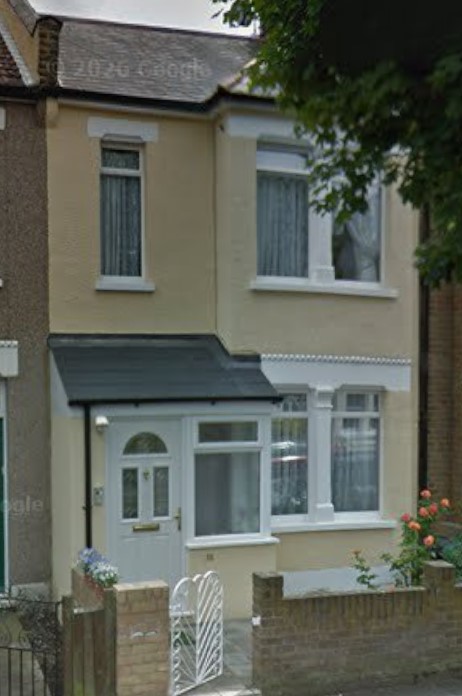
By March 1901, the family were living in a five-room house at 38 Clarence Road, Wimbledon, which remained their home until the 1930s. In July 1908, Maurice was listed as a junior King’s Messenger, which was a children’s branch of the Society for the Propagation of the Gospel.[2] He later became a corporal in the 10th Wimbledon Troop of Scouts, and in March 1911, he sang a solo at a meeting of the local branch of the Surrey Veteran Reservists.[3]
First World War
During the First World War, Maurice served as a private in the East Surrey Regiment and later in the Labour Corps.[4] His brother, William Ernest John Trendell, served as a driver in the Royal Field Artillery.[5]
Inter-war years
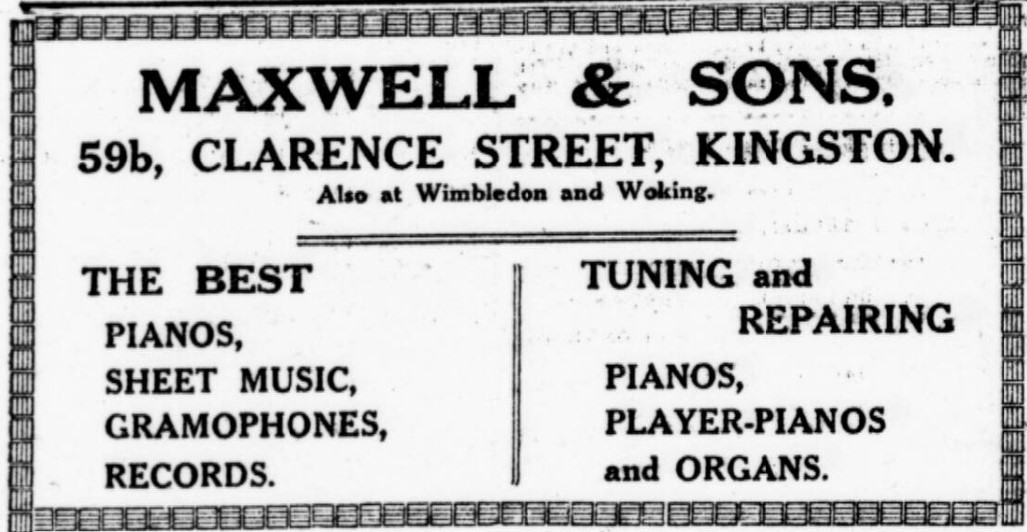
After the war, Maurice became a piano and gramophone salesman for Maxwell Sons, who had premises at 59B Clarence Street, Kingston. Around this time, he began courting Alice Wilmot Elizabeth Evans, who came from Dunstable in Bedfordshire. Her father, William Thomas Evans, was a cattle dealer from Houghton Regis, while her mother, Maria Ann Wilmot, was the daughter of a Lincolnshire farmer from Newton on Trent. After the birth of Alice’s sister, Dorothy Wilmot Evans, in 1902, her father appears to have deserted the family, leaving their mother to support them by taking in lodgers.
Maurice and Alice married at Holy Trinity Church, Wimbledon, on 22 July 1920.[6] By June 1921, they were living with another married couple at 45 Burritt Road, Kingston upon Thames. From about 1925 to 1938, they lived at Alscot, Sugden Road, Thames Ditton.[7]
Maurice’s mother died in February 1930 at the age of fifty-nine. His father died intestate on 9 December 1936 at the age of sixty-six, leaving an estate valued at £224 9s 2d, which was administered by Maurice.[8]
Second World War
In the late 1930s, Maurice embarked on a new career as a horticulturist at West Malling in Kent. The 1939 Register recorded Maurice and Alice lodging at Lane End with a railway clerk and his wife. Meanwhile, Maurice’s brother, William, had married Alice’s sister, Dororothy, in 1928. William left his job as a wireless salesman in Wimbledon, and the couple moved to Chilthorne Domer, Somerset, where they ran Clover Poultry Farm on Kings Hill from the late 1930s to 1943.[9]
Possibly influenced by this example, Maurice and Alice also moved to Somerset. They probably travelled in a black 1939 Morris 8 four-door saloon, which Maurice purchased in May 1940. Four months later, he advertised it for sale, setting a minimum price of £110.[10] The rapid disposal of a recently purchased car suggests a significant reassessment of their plans.
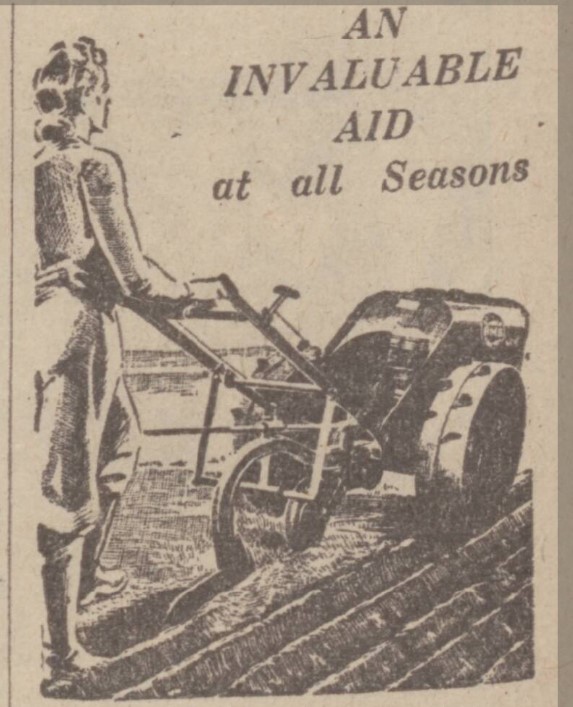
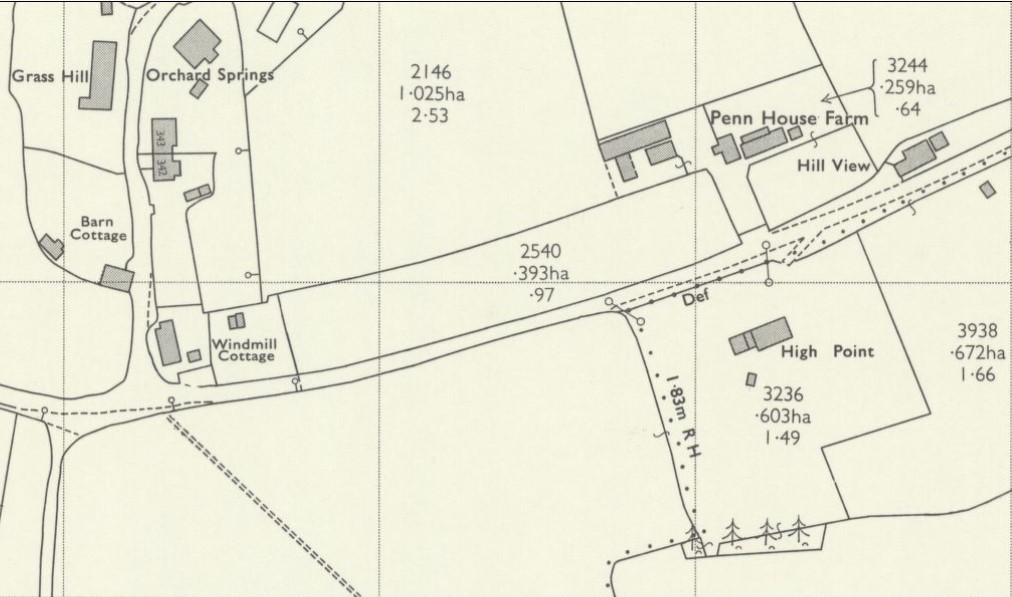
They lived at a property named High Point, which faced Penn Lane, Hardington, although it was just over the parish boundary in Pendomer. They briefly experimented with poultry farming but appear to have abandoned it in January 1942, when they sold pullets, fattening pens, and other equipment.[11] They then turn to horticulture, opening High Point Nursery. In May 1942, they advertised for a working pupil of either sex, describing themselves as “experienced horticulturalists” and offering training and board.[12] In August 1942, Maurice served as a judge at an amateur horticultural show at Compton Pauncefoot, and in November 1942, he won first prize of three guineas in a competition run by Shillan’s Engineering Company of Banbury for an essay on the benefits of using a BMB light tractor to increase food.[13]
Despite these activities, the nursery was short-lived. In June and July 1943, they advertised large cloches for sale at 36 shillings per dozen, suggesting that the enterprise had failed.[14] There is no evidence that either their poultry venture or the nursery was closed by official direction; more likely, both succumbed to the economic and practical pressures faced by small-scale producers during wartime.
Although Maurice and Alice had no children of their own, in July 1942, Maurice wrote a letter to the Western Gazette calling for a more coordinated approach to religious education in schools, along with the provision of additional scholarships.[15]
Alice may have played a key role in establishing the local branch of the Women’s Institute. In April 1941, as Secretary of the Hardington and Pendomer Women’s Institute, she wrote to the Western Gazette urging the government to allocate more sugar for jam making.[16]
By September 1943, Maurice and Alice had left High Point, which was then occupied by a successor named Greenwood.[17]
Devon
The couple moved to Devon, where Maurice was appointed Horticultural Organiser with the National Farmers’ Union. [18] In 1945, his title was changed to Horticultural Secretary, a position he held until late 1955.[19]
Maurice died on 9 October 1975 at the age of seventy-nine, leaving an estate valued at £1,623. His last address was Copp End, Vision Hill Road, Budleigh Salterton.[20] Alice died in the Plymouth area in November 2006 at the age of 106.
References
[1] St Mary, Lambeth, baptism register; 1939 Register.
[2] Wimbledon News, 11 July 1908, p.2.
[3] Wimbledon News, 4 March 1911, p.2.
[4] World War I Service Medal and Award Rolls, 1914-1920; British Army World War I Medal Rolls Index Cards, 1914-1920.
[5] World War I Service Medal and Award Rolls, 1914-1920.
[6] Marriage register of Holy Trinity, Wimbledon.
[7] Voters’ lists.
[8] National Probate Calendar.
[9] 1939 Register: Taunton Courier and Western Advertiser, 28 September 1940, p.1; Western Gazette, 23 April 1943, p.4; Western Gazette, 25 June 1943, p.4.
[10] Western Gazette, 20 September 1940, p.7.
[11] Western Gazette, 16 January 1942, p.5.
[12] Western Gazette, 29 May 1942, p.4.
[13] Western Gazette, 21 August 1942, p.5; Banbury Advertiser, 8 October 1942, p.7; Banbury Advertiser, 25 November 1942, p.3.
[14] Western Gazette, 11 June 1943, p.4; 2 July 1943, p.4.
[15] Western Gazette, 24 July 1942, p.6.
[16] Western Gazette 4 April 1941 p. 8.
[17] Western Gazette, 10 September 1943, p.5.
[18] Western Morning News, 15 November 1943, p.2; 29 January 1944, p.6.
[19] Western Times, 20 July 1945, p.4; Express and Echo, 18 January 1956, p.3.
[20] National Probate Calendar.