Introduction
John Philip Wills rose from a working-class background to become a schoolmaster and an Anglican clergyman, following a path made possible by the educational opportunities of the nineteenth century. He obtained a degree from the University of London as a mature student and, after a career in teaching, entered holy orders in his late thirties.
Childhood in Plymouth
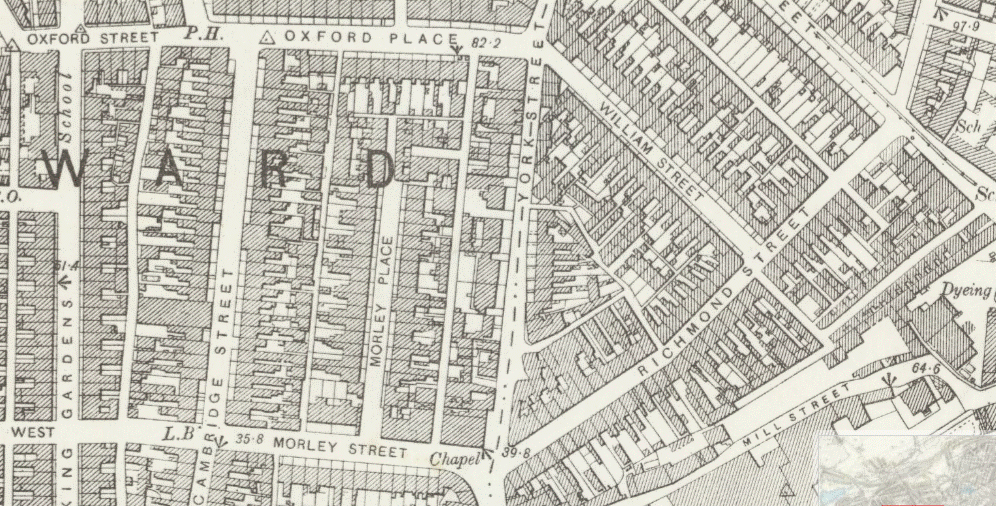
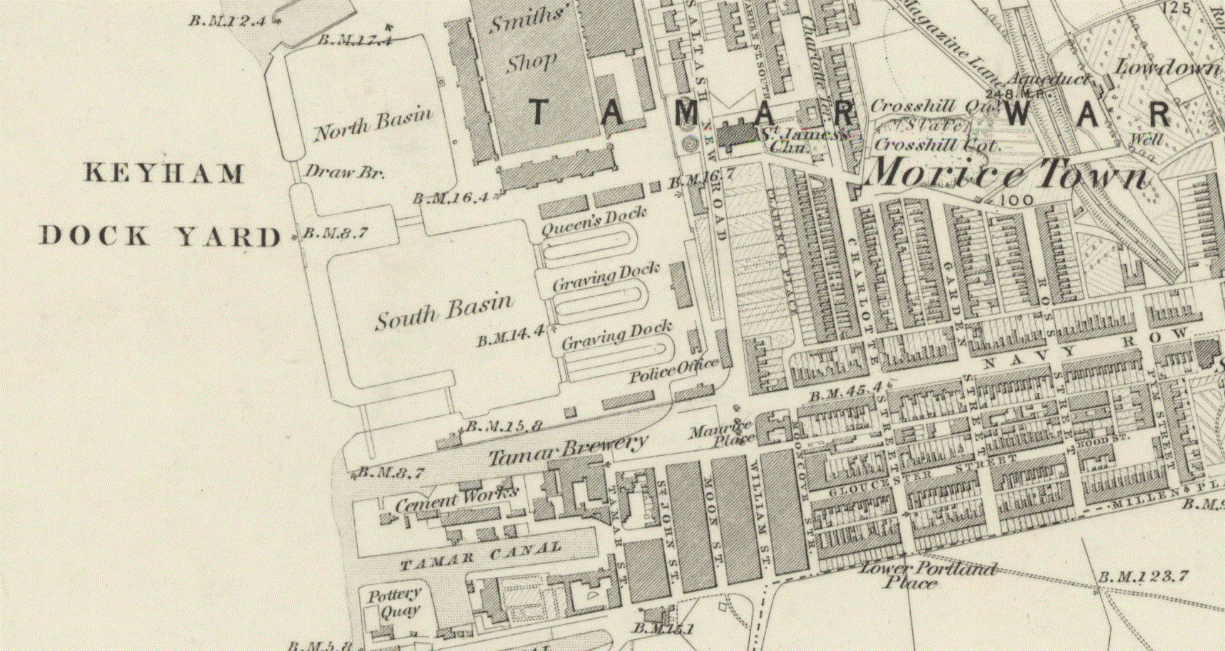
John was born at 17 York Street, near the centre of Plymouth, on 3 September 1837, the third child of James Blake Wills and his wife, Mary.[i] His father worked as a coachbuilder. By June 1860, when their next child was born, the family had moved to 27 William Street, Morice Town, Stoke Damerel, a working-class area close to the Torpoint steam ferry and the King William Victualling Yard.[ii] Two more children followed: Charles Thorne in 1844 and Lucy Margaret in 1846.[iii] When John was fourteen, Lucy died on 4 October 1851 from pneumonia at the age of four years and nine months.[iv] By then, his older brother, James, had started working as a tinplate worker’s apprentice, a trade he later pursued in London.
When John was eight years old, ecclesiastical changes occurred that would have a dramatic impact on his life. In 1846, the new parish of St James was created to serve Morice Town and the royal docks, with the first incumbent, the Rev William Bennett Killpack, licensed on 14 August 1846.[v]
Killpack may have served as a role model for John. He was a wheelwright’s son from Leicestershire who attended Corpus Christi, Cambridge, and became the second master of the classical and mathematical Proprietary School at Devonport in October 1844.[vi] The following year, he took holy orders. He was licensed to the assistant curacy of Devonport in March 1845, while retaining his teaching position at the school until taking his position at St James.[vii]
Killpack began conducting services in temporary buildings, including a former dissenters’ chapel, as he raised the funds for a church.[viii] He also established a day school for boys, which opened in September 1848, with Mr H. Joyner, from the National Training College at Battersea, as the first master.[ix] The foundation stone of the new church of St James the Greater was laid on 25 July 1849, and the church was consecrated on 11 June 1851.[x] Killpack did not live to see the church completed, as he passed away on 8 August 1850, aged just 39.[xi] A newspaper article referred to his “Christian gentleness, charity and forgiveness” and “his daily ministrations amongst the poor and sick.”[xii]
John, who was then eleven, may have enrolled in the new boys’ school when it opened. His brother Charles may have joined him a year or two later. Both boys made the most of the opportunity, becoming pupil teachers and later certified teachers. However, while Charles never advanced further, John was much more ambitious.
References
[i] Birth certificate of John Philip Wills.
[ii] HO107, piece 275, book 6, folio 17, p.9; St James the Great baptism register.
[iii] Civil Registration Birth Index.
[iv] Death certificate of Lucy Margaret Wills.
[v] Western Courier, West of England Conservative, Plymouth and Devonport Advertiser, 19 August 1846, p.2.
[vi] Leicester Journal, 11 October 1844, p.3.
[vii] Lincolnshire Chronicle, 7 March 1845, p.4; Western Courier, West of England Conservative, Plymouth and Devonport Advertiser, 16 July 1845, p.2; Royal Cornwall Gazette, 10 July 1846, p.1
[viii] Western Times, 3 April 1847, p.6; Exeter and Plymouth Gazette, 24 June 1848, p. 8; Western Courier, West of England Conservative, Plymouth and Devonport Advertiser, 2 August 1848, p.2.
[ix] Exeter and Plymouth Gazette, 23 September 1848, p.7.
[x] Exeter and Plymouth Gazette, 28 July 1849, p.8; Western Courier, West of England Conservative, Plymouth and Devonport Advertiser, 25 June 1851, p.8.
[xi] West of England Conservative, Plymouth and Devonport Advertiser, 14 August 1850, p.5.
[xii] West of England Conservative, Plymouth and Devonport Advertiser, 14 August 1850, p.5.
Witham
By April 1861, John was a certified schoolmaster in charge of a National School at Witham, Essex.[i] This was a responsible position as a trade directory of 1855 states that the National and infant schools at Witham accommodated 360 children.[ii] The town had a literary institution with over 800 volumes, which was probably an essential resource for the next chapter of his life: obtaining a university degree by private study. One can imagine him borrowing books from the institution in Newlands Street and carrying them down the hill to his lodgings in Bridge Street.[iii]
In January 1861, John sat the London University Matriculation Examination and passed it in the Second Division.[iv] He passed the Intermediate Arts examination in the second division in 1862 and completed his B.A. degree in 1864.[v]
References
[i] RG9, piece 1107, folio 5, p.3.Chelmsford Chronicle, 27 June 1913, p.2.
[ii] Post Office Directory of Essex, Herts, Kent, 1885, pp.168-170.
[iii] RG9, piece 1107, folio 5, p.3.
[iv] Morning Post, 1 February 1861, p.6.
[v] British Standard, 12 September 1862, p.7; University of London, General Register, 1901, p.676.
Exeter
After obtaining his degree, John became the mathematical master at the Exeter Diocesan Training College, where he served for four years.[i]
His time in Exeter was possibly the happiest of his life. In July 1865, he was asked to return to Plymouth to read the lesson at St James’s annual Sunday School festival.[ii] In October 1866, he recited the opening portion of Dickens’s Doctor Marigold’s Prescriptions, a short story published the previous Christmas, and told in the first person about a genial peddler who is left sad and alone after the deaths of his wife and daughter, and who subsequently adopts a deaf and dumb girl named Sophy.[iii] His delivery kept the audience in continual laughter, which may have prompted him to choose the nature of wit and humour as the subject of a lecture given to the Exeter Literary Institution on 6 March 1867.[iv] He also met his future wife, Jane Vickary.
Jane was the second child of John Vickary, who, during the 1850s and 1860s, was one of Exeter’s most prominent businessmen. Born in Exeter in 1818, the son of a block tin worker, John Vickary moved to Paris in his early twenties, where he learned to make gas meters. In about 1843, he returned to Exeter and opened a small shop in Fore Street.[v] By 1858, he was operating an iron foundry and engineering works on Exe Island, covering an acre and employing 170 workers.[vi] He was an expert on gas works and installed gas supplies in many towns, including Ottery St Mary.[vii] He was also active in local politics, sitting on the town council first as a Liberal and later as a Conservative.[viii]
Though John Vickary would probably have approved of his daughter marrying an Anglican clergyman, he died well before this event, collapsing at his home at South Lawn in March 1868 at the age of 49. His early death was brought on by heart disease and over-exertion in dealing with a fire at his business premises earlier in the day.[ix] As “Mr Wills of Exeter” was named as one of the chief mourners, it would suggest that John and Jane were courting by then.[x]
John Vickary died intestate, leaving an estate valued at “under £16,000” which was administered by his widow, Caroline.[xi] After initially advertising the business for sale, she announced that she had engaged a manager to run it with her and her son Charles.[xii]
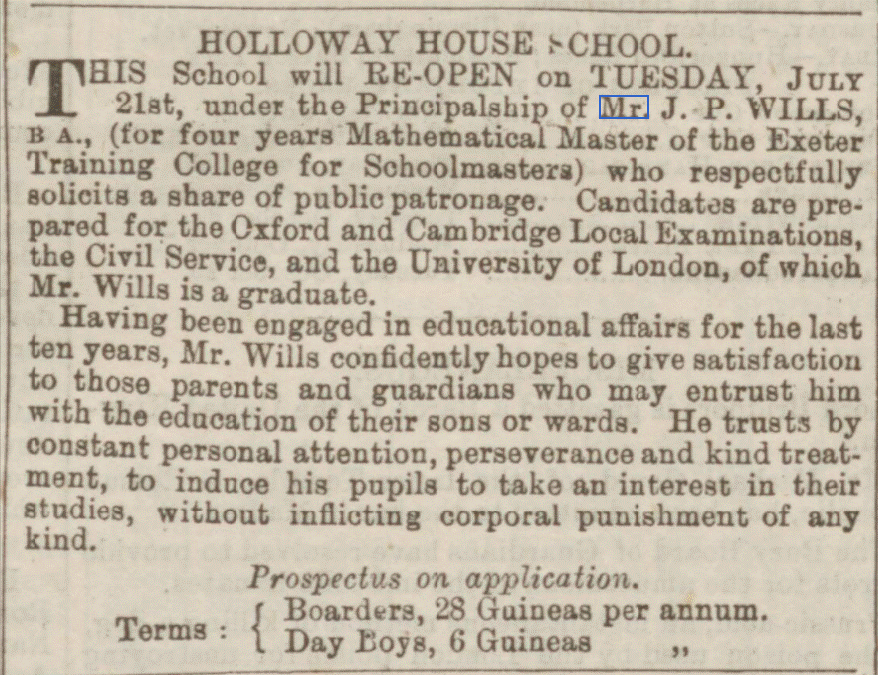
Possibly encouraged by the example of John Vickary and his family, in June 1868, John agreed to take over Holloway House School, Exeter, from its founder, John Wallis, who was in declining health.[xiii] The school, located between Holloway Road and Friar’s Walk, had been operating for seven years and offered both boarding and day schooling. It reopened under John’s ownership on 21 July 1868, offering to prepare candidates for the Oxford and Cambridge Local Examinations, the Civil Service, and the University of London. The fees were 28 guineas per annum for boarders and six guineas for day boys, and John pledged to gain his students’ attention without resorting to corporal punishment.[xiv] By the end of that year, the school had ten boarders and six vacancies, and had recruited a French master.[xv]
On 31 December 1868, John and Jane were married at Holy Trinity, Exeter.[xvi]
In January 1869, John advertised for an articled assistant to help run the school in return for board and lodging and assistance with private study.[xvii] By March, the school had a drawing master.[xviii] John ran the school until the end of the summer term on 20 July, but when the school reopened on 4 October, it was to be under a new headmaster.[xix] The burden of teaching and administration had probably become unbearable. Furthermore, the school was probably unprofitable as the promised reopening never happened.
References
[i] Western Times, 7 July 1868, p.4.
[ii] Western Morning News, 28 July 1865, p.3.
[iii] Exeter and Plymouth Gazette, 19 October 1866, p. 6.
[iv] Exeter and Plymouth Gazette, 18 January 1867, p.5.
[v] Western Times, 27 March 1868, p.8.
[vi] Exeter Flying Post, 2 September 1858, p.5.
[vii] Exeter Flying Post, 27 March 1868, p.5; Exeter and Plymouth Gazette, 20 October 1865, p.7.
[viii] Western Times, 7 January 1860, p.11; 27 September 1864, p.2; Exeter and Plymouth Gazette, 8 November 1867, p.6.
[ix] Exeter and Plymouth Gazette, 27 March 1868, p.5; Western Times, 27 March 1868, p.8; Tiverton Gazette (Mid-Devon Gazette), 31 March 1868, p.5; Western Times, 31 March 1868, p.6.
[x] Western Times, 3 April 1868, p.6.
[xi] National Probate Calendar.
[xii] Western Times, 17 April 1868, p.1; Western Times, 12 May 1868, p.4.
[xiii] Exeter and Plymouth Gazette, 26 June 1868, p.8.
[xiv] Express and Echo, 25 July 1868, p.1.
[xv] Exeter and Plymouth Gazette, 18 December 1868, p.8.
[xvi] Exeter and Plymouth Gazette, 1 January 1869, p.6.
[xvii] Western Times, 5 January 1869, p.1.
[xviii] Western Times, 30 March 1869, p.1.
[xix] Exeter and Plymouth Gazette Daily Telegrams, 20 July 1869, p.2; 2 October 1869, p.2.
Chipping Sodbury
John had found a new position as the Headmaster of Chipping Sodbury Grammar School. The school’s trustees advertised the post in March 1869, offering a salary of £100 per annum, half the capitation fees of day boys and a residence.[i] The school had been closed for several years, but was due to reopen on 4 October.[ii] In July, it was announced that John had secured the position, beating 54 other applicants.[iii]
His first child, John Percival, was born at Chipping Sodbury on 6 December 1869.[iv] Two more children followed: Amelia Florence (1870) and Daisy Mary (1876). On 9 December 1874, John Percival died of scarlet fever at the age of five.[v]
In May 1874, John was among 471 University of London graduates who petitioned the Home Secretary to change the law to allow universities to grant degrees to women.[vi] In August 1875, he was initiated into the Freemasons’ Tyndall Lodge at Chipping Sodbury.[vii]
In January 1876, the stream of advertisements for the school ceased, and in April 1876, John applied for the position at Odiham Endowed School in Hampshire, reaching the last ten but not securing the job.[viii] The following August, the trustees advertised for a new master to begin his duties from Christmas, selecting Henry Valentine, M. A., a former scholar of St John’s College, Cambridge.[ix] It is possible that the trustees wanted to appoint a man with more impressive academic credentials, and John was cold-shouldered.
References
[i] Gloucester Chronicle, 27 March 1869, p.8.
[ii] Kelly’s Directory of Gloucestershire, 1897, pp.105-108: Bristol Mercury, 28 August 1869, p.4.
[iii] Bristol Times and Mirror, 26 July 1869, p.2.
[iv] London Evening Standard, 11 December 1869, p.7.
[v] Death certificate of John Percival Wills.
[vi] Glasgow Herald, 28 May 1874, p.5.
[vii] United Grand Lodge of England Freemason Membership Registers, 1751-1921.
[viii] Hampshire Independent, 22 April 1876, p.7.
[ix] Gloucestershire Chronicle, 12 August 1876, p.8; Bristol Times and Mirror, 21 July 1877, p.5.
Ordination and Bridford
At the age of 39, John decided to take holy orders. His reasons for doing so are unclear, but several factors may have contributed, including his departure from Chipping Sodbury Grammar School, the death of his son and even memories of the Rev. John Killpack, who died at the age of 38.
Another reason may have been the Vickary family’s failing business. By mid-1876, John probably knew or suspected that he was unlikely to inherit money from his mother-in-law and was therefore reliant on his own resources. In July 1875, Caroline and Charles Vickary dissolved their partnership with George Robertson, and in June 1876, they offered the business for sale by private contract.[i] In June 1877, they held a public auction of the business premises and offered the stock at valuation.[ii]
On Christmas Eve 1876, the Bishop of Exeter ordained John as a deacon and licensed him to the curacy of Bridford, where he remained until 1879.[iii] One year later, on 23 December 1877, the same bishop ordained him as a priest at Exeter Cathedral.[iv] In September 1878, he preached at the Harvest Thanksgiving at Moretonhampstead and the following month, he officiated at the marriage of Jane’s sister, Caroline Amelia, at St. James’s Church, Exeter.[v]
After leaving Bridford, John and his family lived at 10 Salutary Place, Exeter, where his son, Frederick John, was born on 14 June 1879.[vi]
References
[i] Western Times, 6 August 1875, p.4; 7 January 1876, p.1.
[ii] Western Times, 6 August 1875, p.4; 7 January 1876, p.1; 1 June 1877, p.1.
[iii] Exeter Flying Post, 27 December 1876, p.5.
[iv] Exeter Flying Post, 26 December 1877, p.7.
[v] Exeter Flying Post, 25 September 1878, p.5; Exeter and Plymouth Gazette, 4 October 1878, p.5.
[vi] Western Times, 17 June 1879, p.5.
Bovey Tracey
A few months later, John returned to teaching, becoming the headmaster of Bovey Tracey Grammar School, which reopened in October 1879, as a second-grade school, under a new scheme devised by the Charity Commissioners. The school was organised to provide an education for day scholars and boarders who intended to pursue commercial, industrial or professional careers rather than attend university.[i]
While at the school, he took part in local events. He occasionally played cricket and, in 1882, attended the coming-of-age celebrations of Viscount Exmouth at Canonteign House.[ii] He also gave evidence at an enquiry into the use of traction engines on public roads, calling them “attraction engines” due to their ability to capture the attention of boys, and read selections from the Pickwick Papers and one of Mrs Caudle’s “Curtain Lectures” at a church entertainment at Bovey Tracey.[iii]
In July 1883, he sought to arrange a holiday for himself and his family by offering to exchange accommodation with someone on the south coast.[iv] In September 1883, during a leaving party for a local doctor, he responded to a toast to the “Bishop and clergy” by praising the bishop. He was not, he said, the bishop’s flatterer, but he always found him to be “a foremost preacher, a hard worker, and a very fair and impartial man.”[v]
John combined his duties at Bovey Tracey with serving as chaplain to Lawrence Hesketh Palk, 2nd Baron Haldon of Haldon House, Kenn.[vi] His responsibilities included conducting services in the house’s chapel for the family and their household, which included around twenty servants.[vii] He also officiated at the marriage of the baron’s youngest daughter at St Paul’s Church, Knightsbridge, on 26 April 1882.[viii] When the Baron died on 23 March 1883 at the age of 65, John officiated at the funeral, which was well attended by aristocrats, gentry, tenants and others.[ix]
References
[i] Western Times, 24 September 1879, p.1; 31 October 1879, p.6.
[ii] Exeter and Plymouth Gazette Daily Telegrams, 12 August 1882, p.3; 11 July 1882, p.3.
[iii] Exeter and Plymouth Gazette Daily Telegrams, 15 August 1882, p.3; Western Times, 29 November 1880, p.4.
[iv] Exeter and Plymouth Gazette Daily Telegrams, 28 July 1883, p.1.
[v] East & South Devon Advertiser, 29 September 1883, p.8. He claimed that the bishop was once his schoolmaster, but this cannot be verified.
[vi] Crockford’s Clerical Directory, 1885, p.1305.
[vii] Exeter and Plymouth Gazette Daily Telegrams, 1 November 1882, p.4; RG11, piece 2148, folio 22, p.8.
[viii] Western Times, 28 April 1882, p.8.
[ix] Exeter and Plymouth Gazette, 30 March 1883, p.5.
Richmond
The Baron did not leave John a legacy in his will, but his family may have made a farewell gift to John when he left Bovey Tracey in the last quarter of 1883.[i] By January 1884, he had moved to Brunstane Villa, 65 Church Road, Richmond, where he sought to make a living by offering private tuition at his home to fee-paying boys.[ii] This venture continued into 1885, as he attended a lecture on the history of the epigram at the Richmond Athenaeum on 12 January and participated in the discussion that followed.[iii]
References
[i] The will of Lawrence Baron Haldon, dated 19 January 1883, proved at the Principal Registry on 23 March 1883.
[ii] South London Press, 26 January 1884, p.7; 10 May 1884, p.13.
[iii] Surrey Comet, 17 January 1885, p.6. The Crockford’s Directory of 1885, also gives his address at 67 Church Road (p.1305).
Manchester
His next move was to Cheetham Hill, Manchester, where he was appointed headmaster at Holly Bank Schools. He was there by June 1885, when he advertised for “Sunday Duty” work, covering for other clergymen.[i] His responsibilities included overseeing boys’ and girls’ schools, where pupils were prepared for local university examinations and for the College of Preceptors, an organisation that trained teachers.[ii]
Short of money and desperate to earn more, he continued advertising for Sunday duty or a locum tenancy and took on extra teaching.[iii] In September 1885, he offered a two-hour Saturday-morning matriculation class lasting twelve weeks for three guineas and private tuition on any evening.[iv] In January 1886, he advertised for a £100 loan for a year at 5% interest, offering £200 in shares as security, or proposing to sell the shares for £150.[v] In June 1886, the Bishop of Manchester licensed him to preach in the diocese.[vi]
At the end of the summer term in 1887, he left the school and began teaching pupils at his home at 3 Crumpsall Lane, offering places for up to half a dozen boarders at 14 guineas per term to be taught with his eight-year-old son.[vii] He also offered coaching for “Preliminary Bar, Law, Medical.”[viii]
On 25 March 1889, Jane’s mother died at 28 Bignor Street, Cheetham Road, at the age of 65.[ix] She had moved north with several of her children, probably after selling her business premises in Fore Street and Milk Street, Exeter, on 1 July 1889.[x] She died intestate and without an estate worth the attention of the probate registry.
Towards the end of 1889, John applied for the chaplaincy of Exminster Asylum. In total, 70 candidates applied, and he was on the shortlist of five selected for a personal interview; however, he was ultimately unsuccessful.[xi]
References
[i] Manchester Courier, 5 June 1885, p.2.
[ii] Manchester Courier, 6 June 1885, p.1.
[iii] Manchester Courier, 29 July 1886, p.2, plus many similar advertisements.
[iv] Manchester Courier, 28 September 1885, p.2.
[v] Manchester Courier, 8 January 1886, p.2.
[vi] Crockford’s Clerical Directory, 1885, p.1305; Manchester Courier, 8 June 1886, p.8.
[vii] Manchester Courier, 17 August 1887, p.2.
[viii] Manchester Courier, 8 September 1887, p.2.
[ix] Express and Echo, 27 March 1889, p.3.
[x] Exeter and Plymouth Gazette, 1 July 1889, p.1.
[xi] Exeter Flying Post, 9 December 1889, p.3.
Headcorn
In May 1890, John was licensed to the stipendiary curacy of Headcorn in Kent, in a parish of about 1,500 people, where he lived at the Vicarage and stood in for the rector, the Rev. George Alfred Lewis M. A., who was taking a long vacation with his family at Ventnor on the Isle of Wight.[i] On 28 May, John chaired a meeting of the Headcorn Club in a large marquee behind the George Hotel; on 16 June, he took his church choir to a choral festival at Staplehurst; and on 23 September 1890, he attended the reopening of St. Andrew’s church, Paddock Wood.[ii] His duties continued until the spring of 1891, as he attended an archidiaconal visitation at Ashford on 24 April 1891.[iii]
References
[i] Middleton Guardian, 7 June 1890, p.3; Kelly’s Directory of Kent, Surrey & Sussex, 1891, p.342; RG12, piece 695, folio 73, pp.13-14; RG12, piece 895, folio 22, p.8.
[ii] Maidstone Journal and Kentish Advertiser, 3 June 1890, p.6; Bromley Journal and West Kent Herald, 18 July 1890, p.6; Sussex Express, 27 September 1890, p.9.
[iii] Maidstone Journal and Kentish Advertiser, 28 April 1891, p.7.
Maperton
John’s next appointment was to the curacy of Maperton, a parish with a population of about 200 near Wincanton.[i] The elderly rector, the Rev. George Eveleigh Saunders, a former Fellow of Wadham College, Oxford, held the living from 1857 to 1895, but moved to Sherborne soon after his daughter’s marriage in April 1893.[ii] John and his family lived in the eleven-room rectory and had the use of the rector’s furniture, which was not sold until 1895.[iii]
Even before moving in, John saw the potential to market the rectory as a school. He advertised to recruit six pupils to be educated alongside his twelve-year-old son, setting his fees at 40 guineas per term.[iv] As long as the rector was happy with the arrangement, the outlook was bright.
In fact, the family’s time at Maperton turned into a nightmare. In about December 1892, the older daughter, Amelia Florence, fell ill from pulmonary tuberculosis, and the infection spread to her sister, Daisy May. Daisy died on 26 September 1893, at the age of 17, and Amelia on 2 October 1893, at the age of 22.[v]
Despite the devastating impact of these deaths on the family, they remained at Maperton. In May 1894, John travelled to Bovey Tracey to attend a missionary association meeting, and in July 1894, he advertised for pupils once again.[vi] The family was compelled to leave early the following year after the rector resigned from the living.[vii]
References
[i] Kelly’s Directory of Somerset, 1889, p. 275.
[ii] Kelly’s Directory of Somerset, 1889, p. 275; Western Gazette, 12 April 1895, p.1; Bath Chronicle, 20 April 1893, p.6.
[iii] RG14, piece 14430; Western Gazette, 19 April 1895, p.1.
[iv] Manchester Courier, 19 August 1891, p.2; London Evening Standard, 25 September 1891, p.8.
[v] Death certificate of Amelia Florence Wills; death certificate of Dairy Mary Wills; Western Gazette, 6 October 1893, p.8; Wells Journal, 12 October 1893, p.5.
[vi] Exeter and Plymouth Gazette, 17 May 1894, p.3; Morning Post, 20 July 1894, p.1.
[vii] Western Gazette, 12 April 1895, p.1.
Bridport
They next moved to Bridport, where John had accepted a curacy, working for the Rev. Charles Octavius Watson, M. A. Appointed vicar of Bothenhampton in 1894, Watson’s duties expanded in April 1895, when he was also awarded the livings of Walditch and Christ Church.[i] John, Jane, and their son, Frederick, moved into Holmleigh, 67 Victoria Road, Bridport.[ii] John soon began seeking boys to tutor privately at his home, starting on 5 November 1895.[iii]
John participated in the town’s cultural life. He attended the annual meeting of the Literary and Scientific Institution on 31 October 1895; a meeting at the St Mary’s Freemason Lodge on 27 December 1895; a tradesmen’s dinner at the Bull hotel on 6 February 1896; and a cricket club dinner on 15 August 1896.[iv] He was also elected to the committee of the local branch of the British and Foreign Bible Society on 14 April 1896.[v]
This pleasant way of life was shattered when, in the summer of 1896, Jane began exhibiting symptoms of tuberculosis. John nursed her at home almost until the end. On 20 April 1897, he accompanied her to Weymouth, where he had secured a place for her at Wordsworth House, a rest home for mothers and other women.[vi] He returned home but received a telegram the next morning saying that her condition had worsened. After hastening back to Weymouth, he returned to Bridport later that day to say that Jane had died.[vii] Whether he was in time to be beside her is unclear. She was buried with her daughters at Maperton three days later, and the following day, funeral sermons were held at Christ Church with the interior draped in black.[viii] So ended John’s marriage of nearly 28 years.
His troubles were far from over. When Jane first became ill, he needed money to pay for her medical care. Already in debt and wishing to shield Jane from worry, he borrowed £100 from a moneylender who charged 40% interest.[ix] He met the first eight instalments but could not pay the ninth by the strict deadline. Although he pleaded with the money lender to delay collection, his pleas fell on deaf ears. His furniture was seized while he was at Jane’s funeral and sold for a third of its true value. To prevent further action by the moneylender, John declared bankruptcy. At his public examination held at Dorchester on 13 August 1897, it was reported that he had unsecured liabilities of £200 and no assets. He blamed his predicament on the smallness of his stipend, sickness and bereavement. The moneylender was Isaac Gordon, a Polish Jew based in Birmingham, whose unscrupulous activities were later investigated by Parliament.[x]
References
[i] Western Gazette, 8 June 1894, p.3; 19 April 1895, p.7.
[ii] Bridport News, 18 October 1895, p.1.
[iii] Bridport News, 18 October 1895, p.1.
[iv] Bridport News, 8 November 1895, p.6; 3 January 1896, p.5; 14 February 1896, p.6; 21 August 1896, p.6.
[v] Pulman’s Weekly News and Advertiser, 21 April 1896, p.7.
[vi] The home was named after Susan Esther Wordsworth, the wife of John Wordsworth, the Bishop of Salisbury (Lincolnshire Echo, 20 October 1894, p.4).
[vii] Bridport News, 23 April 1897, p. 5.
[viii] Bridport News, 30 April 1897, p.5.
[ix] The loan was repayable in twelve monthly instalments of £11 13s 4d. After eight months, John had repaid £93 6s 8d.
[x] Western Morning News, 17 August 1897, p.8; Great Britain. Parliament. House of Commons. Select Committee on Money Lending. Report from the Select Committee on money lending; together with the proceedings of the committee, minutes of evidence, appendix, and index (19th Century House of Commons Sessional Papers, No 364, 1897).
Furneaux Pelham
Although the newspaper coverage was sympathetic, one hoped John would not lose his job, but he did lose it.[i] By the time of the public examination, he was a curate at Furneaux Pelham, Hertfordshire, while his son remained in Dorset working as a bank clerk.
On 15 April 1898, he performed at a Cricket Club concert.[ii] He had gone to the parish to assist the elderly the Rev. Francis Randolph M. A., who had been vicar of Brent Pelham with Furneaux Pelham since 1876. Another curate, Henry Grindle, looked after Brent Pelham.[iii] John’s stay at Furneaux Pelham was short; Randolph died on 30 August 1898, at the age of 85, and a few weeks later, the Bishop of St Albans presented the living to Grindle.[iv]
References
[i] Bridport News, 20 August 1897, p.5.
[ii] Chelmsford Chronicle, 22 April 1898, p.7.
[iii] Herts & Cambs. Reporter & Royston Crow, 9 September 1898, p.8.
[iv] Herts & Cambs. Reporter & Royston Crow, 7 October 1898, p.8; 9 September 1898, p.8.
Hardington Mandeville
Oswaldkirk
In September 1899, John was licensed to the curacy of Oswaldkirk, Yorkshire, where he worked under the Rev. Canon Henry Temple, D.D. (1827-1906). Temple an influential churchman who had served as the headmaster of Worcester Grammar School and Coventry School, and the Vicar of St John’s the Evangelist, York, before fatigue from overwork compelled him to take the rectorship of Oswaldkirk in 1883.[i] In January 1899, the Archbishop of York collated Temple to the Chancellorship of York Minster, which probably prompted Temple to recruit an assistant.[ii]
Oswaldkirk was a small community on the edge of the Howardian Hills. The population in 1911 was 158, and the church of St Oswald had 123 sittings.[iii] The 1901 census listed John as a lodger at Birch Farm.[iv]
References
[i] Crockford’s Clerical Directory, 1898, p. 1568; Morning Post, 2 July 1906, p.9.
[ii] York Herald, 10 January 1899, p.3. Temple continued to live at Oswaldkirk Rectory until his death.
[iii] Kelly’s Directory of N & E Ridings of Yorkshire, 1913, pp. 288-89.
[iv] RG12, piece 4551, folio 34, p.6.
Askham
With Temple’s help, John finally secured a living in July 1905 when he was appointed as the vicar of Askham, Nottinghamshire, by the Dean and Chapter of York. This position, which had a gross income of £180 and a net income of £155, had become vacant due to the death of the previous vicar, Robert Sweeting, who had served there for 38 years.[i] At that time, the parish had a population of around 240.[ii]
John’s time at Askham before the First World War was largely quiet and uneventful. Like Sweeting before him, he lived in the ten-room vicarage with one housekeeper.[iii] One of his first tasks was to oversee the church’s restoration, funded by a large bequest from Sweeting, and on 7 November 1907, he attended a reopening service at the church.[iv] On 3 January 1911, he officiated at the marriage of his niece, Ada Elizabeth Wills, the daughter of his brother Charles, at Askham.[v]
Significant changes occurred in 1913. In April of that year, his housekeeper, Gertrude Hesp, married a local farmer, prompting John to recruit Emma Lavinia Woodhead as a replacement.[vi] John and Emma married at Askham on 9 October 1916; he was 79, and Emma was 40.[vii]
Emma came from a working-class background. Her father was a joiner, and she herself had worked as a hosiery machinist in her twenties and thirties.[viii] Her family may have been nonconformists, as her older sister, Alice, married Arthur Wakelin, a Congregational minister, in 1907.[ix] In her youth, Emma was an accomplished pianist who performed in public concerts in Nottingham.[x]
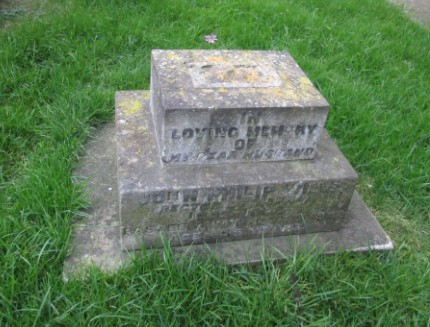
John and Emma were married for six years. He died at Askham on 22 November 1922, at the age of 85.[xi] After his death, Emma was probably left relatively poor. By 1932, she was living in the cathedral precincts in Ely.[xii] When her sister Alice became seriously ill the following year, Emma travelled to Newark to care for her.[xiii] After Alice died, her husband, Arthur Wakelin, became the Congregational minister at Broadway in 1936, and Emma became his housekeeper, living with him at the manse.[xiv] When he retired in 1947, she moved to a flat at Top Farm, where she died on 19 December 1960 at the age of 83.[xv]
References
[i] Nottinghamshire Weekly Express, 23 June 1905, p.2; 14 July 1905, p.9.
[ii] Crockford’s Clerical Directory, 1908, p. 1568.
[iii] RG14, piece 20218;
[iv] Newark Herald, 9 November 1907, p.3
[v] Driffield Times, 14 January 1911, p.2.
[vi] RG14, piece 20218; Askham marriage register.
[vii] Askham marriage register.
[viii] RG13, piece 3174, folio 153, p.26; RG14 piece 2028.
[ix] Newark Herald, 11 February 1933, p.8.
[x] Evesham Standard & West Midland Observer, 30 December 1960, p.4.
[xi] https://southwellchurches.nottingham.ac.uk/askham/hhistory.php (accessed 9 January 2026); Civil Registration Death Index.
[xii] Parish of Ely College voters’ list, 1932.
[xiii] Newark Herald, 11 February 1933, p.8.
[xiv] Gloucestershire Echo, 7 May 1947, p.3.
[xv] Evesham Standard & West Midland Observer, 30 December 1960, p.4.
Conclusion
John Wills’ life illustrates one path by which a working-class boy could benefit from the educational reforms of the nineteenth century and enter the Anglican ministry. Parish schooling, pupil-teachership, and the University of London’s external degree programme provided him opportunities that would have been scarce a generation earlier. Yet education did not guarantee security. Despite his degree, his marriage into the Vickary family, and his chaplaincy to Lord Haldon, his career remained unsettled, frequently shifting between teaching, private tuition, and assistant clerical posts. His life reflects both the possibilities and limitations of Victorian self-improvement. He was ambitious, industrious, and resilient, but never quite established. The family tragedies of the 1890s, followed by bankruptcy, could have broken him. Instead, he continued in his calling and, late in life, finally obtained the benefice that had eluded him for so long.