Introduction
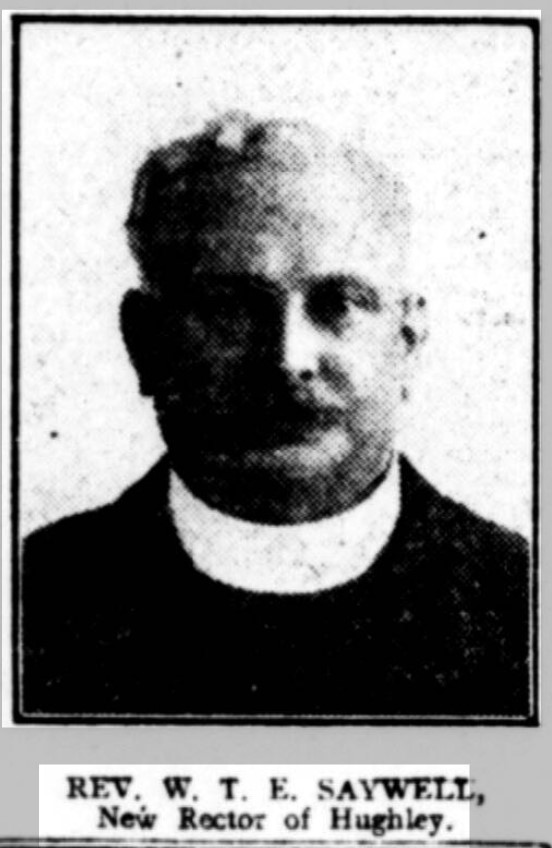
This article explores the life of Anglican clergyman William Thomas Edward Saywell, detailing his humble beginnings as the son of two schoolteachers, his time as a lay reader in Grantham, his five years spent in British Guiana, and his later clerical career, including his time at Bredon’s Norton near Tewkesbury, where he worked closely with his brother, George. Additionally, it examines the contributions of William’s uncles, Lemuel and Samuel, to the founding and development of Bromsgrove College.
Childhood
William was born at Burscough Bridge, Lancashire, on 24 December 1857, the second of five children born to Joseph and Maria Kirby.[i] Joseph and Maria met while working as schoolteachers in Burnham, Buckinghamshire, and in 1854, they moved to Burscough Bridge to run St John’s School.[ii]
Burscough Bridge developed around a crossing over the Leeds and Liverpool Canal and later the railway line, which opened in 1849, becoming a local transport and market centre. St John’s church was opened in 1832, followed by St John’s National School in 1836.[iii]
Although Joseph remained a National schoolteacher, his two brothers, Lemuel and Samuel, were more talented and ambitious. Lemuel founded the Middle School at Bromsgrove in 1857, and after taking holy orders in 1861, entrusted the running of the school to Samuel in 1862.[iv] Samuel developed the school, which became known first as Collegiate College and later as Bromsgrove College. These two uncles served as role models for William and his three brothers, Joseph, George, and Walter, with the first three becoming clergymen while Walter became a music teacher at Bromsgrove College.[v]
In 1871, when William was thirteen, his life at Burscough Bridge came to an end. In March of that year, Joseph resigned from his position, believing that the new Education Act prevented him from dedicating an hour each day to religious instruction. He is reported as saying that, from youth, his resolution had been to make his duty to God the primary object of his life, and under the new Act, he felt he could not fulfil that duty.[vi] His interpretation of the law was misguided, but his words reflect the family’s religious ethos and Joseph’s strict, uncompromising nature.
Joseph then joined Samuel as a schoolmaster at the Collegiate College, Bromsgrove, while Maria and the children lived at 66 Virginia Street, Southport.[vii] This arrangement may have been temporary until Joseph could find accommodation for his family in Bromsgrove. By 1874, the family had moved to Duckmanton near Chesterfield, where Joseph and Maria ran the village school together until their retirement around 1889, when they moved to Stock and Bradley in Worcestershire and later Bromsgrove.[viii]
In September 1874, their eldest son, Joseph, was licensed as a lay deacon in Bolsover and the following year, he began his training at St Bees Theological College.[ix]
References
[i] Birth certificate of William Thomas Edward Saywell.
[ii] HO107, Burnham, ED4d, piece 1718, folio 675, p.1. Samuel Saywell also worked there as a teacher. Southport Independent and Ormskirk Chronicle, 25 February 1871, p.2.
[iii] History and Directory of Mid Lancashire, 1854, p.548.
[iv] Worcester Journal, 11 July 1868, p.5; Bromsgrove & Droitwich Messenger, 15 June 1861, p.1; Bromsgrove & Droitwich Messenger, 5 July 1862, p.1.
[v] Kelly’s Directory of Worcestershire, 1912, p.49.
[vi] Ormskirk Advertiser, 2 March 1871, p.3.
[vii] RG10, Bromsgrove, ED3, piece 3071, folio 68, p.20; RG10, North Meols, ED18, piece 3875, folio 57, p.7.
[viii] Derbyshire Times, 26 September 1874, p.5; Nottinghamshire Guardian, 11 May 1889, p.3; RG12, Stock and Bradley, ED6, piece 2343, folio 96, p.8; RG13, Bromsgrove, ED2, piece 2798, folio 41, p.28.
[ix] Derbyshire Times, 26 September 1874, p.5; Crockford’s Clerical Directory, 1908, p.1266.

Early career
In his early twenties, William began preparing for the ministry. From September 1880 to September 1881, he served as a licensed lay reader in Grantham, living at the vicarage and overseeing the Welby Street Mission.[i] According to the Grantham Journal, he was a licensed lay reader in the diocese of Lichfield before he came to Grantham.[ii]
William then left Grantham to train at St Bee’s College.[iii] On 15 March 1885, he was ordained as a deacon and licensed to the curacy of George Town Cathedral, British Guiana.[iv] He was ordained as a priest in 1887 and subsequently served as the perpetual curate of St Stephen’s in Mahaica, a village 22 miles along the coast, from 1887 to 1890.[v]
Upon returning to England, he held a succession of short curacies over the following twelve years, a common experience for clergy of limited means. He briefly served as the curate of Feckenham from August 1890 to January 1891, assisting the newly appointed vicar, and then spent a short time in Dudley.[vi] Neither of these appointments is listed in Crockford’s.
In May 1891, he was licensed to the curacy of Alveston, where he served under the Rev William Barnard of Trinity College, Cambridge, until 1896.[vii] He was active in temperance work and took an interest in the school, attending the prize giving and serving as the honorary secretary of the technical education classes.[viii] He also participated in the social and political life of Stratford-upon-Avon, attending a Hospital Ball in January 1892 and a meeting of the local Conservative Association in May 1896.[ix] After five years, his health began to suffer, prompting him to seek a new appointment.[x] When he left the parish in November 1896, Mrs Barnard presented him with a tea set and caddy.[xi]
In October 1896, William was appointed to the curacy of Studley, where he assisted the vicar, the Rev. James Smith Turner of Trinity Hall, Cambridge.[xii] One of his early duties was serving on the Diamond Jubilee committee tasked with raising funds to build a vicarage.[xiii] One of his last duties was to preside over a lantern slide lecture on “The home mission of the church” at the school on 3 December 1897.[xiv]
From 1897 to 1900, he served as the curate of Wimblington in the Isle of Ely, covering for the elderly rector, the Rev. John Hill, who lived on the Dorset coast.[xv] No newspaper accounts of his time there have been found.
He was the curate at Cotteridge, a district of Kings Norton, from 1900 to 1902.[xvi] The 1901 census recorded him living with the family of a lithographic artist at 60 Station Road.[xvii] When he left the parish in September 1902, he was presented with a clock and a purse of gold.[xviii]
References
[i] Grantham Journal, 11 September 1880, p.4; Grantham Journal, 5 March 1881, p.4; Grantham Journal, 8 October 1881, p.4; RG11, Grantham, ED7, piece 3231, folio 153, p.37.
[ii] Grantham Journal, 11 September 1880, p.4.
[iii] Crockford’s Clerical Directory, 1908, p. 1266.
[iv] Glossop Times, 25 April 1885, p.5
[v] Crockford’s Clerical Directory, 1908, p. 1266.
[vi] Bromsgrove & Droitwich Messenger, 16 August 1890, p.4; 17 January 1891, p.5; Worcestershire Chronicle, 4 April 1891, p.5. He was at Dudley when he attended the Bishop of Worcester’s enthronement on 2 April 1891
[vii] Worcester Journal, 9 May 1891, p.4; Stratford-upon-Avon Herald, 20 November 1896, p.5.
[viii] Stratford-upon-Avon Herald, 2 October 1896, p.5; 31 March 1893, p.3; 22 November 1895, p.4.
[ix] Stratford-upon-Avon Herald, 15 January 1892, p.8; 8 May 1896, p.2.
[x] Stratford-upon-Avon Herald, 2 October 1896, p.5.
[xi] Stratford-upon-Avon Herald, 20 November 1896, p.5.
[xii] Stratford-upon-Avon Herald, 2 October 1896, p.5.
[xiii] Alcester Chronicle, 3 April 1897, p.4.
[xiv] Alcester Chronicle, 11 December 1897, p.5.
[xv] Crockford’s Clerical Directory, 1908, p.1266; RG12, piece 1978, folio 143, p.44. William took over from the Rev. Harry Whittaker, who had gone to Aberdeen University to obtain a medical degree (Stamford Mercury, 12 November 1897, p.4).
[xvi] Crockford’s Clerical Directory, 1908, p.1266.
[xvii] RG14, piece 2804, folio 74, p.24.
[xviii] Gloucester Echo, 30 September 1902, p.2.
Bredon’s Norton
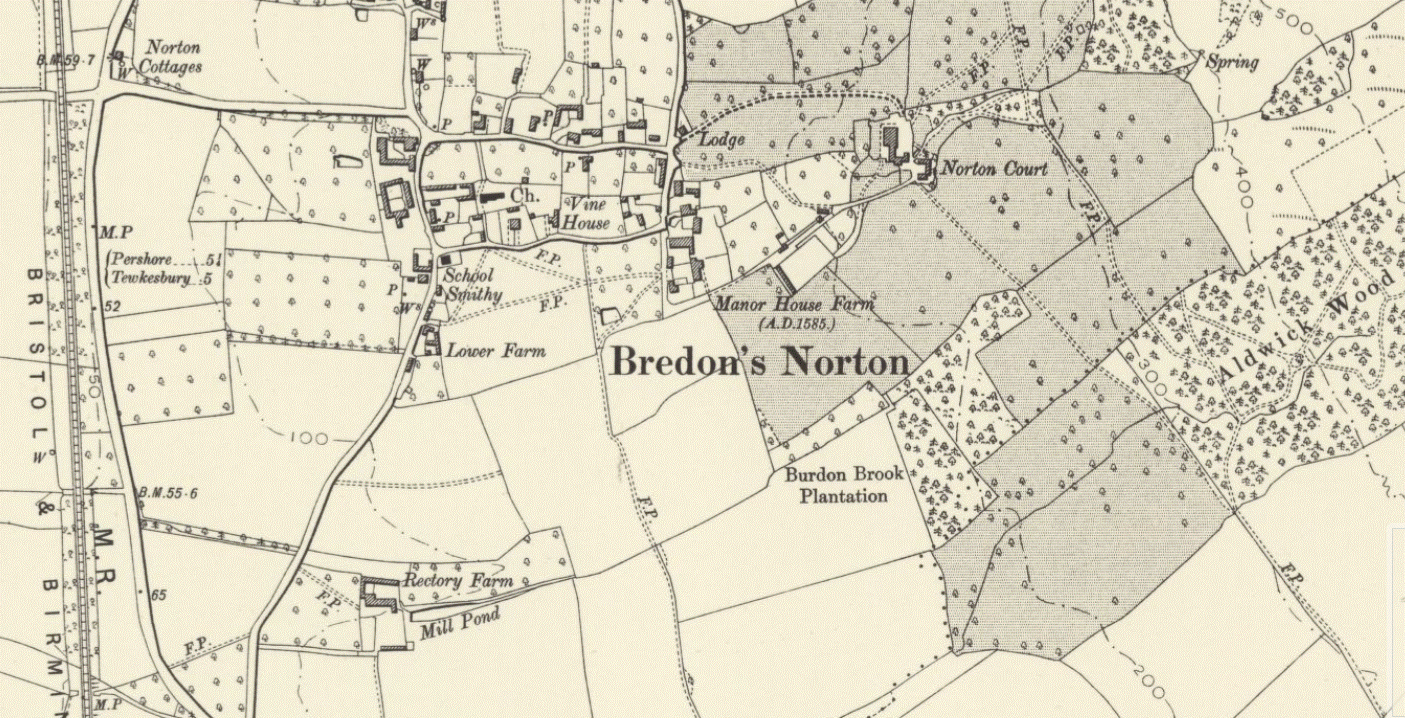
In October 1902, the Rev Henry George Cavendish Browne, the Rector of Bredon, appointed William to look after the chapelry of Bredon’s Norton.[i] Browne had been presented to the rectory in 1881 by his wife’s nephew, the Duke of Portland.[ii] The parish’s gross income of £1,600 enabled him to recruit a team of two or three curates.[iii] In 1903, William’s brother, George, became a curate at Bredon, and in 1906, Ernest Rundell of Hertford College, Oxford, joined him.[iv] The 1911 census recorded William and George both living in a boarding house in Bredon.[v]
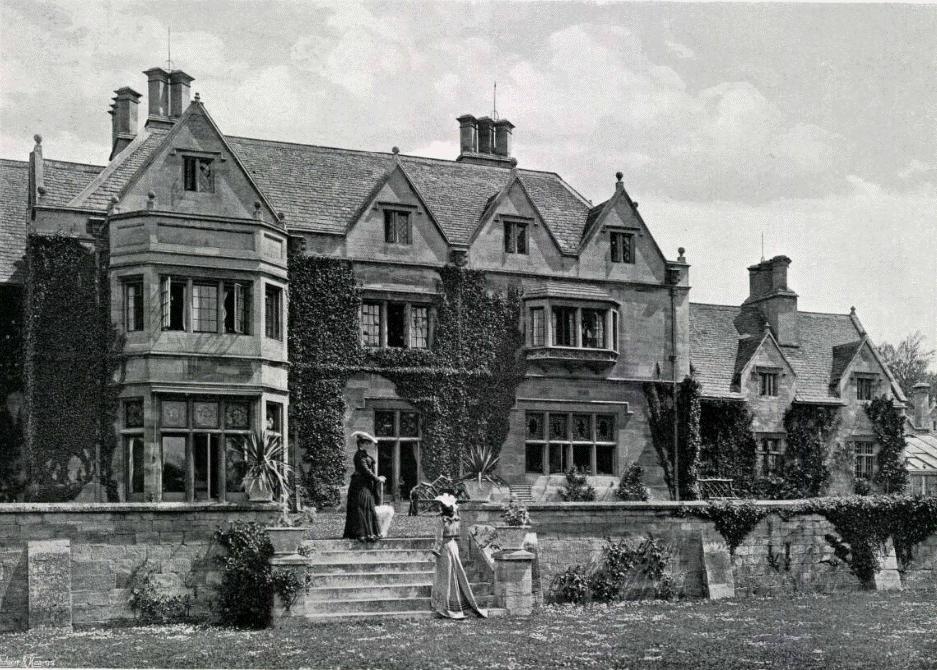
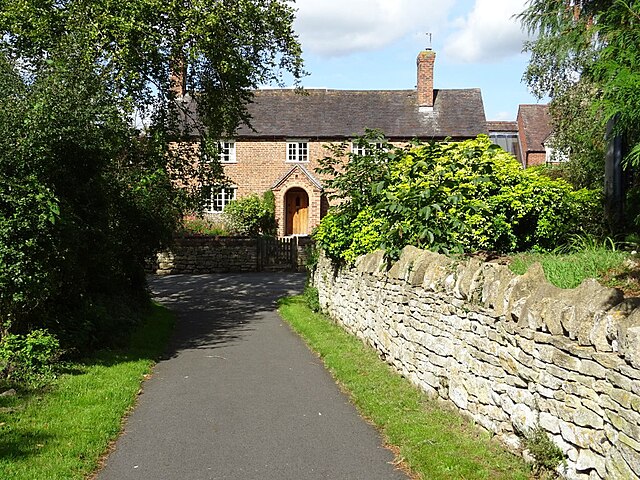
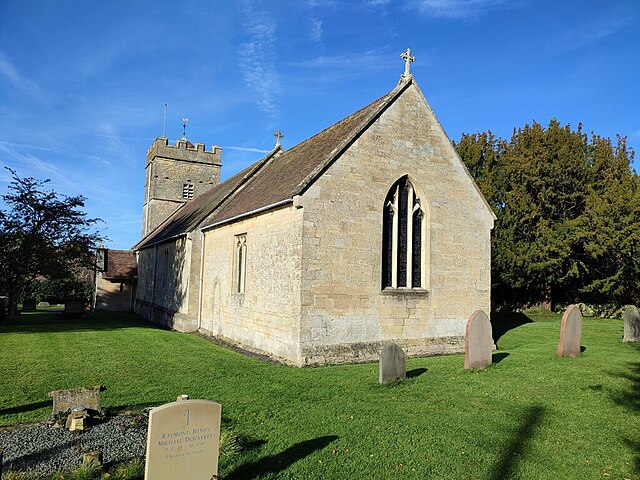
In 1901, Bredon’s Norton was a hamlet with a population of 187.[vi] It was served by a chapel of ease, which was restored in 1883 and had 150 sittings. It also had a National School, built in 1876 and enlarged in 1887. Mrs Biddulph Martin, who lived at Norton Court, was the lord of the manor.[vii] In addition to services at Bredon’s Norton church, William also conducted services in a Church Room at Westmancote.[viii]
William undertook a variety of parish duties. He arranged annual outings for church workers, chaired the Easter vestry meeting, served as the Chaplain’s churchwarden, and helped to decorate the church at Christmas time.[ix] He served as a school manager and led the children in celebrations for Empire Day.[x] He also served on the village agricultural show committee.[xi]
However, William’s time there was not all work. On 5 January 1904, he and his brother attended the Tewkesbury County Ball.[xii] He also went on the annual church workers’ trips to places that included Bournemouth, Llandudno, Sharpness, Torquay, Weston-super-Mare, and Weymouth.[xiii]
William enjoyed music and embraced the new technology of recorded sound. On 17 October 1904, he and George borrowed a giant gramophone from Mrs Martin of Norton Court to play sacred music during Bredon’s Norton’s harvest evensong.[xiv] Two years later, he played gramophone records to the Westmancote Church Mothers.[xv]
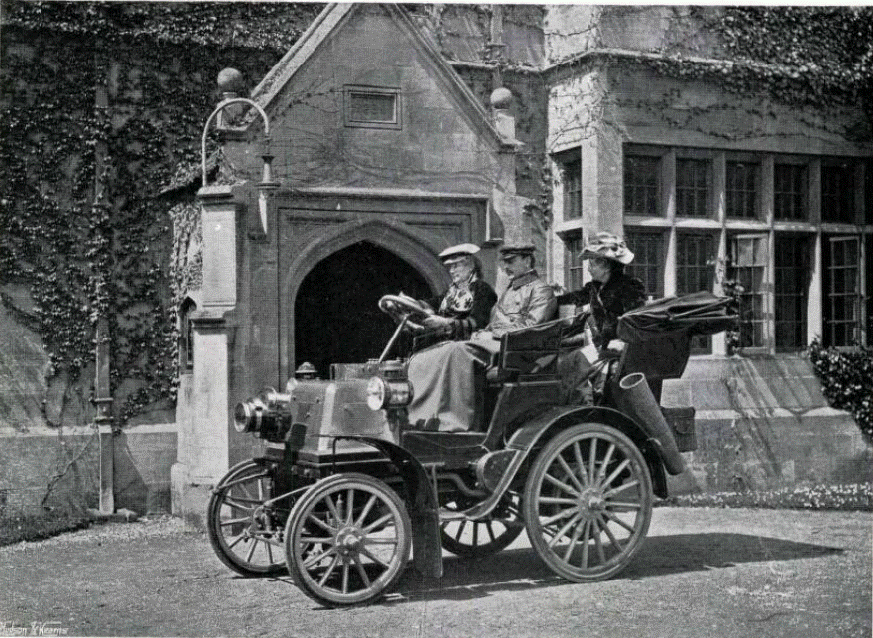
Mrs Martin was a wealthy American who moved to the village after the death of her third husband in 1897. An early feminist, she campaigned for women’s suffrage in America as early as 1870 and two years later, she was the first woman nominated for the presidency of the United States.[xvi] Outspoken and progressive, she delighted in introducing change into the quiet village that had become her new home. Among her innovations were a telephone exchange, a Guild of Lady Gardeners, and an Automobile Clubhouse and garage to accommodate up to fifty motorists.[xvii]
She and her daughter, Zula, were generous benefactors to the church and school. In 1907, they took on the running of the village school after the local Education Committee rejected their proposal to run it on the based on the principles of the German educator Friedrich Fröbel, the inventor of the kindergarten.[xviii] That same year, Zula donated an organ dating from 1760 to the church. At the dedication service on 22 May 1907, William read the prayers, George read the lessons and their brother, Walter, who was the organist and choirmaster at All Saints’, Bromsgrove, performed an organ recital.[xix]
Towards the end of 1903, a local newspaper published letters critical of some of Bredon Norton’s leading inhabitants, including William and Mrs Martin. Although this has not yet been found, in April 1904, an anonymous writer—likely Mrs Martin or someone close to her—wrote to the Tewkesbury Register to defend them. The writer maintained that “the chaplain is the right man in the right place,” asserting that he had done his duty in matters both spiritual and temporal. He was a man with “go,” who had improved attendance, communicants, and collections, and adopted cleanliness as his watchword.[xx]
In August 1911, this halcyon period came to an end when Browne died and was replaced by Rev. Canon Hugh Holbech. William, George and Ernest Rundell attended Holbech’s induction on 10 December 1911, but left the parish shortly after: William and George in January and Ernest Rundell in April.[xxi] George was presented with a gold curb watch chain with a cross pendant, engraved “G.J.S. Jan.1912,” and a purse of money. In his acceptance speech, he said that the years he had spent at Bredon were among the happiest of his life.[xxii] William was presented with a gold watch chain, a gold cross, a leather travelling bag, a purse of late subscriptions and an address.[xxiii]
A local newspaper praised his “good and faithful service,” “devotion to duty”, and remarkable attendance record in not missing a Sunday service in his entire nine years. He had taken an interest in the work, sports, and amusements of his parishioners, helped the poor and those in trouble, and taken care of the church and its surroundings, including the churchyard.[xxiv] Another newspaper acknowledged his dedication but caustically remarked that, by not taking a holiday or preaching elsewhere, William had harmed his parishioners and himself, cutting them off from new ideas and making both “wooden-headed.” The piece ended by quoting two of William’s favourite precepts: “Get right with God” and then “Keep right with Him in your daily life,” words that suggest a simple, homely theology.[xxv]
References
[i] Bromsgrove & Droitwich Messenger, 6 September 1902, p.5.
[ii] Cheltenham Chronicle, 17 May 1881, p.2.
[iii] Crockford’s Clerical Directory, 1908, p. 249.
[iv] Tewkesbury Register, 17 October 1903, p.4-name printed as “R. J. Saywell;” 20 October 1906, p.4.
[v] RG14, piece 15600.
[vi] Kelly’s Directory of Worcester, 1912, p.40.
[vii] Kelly’s Directory of Worcester, 1900, p.34.
[viii] Tewkesbury Register, 8 October 1906, p.5.
[ix] Tewkesbury Register, 3 September 1904, p.5; Evesham Standard & West Midland Observer, 21 April 1906, p.3; Tewkesbury Register, 6 April 1907, p.4; Tewkesbury Register, 22 October 1904, p.5;
[x] Worcestershire Chronicle, 11 April 1903, p.8; Gloucester Journal, 30 May 1906, p.4.
[xi] Gloucestershire Echo, 8 September 1906, p.4.
[xii] Gloucester Citizen, 6 January 1904, p.3.
[xiii] Tewkesbury Register, 3 September 1904, p.5; 5 August 1905, p.1; 17 August 1907, p.5; Gloucestershire Echo, 12 August 1908, p.3; 8 August 1910, p.2.
[xiv] Cheltenham Chronicle, 22 October 1904, p.7.
[xv] Tewkesbury Register, 20 October 1906, p.4.
[xvi] Daily News (London), 11 June 1927, p.3.
[xvii] Cheltenham Examiner, 19 February 1908, p.2.
[xviii] Cheltenham Examiner, 19 February 1908, p.2.
[xix] Gloucestershire Echo, 23 May 1907, p.1; Gloucester Citizen, 23 May 1907, p.5.
[xx] Tewkesbury Register, 23 April 1904, p.4. The author was probably Mrs Martin or someone close to her.
[xxi] Tewkesbury Register, 16 December 1911, p.4.
[xxii] Tewkesbury Register, 27 January 1912, p.5.
[xxiii] Cheltenham Chronicle, 20 January 1912, p.3.
[xxiv] Worcester Journal, 20 January 1912, p.5.
[xxv] Cheltenham Chronicle, 20 January 1912, p.3.
Hardington Mandeville
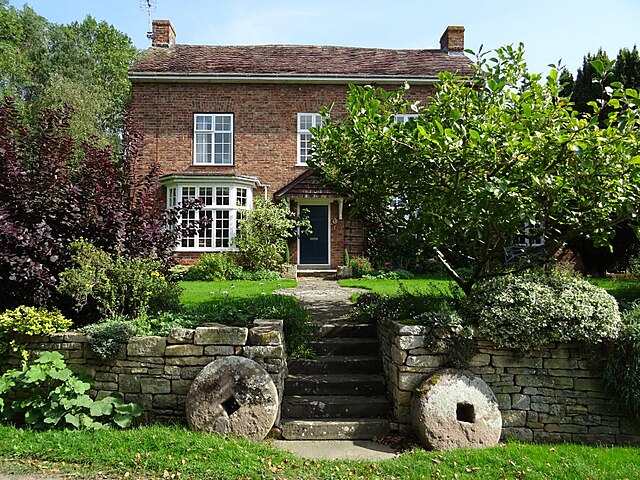
By the time he left Bredon, William had secured a new position at Hardington Mandeville.[i] He helped decorate the church for Easter 1912 and assisted the rector, the Rev. H. H. T. Cleife, in taking the Easter services.[ii] Two weeks later, he and Cleife held a memorial service for those who lost their lives on the Titanic.[iii] In June 1912, it was officially announced that William had been licensed to the curacy, but by then, he had already left or was about to leave.[iv] He was fifty-four years old and had no clear prospects for advancement.
References
[i] Cheltenham Chronicle, 20 January 1912, p.3.
[ii] Western Chronicle, 12 April 1912, p.6,
[iii] Western Chronicle, 26 April 1912, p.7.
[iv] Wells Journal 6 June 1912 p. 4
Family deaths
The period 1911 to 1914 saw the loss of several close family members. In April 1911, his older brother, Joseph, died after serving for ten years as vicar of Stanningley, West Yorkshire.[i] On 12 June 1913, his father passed away, and William and his two surviving brothers attended his funeral at Bromsgrove.[ii] On 11 February 1914, William helped officiate at the marriage of his sister Ada to Josiah Watton, a wealthy bachelor of Bromsgrove.[iii] They both died of pneumonia the following January.[iv] Ada, who died intestate after her husband, left an estate valued at £324 19s, which William administered and probably shared in with his two surviving brothers.[v]
On 28 December 1914, William and his brothers attended the funeral of their uncle, Samuel Saywell, at Bromsgrove.[vi] His time as the headmaster of Bromsgrove College had proved lucrative, and he left an estate valued at £10,840 9s. 7d. Under the terms of his will, he made provision for his wife and several specific legatees, and granted his brother Joseph an annuity of £30, but the residue of his estate was divided, in unequal shares, among fourteen nephews and nieces. [vii] William, who was also one of the executors, probably received an inheritance in the region of £500 to £600, though the precise amount depends on uncertain factors such as the value of specific property and the provision made for the annuity.
References
[i] Laisterdyke & Bowling News, 28 April 1911, p.3.
[ii] Bromsgrove & Droitwich Messenger, 21 June 1913, p.5.
[iii] Bromsgrove & Droitwich Messenger, 14 February 1914, p.8.
[iv] Bromsgrove & Droitwich Messenger, 30 January 1915, p.6.
[v] National Probate Calendar.
[vi] Bromsgrove & Droitwich Messenger, 2 January 1915, p.3
[vii] The will of Samuel Saywell, dated 22 December 1910, and codicil, dated 15 October 1914 proved at Worcester on 23 March 1915. The will makes no mention of his niece, Lucy Elizabeth Saywell, who was in a lunatic asylum at Powick.
Later career
After leaving Hardington, William spent fourteen years in and around Birmingham. He held a curacy at St Cyprian, Hay Mills, for five years, Kingsbury for two, and St. Edward’s, Birmingham, for three. In July 1919, he attended a ruri-decanal conference at Kingsbury as a representative from Hurley.[i] These later appointments suggest a continuation of subordinate posts rather than any real advancement, despite his long experience.
The 1921 census recorded him as a curate at St Edward’s Church, boarding with a widow at 104 Heathfield Road.[ii] He was then the chaplain of Yardley Cemetery for three years.[iii] When he made his will on 12 February 1925, he lived at Howard Road, South Yardley.[iv]
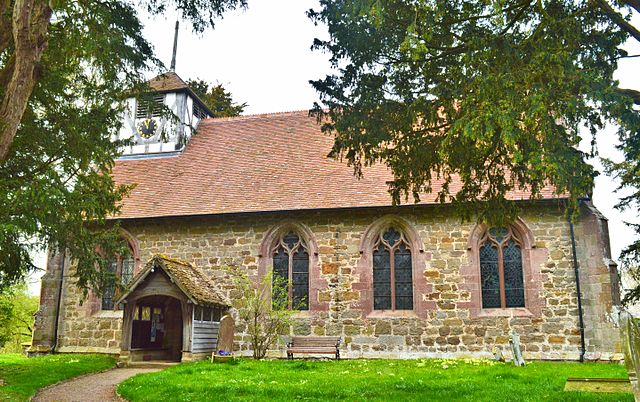
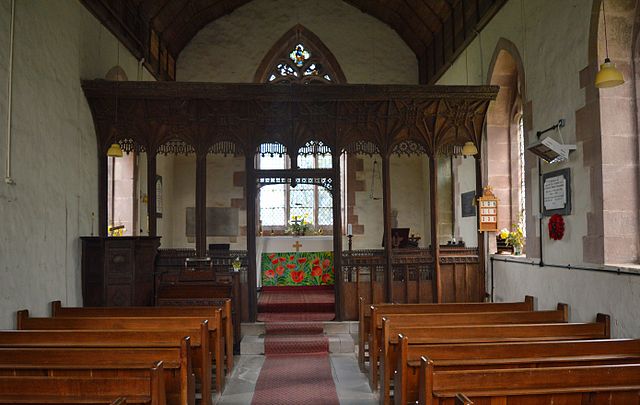
In 1926, at the age of 68, he finally obtained his own benefice when he was presented to the rectory of Hughley with Church Preen in Shropshire, taking over from the Rev Wilfred Wilson Gawn, who had served there since 1912.[v] William was inducted into the living by the Bishop of Hereford on 25 January 1926.[vi] Hugley had an annual income of £165, and Church Preen £75. Hughley’s population was 67, and Church Preen’s was 58.[vii]
William died at the Vicarage, Little Dewchurch, Herefordshire, the home of his brother George, on 9 August 1929 at the age of 71. He left an estate valued at £468 1s 4d, which he bequeathed entirely to George.[viii] However, his holograph will was defective, resulting in administration (with the will annexed) rather than formal probate.[ix]
References
[i] Tamworth Herald, 26 July 1919, p.2.
[ii] RG15, enumeration district 21, schedule 38.
[iii] Shrewsbury Chronicle, 29 January 1926, p.5.
[iv] The will of William Thomas Edward Saywell, dated 12 February 1925, proved at Gloucester on 5 October 1929.
[v] Shrewsbury Chronicle, 29 January 1926, p.5; 5 July 1912, p.7.
[vi] Shrewsbury Chronicle, 29 January 1926, p.5.
[vii] Shrewsbury Chronicle, 1 October 1926, p.3.
[viii] The will of William Thomas Edward Saywell, dated 12 February 1925, proved at Gloucester on 5 October 1929.
[ix] The problem may have been that the will was headed up with the date 12 February 1925, but underneath William’s signature bore the date 14 February 1925.
Conclusion
William Thomas Edward Saywell’s career was characterised more by persistence than clear advancement. Although he followed his uncles and brothers into the church and served continuously for over forty years, he spent most of his life in subordinate roles, not obtaining an incumbency until his late sixties. The inheritance he received from his uncle in 1914 may have provided some temporary financial security, but it appears not to have altered the overall pattern of his life, which remained one of modest means. His experience illustrates the constraints faced by many clergymen of his background, for whom education and industry did not necessarily lead to preferment.