Introduction
Richard James Hunt served as a missionary with the South American Missionary Society (SAMS) from 1894 to 1929, primarily in the Chaco region of Paraguay. During his time there, he developed an impressive ability to learn indigenous languages and reduce them to written form. Upon his final return to England, he served as Acting Assistant Secretary of the society from 1930 to 1934 before becoming the rector of Hardington Mandeville, where he served until his death in 1938.
Childhood
Richard was born at Wisborough Green in Sussex on 16 January 1874, as the only child of James Hunt and his wife, Elizabeth (née Blunden).[1]
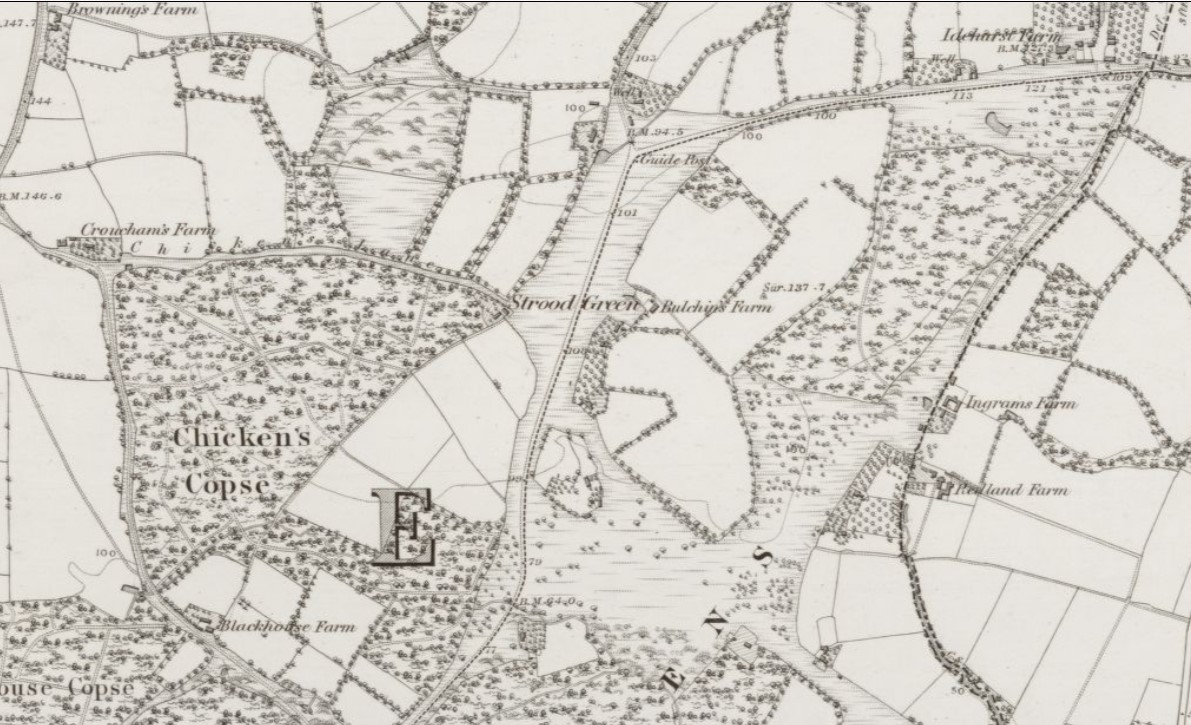
Although James worked as a bricklayer, his two grandfathers, James Hunt and Richard Sopp, had both been farmers at Petworth, suggesting a decline in status over the generations. In the 1860s, James’s father, Alfred, moved to Strood Green, Kirdford, where he worked as a farm labourer before opening a grocery shop.
Elizabeth came from an extremely poor family. In July 1850, when she was just an infant, she and her three siblings were admitted to Easebourne workhouse with their mother after their father deserted the family.[2] Elizabeth was later sent to live with a farm labourer’s family at Bepton.
By April 1881, James and his family were living with his parents at Strood Green, possibly due to declining health. He died there on 19 November at the age of thirty-two from pulmonary tuberculosis, and his father, Alfred, registered his death.[3]
The next ten years of Richard’s life are obscure, and it is not even clear whether his mother continued to care for him. By April 1891, Elizabeth was working as a housemaid at the rectory in Collyhurst, Manchester, for the Rev. Charles Neville Keeling, rector from 1874 to 1907.[4] In April 1895, while still resident at the rectory, she married a widower named Edward Marshall, a labourer at a fish market, and the Rev. Keeling officiated.[5] The couple later lived at Blackley before retiring to Congleton in Cheshire, where Elizabeth died in 1925 and Edward in 1929.
Richard may have remained with his grandparents at Strood Green and, if so, would have been brought up in a rural working-class household. Little is known about this time, except that in 1883 and 1887 his grandfather, Alfred, was fined for poaching.[6]
By the age of seventeen, Richard had moved to Reading, with help from a relative. He worked as a china warehouseman and lodged with Isaac Gideon Ashdown, a glass and china salesman, at 2 Body Road. Isaac was related to Richard through marriage, having wed Charlotte Mitchell, the daughter of Richard’s great aunt, Charlotte Sopp, in 1881.
It was probably while living on Body Road that Richard became acquainted with the nearby Holloway family, whose connection with him would last for the rest of his life. The head of the family, George Holloway, was the Scripture Reader at St Mary’s Episcopal Church, a position he had held since 1882.[7] Before that, he had served as the Town Missionary for nineteen years. George and his wife, Jane, had three daughters—Mary Ellen, Amy Jane, and Alice Ann—and a son, George, who was mentally disabled. A fourth daughter, Lizzie Emma, had died in 1878 at the age of eight.
Missionary work
In 1894, Richard joined the Chaco Mission in South America as a lay missionary.[8] It is unclear whether George Holloway influenced this decision, but it is possible. In 1899, Amy Jane Holloway joined Richard in South America, and they were married in Asuncion, Paraguay, on 15 March 1899.[9]
Just over a year later, on 2 July 1900, George Holloway died suddenly at 27 Sherman Road, Reading, at the age of sixty-four.[10] Nine months later, Richard and Amy were in England, and on census night 1901, they were staying with Richard’s grandparents at Strood Green, along with Amy’s sister, Alice. Richard probably never saw his grandparents again, as they both died in 1905. While in England, Richard and Amy probably also visited Amy’s mother and two siblings, who by then were living at 16 Beresford Road, Reading.
After a brief stay in England, Richard and Amy returned to South America, and their first son, Alfred James, was born at Villa Concepcion on 17 May 1902.[11] Within a few years, Amy returned to Reading, where their second son, Harold George, was born on 25 June 1905.[12]
For much of Richard’s subsequent missionary career, Amy and the boys appear to have remained in Reading while he continued his work in South America. Initially, they lived with her mother and her siblings at 121 Waverley Road. Amy’s mother died on 3 September 1909, and her sister, Mary Ellen, on 13 January 1913, of diabetes mellitus.[13] By 1918, the family had moved to two doors along to 117 Waverley Road, which remained their home until 1934.[14] Alfred attended Reading Collegiate School from 1914 to 1920, after which he began an apprenticeship with Robey & Co Ltd, an engineering firm in Lincoln.[15]
On 6 June 1914, Richard arrived in London after travelling from La Plata on the Highland Corrie.[16] He departed from Liverpool on 15 April 1915.[17] A second stay in England lasted from 17 December 1919 to 7 January 1921.[18] In 1920, while in England, he was elected a Fellow of the Royal Anthropological Institute.[19] By this time he had written books and produced translations in the Lengua and Mataco languages.[20] In 1923, after twenty-nine years as a lay missionary, Richard was ordained in Argentina as a deacon, becoming a priest the following year. After becoming a priest, he spent the period from 19 October 1924 to 26 February 1926 in England.[21] Much of his stay appears to have been devoted to fund-raising. Almost every month, he gave a talk at a branch meeting of the South American Missionary Society, including one in Belfast. A newspaper report of his talk at Chichester in December 1924 referred to him as a native of Wisborough Green and described how he had helped establish a flourishing farm as part of their plan to make the missions as self-supporting as possible.[22] Richard also delivered a fifteen-minute radio talk on “The Indians of South American Chaco,” which was broadcast on 2 August 1925.[23]
Richard left South America for the last time in 1929, arriving at Southampton on 4 June.[24] Crockford’s records him as a chaplain until 1930, when he became Acting Assistant Secretary of SAMS, a role that involved giving talks across the country to attract support. In a talk given at Norwich in January 1934, he said that looking back over forty years in SAMS, the most valuable part of their work was training native evangelicals. He also observed that the society’s missionaries’ work had lately been hampered by the war between Bolivia and Paraguay.[25] He wrote a book about the missionary Wilfred Barbrooke Grubb, published in 1933 as The Livingstone of South America.[26] He also briefly served as the curate of Greyfriars, Reading.[27]
Rector
In January 1934, it was announced that the Rev. Richard James Hunt would be the next rector of Hardington Mandeville. He was the first rector to be presented by the Martyrs’ Memorial Trustees, a group dedicated to appointing clergy who adhered to evangelical principles.[28] He was inducted into the rectory on 3 March 1934.[29]
On 19 December 1935, Richard officiated at the funeral of Walter Oxenbury of White Vine Farm, describing him as a “good Christian gentleman” and recalling the warm welcomes he had received at the farm from a man “ready to converse on any subject under the sun.”[30] He also officiated at the marriage of Basil Taylor and Phyllis White in September 1936.[31] The following year, he was involved in applying for a faculty to install electric lighting in the church.[32]
Richard’s rectorship lasted only four years, as he died on 24 February 1938, from a blocked heart artery brought on by hardening of the arteries, at the age of sixty-four. His son, Harold, registered his death.[33] Richard’s entire estate was valued at only £261, and Amy administered it.[34] Some of his furniture, including a small organ, was sold by auction on 19 May 1938.[35] The Rectory was sold in the second half of 1938.[36] Following his death, a list of Hardington rectors was erected in the north aisle of the church in his memory.[37]
At the Bath and Wells Missionary Festival of July 1941, one of the speakers referred to the pioneering missionary work in the Grand Chaco district of Paraguay, singling out “the great work of the late Rev. R. J, Hunt…in reducing to one language the three or four languages spoke[n] in the Chaco.”[38]
Later life of Amy, Alfred and Harold
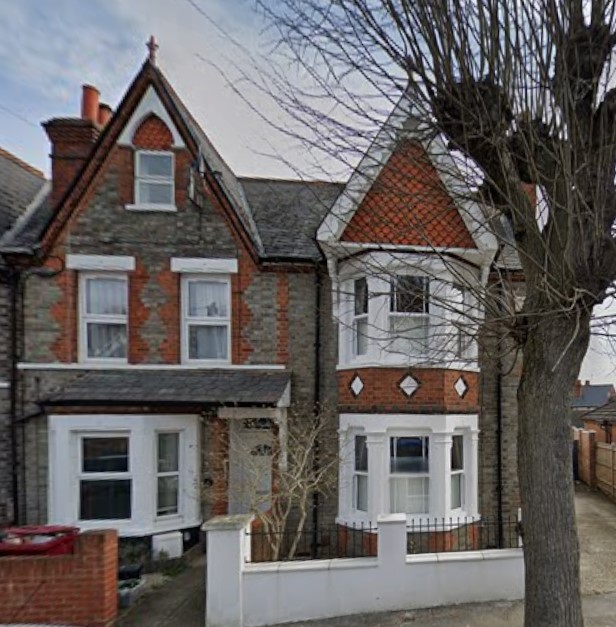
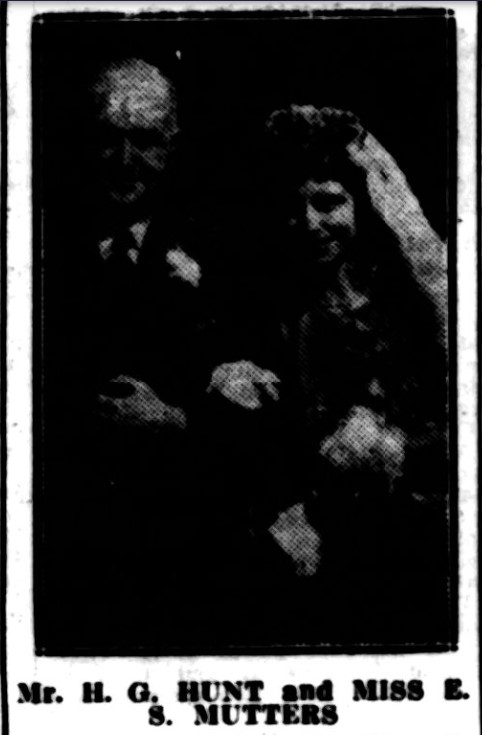
After Richard’s death, Amy and her sister, Alice, moved back to Reading to live with Harold at 19 Matlock Road. When Harold married a fellow railway employee, Miss Edna Sophia Mutters, in 1946, she moved into the house as well.[39] Amy died on 7 September 1954 at the age of eighty-seven, and was interred at Hardington alongside her husband.[40] Her sister, Alice, had died about six months earlier.
Their son, Alfred James, became an engineer and in September 1939, he was boarding with his wife at Manor Farm, Hardington, probably because he was working at Westlands. His last address was in Clanfield in Hampshire, a village about thirty miles from where his father was born.[41]
Conclusion
Richard Hunt’s life was dominated by his nearly forty years’ association with the South American Missionary Society. Beginning as a lay missionary at the age of twenty, he spent much of his adult life in the Chaco region before being ordained and eventually returning to England. His most notable achievement was his linguistic work among the area’s indigenous peoples, which brought him recognition beyond missionary circles.
References
[1] Birth certificate of Richard James Hunt; baptism register for Wisborough Green; Chichester Observer, 10 December 1924, p.1.
[2] Midhurst Union workhouse register of admissions and discharges (PL/WG7/31/8).
[3] Death certificate of James Hunt.
[4] Manchester Courier, 3 June 1874, p.6; 11 March 1907, p.7.
[5] Marriage register of St James, Collyhurst.
[6] West Sussex County Times, 25 August 1883, p.6; 26 November 1887, p.8.
[7] Reading Observer, 4 February 1882, p.3.
[8] Crockford’s Clerical Directory, 1932, p.659.
[9] Sussex Agricultural Express, 1 April 1899, p.4.
[10] Berkshire Chronicle, 7 July 1900, p.8.
[11] The Institution of Mechanical Engineers (proposals).
[12] 1939 Register.
[13] Reading Observer, 11 September 1909, p.9; Reading Observer, 25 January 1913, p.8; death certificate of Mary Ellen Holloway.
[14] Reading electoral rolls.
[15] Mechanical Engineer Records.
[16] UK and Ireland, Incoming Passenger Lists, 1878-1960.
[17] UK and Ireland, Outward Passenger Lists, 1890-1960.
[18] UK and Ireland, Incoming Passenger Lists, 1878-1960; Outward Passenger Lists, 1890-1960.
[19] Crockford’s Clerical Directory, 1932, p.659.
[20] Crockford’s Clerical Directory, 1932, p.659.
[21] UK and Ireland, Incoming Passenger Lists, 1878-1960; Outward Passenger Lists, 1890-1960.
[22] Chichester Observer, 10 December 1924, p.1.
[23] Sunday Post, 2 August 1925, p.7.
[24] UK and Ireland, Incoming Passenger Lists, 1878-1960.
[25] Yarmouth Independent, 3 February 1934, p.16.
[26] Western Daily Press, 13 October 1933, p.11.
[27] Western Daily Press, 26 January 1934, p.8.
[28] Western Daily Press, 26 January 1934, p. 8.
[29] Taunton Courier and Western Advertiser, 4 April 1934, p. 3.
[30] Taunton Courier and Western Advertiser, 25 December 1935, p. 8.
[31] Western Gazette, 2 October 1936, p.15.
[32] Taunton Courier and Western Advertiser, 4 September 1937, p. 7.
[33] Death certificate of Richard James Hunt.
[34] National Probate Calendar.
[35] Western Gazette, 13 May 1938, p. 1.
[36] Western Gazette, 20 January 1939, p. 15.
[37] Taunton Courier and Western Advertiser, 5 November 1938, p.6.
[38] Taunton Courier and Western Advertiser, 19 July 1941, p.7.
[39] Middlesex Advertiser and County Gazette, 20 September 1946, p.8; electoral register for Reading 1950; the 1939 Register for England and Wales.
[40] Memorial inscription at Hardington Mandeville.
[41] National Probate Calendar.