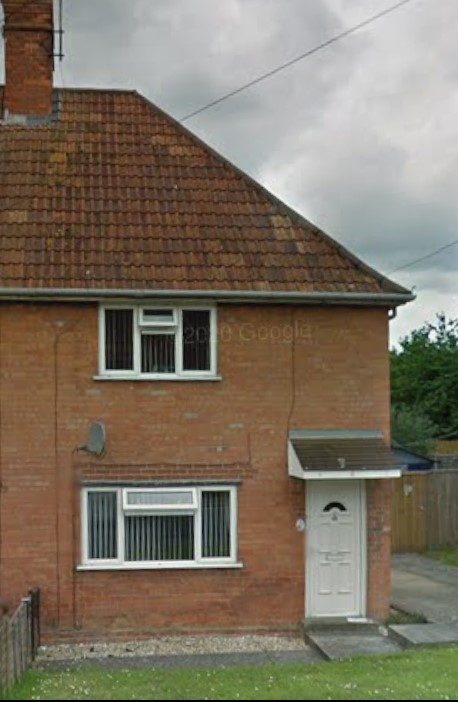
Introduction
Robert Marsh spent more than seventy-five years living at Hardington Mandeville. Beginning his working life as a farm labourer and cowman, he later found employment in the building trade before finishing his working life as a gardener. His life also reflected some of the wider changes that affected rural communities in the twentieth century. Following the sale of the Hardington estate after the First World War, he and his family were evicted from their tied cottage, yet he remained in the village for many years before eventually moving to a council house in Yeovil.
Early life
Robert was born on 21 July 1870 at Hardington Mandeville, the eighth of ten children born to Albert Marsh and his wife, Hester (née Eastment).[1] The family lived in North Lane, and Albert worked as a farm labourer. Robert was only fourteen when his father died of cancer of the tongue in 1884 at the age of fifty-three.[2] Hester remained in North Lane for another fifteen years before moving to Hardington Moor around 1899.
At the age of eighteen, Robert demonstrated unusual initiative by placing a newspaper advertisement seeking employment looking after horses or cows.[3] Such advertisements were uncommon among agricultural labourers and suggest he was actively trying to improve his prospects. By 1891, he was employed as a farm labourer and lodging with a widow at Thorne Coffin.
He later returned to Hardington. In November 1895, he scored one of the goals for the village football team, a reminder that organised sport had become an established part of village life by the closing years of the nineteenth century.[4]
Marriage and family life
On Easter Monday, 13 April 1903, Robert married Mary Ann Axe at Hardington Church. Mary, who had been born at East Chinnock in 1878, had entered domestic service at Hardington Rectory about five years earlier. The wedding was conducted by the Rev. H. H. T. Cleife, who afterwards entertained the newly married couple and their guests to breakfast at the rectory, reflecting the close relationship he maintained with many of his parishioners.[5]
Robert and Mary settled in Hardington, probably in a cottage attached to Manor Farm.[6] They had three daughters: Eveline, born in 1903; Dorothy May, born in 1904; and Leila Maud, born in 1912.
Four years after leaving her position at the rectory, Mary still felt welcome there. On 20 December 1907, she was among five ladies who assisted the rector’s wife in serving tea at the first Sunday Day School Christmas party held at Hardington Rectory.[7]
The family’s happiness was interrupted by tragedy in March 1912. On 13 March, seven-year-old Dorothy attended school as usual but returned home seriously ill. She died the following day from acute laryngitis and bronchial pneumonia. Her funeral, conducted five days later by the Rev. Cleife, was attended by numerous relatives and friends, illustrating the support offered by the close-knit village community in times of bereavement.[8]
By 1911, the family were probably living at Bishop’s House, where Robert was employed as a cowman. During the following decade, he left agricultural work and became a bricklayer’s labourer with the Yeovil building firm of Bird & Pippard, one of many rural labourers who sought more secure or better-paid employment outside farming.
Eviction from Bishop’s House
The sale of the Hardington estate after the First World War had significant consequences for several village families, including Robert’s. By June 1921, he and his family were still living at Bishop’s House, but earlier that month, George Goldring successfully obtained possession of the cottage through the courts. Robert and his family were ordered to leave within three weeks.[9]
Although they lost their home, they did not leave the village. By the end of 1923, they were living in a cottage owned by Annie Voizey.[10] Robert’s experience illustrates the insecurity that many rural families faced once long-established estate ownership gave way to individual purchasers who were under no obligation to retain existing tenants.
Sometime between 1921 and Robert’s second marriage in 1936, his first marriage ended. No death registration for Mary Ann has been identified, leaving open the possibility that the marriage ended in divorce rather than through her death.
Second marriage
In 1936, Robert married Evelyn Maud Rendell, the widow of Frederick Edmund Rendell of Lower Wraxall, Dorset. Evelyn brought four daughters to the marriage and was the sister of George Henry Parsons Hann, who farmed Landground Farm at Hardington.
By 1939, Robert and Evelyn were living with her daughters at 332 Rydon Cottages. Robert was then employed as a general labourer and later worked as a gardener, demonstrating the adaptability that characterised much of his working life.[11]
Following the Second World War, they left Hardington after more than seventy-five years of Robert’s residence in the village and moved into a council house at 83 Westfield Road, Yeovil.
Evelyn died on 7 May 1956 at the age of fifty-nine from a cerebral haemorrhage associated with hypertension and arteriosclerosis.[12] Robert survived her by only a year, dying in 1957 at the age of eighty-six.
Conclusion
Robert Marsh’s life spanned a period of profound change in rural Somerset. Born into a family of agricultural labourers, he witnessed the gradual decline of traditional farm employment and successfully adapted by moving into the building trade and later gardening. His eviction from a tied cottage following the post-war sale of the Hardington estate illustrates the growing insecurity experienced by many rural workers during the twentieth century. Despite personal bereavement, changing occupations and the loss of his home, he remained closely connected with Hardington for most of his life before spending his final years in Yeovil.
References
[1] Civil registration birth index; 1939 Register; family reconstitution.
[2] Death certificate of Albert Marsh.
[3] Western Gazette, 22 June 1888, p.4.
[4] Taunton Courier and Western Advertiser, 6 November 1895, p.7.
[5] Western Chronicle, 17 April 1903, p.5.
[6] Hardington Mandeville Guardian Valuations.
[7] Western Chronicle, 27 December 1907, p.6.
[8] Western Chronicle, 22 March 1912, p.7.
[9] Western Chronicle, 13 May 1921, p.6; 17 June 1921, p.6.
[10] Hardington Mandeville Rate book for 31 December 1923.
[11] Death certificate of Evelyn Maud Marsh.
[12] Death certificate of Evelyn Maud Marsh.