Introduction
Rosamond England Walker served as head teacher of Hardington School from 1920 until her marriage in 1924. During this time, she worked alongside her younger sister, Dorothy. The two women came from a Wesleyan Methodist family in Manchester and moved to Somerset during the First World War. Their lives, shaped by education and by the expanding opportunities available to professionally trained women, illustrate the varied paths open to provincial sisters in the early twentieth century
Early life and family background
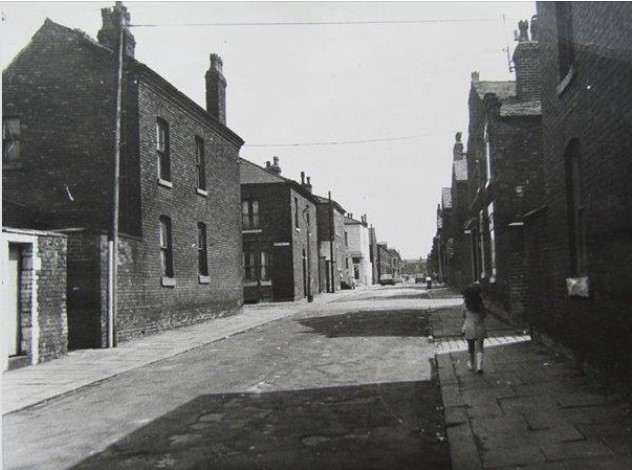
Rosamond was born on 11 December 1888 at Salford in Lancashire, to James Henry Walker and his wife, Mary Jane.[1] She was baptised at St John’s Wesleyan Methodist Church, Langworthy Road, on 22 January 1889, while the family were living at 46 South Ann Street.[2] Her middle name, “England,” was the maiden name of her paternal grandmother.
The Walkers’ situation was respectable but not secure. James earned a living as an insurance agent, relying on commissions that could fluctuate with economic conditions. Mary Jane supplemented the family’s income by working as a shopkeeper and confectioner. Of their seven children, two died in infancy.
By March 1901, the family was living at Pendleton, first at 9 Milford Street and later at 2 Seedley Park Road, an eight-room house that suggests some improvement in their circumstances.[3] However, the 1901 census recorded that Mary Jane and her daughter, Dorothy, were temporarily living with Mary Jane’s cousin, Hannah Threlfall, at Mottram St. Andrew.[4] Hannah Threlfall later became a permanent presence in Mary Jane’s household and remained closely connected to the family until her death in 1950, indicating strong mutual support within the family.
The family’s security was broken in September 1911 when James died at the age of 49. His estate was valued at £246 18s, enough to buy a small terraced house. The administration of the estate was granted to his son George, who was then a schoolmaster.[5] At the time of her father’s death, Rosamond was training at Warrington Training College for Schoolmistresses, a Church of England institution.[6] Her entry into the teaching profession thus coincided with a period of economic uncertainty for the family.
War and loss
The First World War affected the Walker family directly. Harold enlisted in the Manchester Regiment on 10 September 1914, while George served in the Royal Navy from 26 May 1916 to 14 June 1918.[7] After his discharge, George was expected to return to civilian life as a schoolmaster, but he re-enlisted as an airman. He died on 7 December 1918 under unclear circumstances, and his death, occurring almost a month after the Armistice, was especially poignant for the family.[8]
Move to Somerset
During the war years, Rosamond and Dorothy moved to Chiselborough, where they taught at the village school. They lived in North Street with their mother, Hannah Threlfall, and Frank’s wife, Ethel. By 1921, their brother, Harold, was living next door. While living at Chiselborough, Ethel gave birth to a daughter, Nora Mary, on 24 June 1916.[9] Frank later established a career as a solicitor’s managing clerk at Bournemouth.
Records provide glimpses of Rosamond and Dorothy’s participation in village life. A 1919 trade directory lists Rosamond as the schoolmistress of Chiselborough school.[10] On Christmas Eve 1917, Dorothy led the church choir in carol singing to raise money for St Dunstan’s Home for Blinded Soldiers, and in July 1918, she played the church organ at a funeral.[11] In November 1920, Rosamond was appointed the Honorary Secretary of the new Norton-sub-Hamdon hockey club, indicating her participation in organised sport.[12]
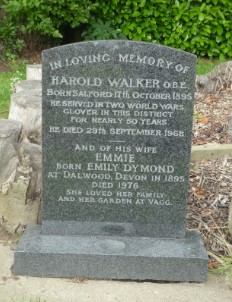
By June 1921, Harold had become a glove manufacturer at Stoke-sub-Hamdon, remaining active in the industry for nearly fifty years.[13] In 1947, while serving as managing director of the Hamdon Glove Company, he was elected vice-president of the National Association of Glove Manufacturers.[14]
Head teacher at Hardington
In 1920, Rosamond was appointed head teacher at Hardington, succeeding Salome Valentine Wallace. Dorothy served as her assistant.[15] At this point, Rosamond was in her early thirties, professionally trained, and experienced in rural education. At least initially, the sisters continued living with their mother at 19 North Street, Chiselborough, rather than moving into the Hardington schoolhouse. Given the five-mile distance to the school, it is likely they travelled by bicycle.
Marriage and later life
In June 1924, Rosamond married Aleck Lisle Smith at Hinton St George. She was thirty-five; he was twenty-five, a reversal of the typical age difference of the time. The managers and children of Hardington School marked her departure with the presentation of an ebony trinket set and matching brushes.[16]
Aleck was the only child of Isaac Lisle Smith, who farmed at Court Farm, Chardstock, from 1902 to 1930 and was the Lord of the Manor of Chardstock.[17] When Isaac died in 1943, he left an estate valued at £26,150 7s 11d. Thus, Rosamond’s marriage placed her within an affluent farming family of established local standing.
The couple settled at Tytherleigh House, Tytherleigh, where Isaac operated a garage business. In 1928, Rosamond gave birth to a daughter, Kathleen Walker Smith. The family later moved to Orchard Close, Chardstock.
Death
Rosamond died on 7 July 1969 at the age of 80, leaving an estate valued at £1,150.[18] Aleck survived her by fourteen years and died in 1983 at the Beauchamp Nursing Home, Hatch Beauchamp, leaving an estate valued at £39,300.[19]
Dorothy Walker
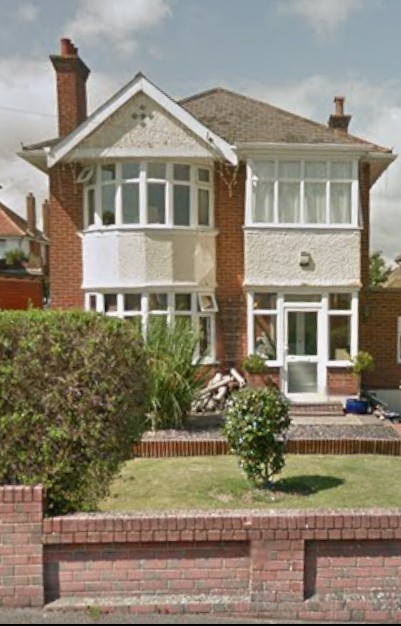
Dorothy’s life followed a different trajectory. In September 1931, the school managers considered a letter of resignation from “Miss Walker,” almost certainly Dorothy, who had served there for eleven years.[20] She moved with her mother and Hannah Threlfall to 18 Meon Road, Bournemouth.
Mary Jane died intestate in 1936, leaving an estate valued at £973 2s.[21] Hannah died in 1950, leaving an estate valued at £229 8s 2d.[22] Dorothy herself died intestate on 20 July 1980 at the age of 89, leaving an estate valued at £37,476.[23] Unlike her sister, she remained unmarried and appears to have retained financial independence into old age.
Conclusion
Rosamond Walker’s life reflects the mobility of early twentieth-century professional women. Raised in a nonconformist household sustained by precarious incomes, she secured training, achieved headship in a rural Somerset school, and participated actively in village society. Her marriage in 1924 marked a shift from salaried independence to domestic life within a prosperous farming family. In contrast, Dorothy remained single and economically active for longer. Together, the sisters’ lives illustrate the varied paths open to educated provincial women in the decades surrounding the First World War.
References
[1] Civil Registration Death Index; the baptism register of St John’s Wesleyan Methodist, Langworthy Road.
[2] The baptism register of St John’s Wesleyan Methodist, Langworthy Road.
[3] RG13, Pendleton, enumeration district, piece 3716, folio 155, p.5; RG14, Pendleton, enumeration district, 15, piece 23946; National Probate Calendar.
[4] RG13, Prestbury, piece 3304, folio 119, p.8.
[5] National Probate Calendar.
[6] RG13, Warrington, enumeration district 49-51, piece 23179.
[7] British Army World War I Service Records, 1914-1920; ADM 337/80/122.
[8] The Annual monitor for 1919-20, being an Obituary of the members of the Society of Friends in Great Britain and Ireland, from October 1, 1917, to September 30, 1919, p.60.
[9] Civil Registration Birth Index; RG15, Bournemouth, enumeration district 30, schedule 247.
[10] Kelly’s Directory of Somerset, 1919, p.199.
[11] Western Chronicle, 4 January 1918, p.9; 26 July 1918, p.7.
[12] Western Chronicle, 26 November 1920, p.11.
[13] RG15, Chiselborough, enumeration district 5, schedule 22; Harold Walker’s MI in Yeovil Cemetery.
[14] Western Gazette, 4 April 1947, p.6.
[15] Taunton Courier and Western Advertiser 16 September 1931 p. 7.
[16] Exeter and Plymouth Gazette 13 June 1924 p. 16.
[17] Western Gazette, 7 March 1902, p.1; Chard and Ilminster News, 25 October 1902, p.5; Exeter and Plymouth Gazette, 14 February 1930, p.16; Western Morning News, 24 September 1943, p.4.
[18] National Probate Calendar.
[19] 1980 telephone directory; National Probate Calendar.
[20] Taunton Courier and Western Advertiser 16 September 1931 p. 7.
[21] National Probate Calendar.
[22] National Probate Calendar.
[23] National Probate Calendar.