Introduction
Samuel Ewins was born to a farming family in Devon. He worked as a dairyman in Devon and Somerset until his late thirties, when he moved to Hammersmith, where he found work as a gardener and later as a groundman, closely associated with the growing business of his brother-in-law, Albert Toley.
Early life
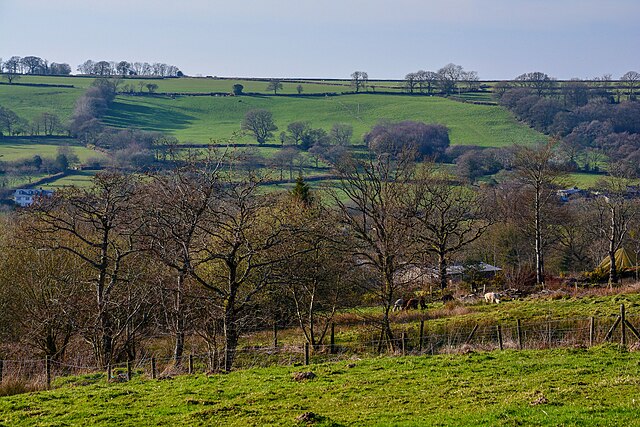
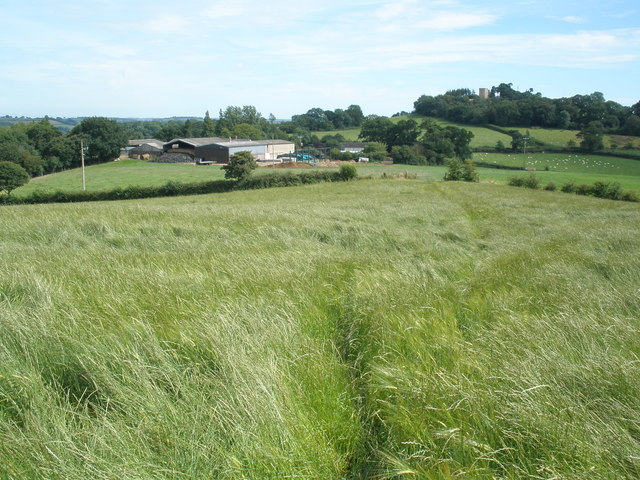
Samuel was born at Hemyock in 1856, the third of five children born to Samuel and Elizabeth Ewins.[1] His family were established tenant farmers. His grandfather, John Ewins, had farmed 127 acres at Oxenpark, Hemyock; his uncle Robert Ewins farmed 90 acres at Great Garlandhayes, Clayhidon; and his father farmed 96 acres at Hemyock.[2]
By April 1871, Samuel Senior had moved to North Hill Farm, Stockland, a farm of 230 acres, which he occupied until 1891.[3] However, while Samuel Senior’s brother Robert left an estate valued at “under £600” when he died in 1877, Samuel Senior died in 1898 without leaving a will.[4]
In his youth, Samuel Junior worked on his father’s farm. In 1872, 1873 and 1874, he won prizes in the annual ploughing match organised by the Stockland and Dalwood Agricultural Society, with the 1873 match held on his father’s farm.[5]
Marriage and life as a dairyman
On 28 February 1878, Samuel married Sarah Ann Clarke of Blackhayes Farm, Yarcombe, at Yarcombe parish church. The marriage register recorded him as a dairyman, which may have been his intended occupation, as he was still living on his father’s farm at that time.[6]
After their marriage, Samuel and Sarah moved 22 miles east to Halstock, where they managed a dairy, typically involving renting a small herd of cows from a farmer. Their first child, Samuel, was born at Halstock on 28 November 1879 and baptised in the parish church on 4 January 1880.[7] Their second child, Annie, was born at Halstock in 1881 and baptised at Hardington on 1 May 1881, indicating that they moved to Hardington in early 1881.
The 1881 census recorded the family at Townsend, Hardington, where Samuel worked as a dairyman assisted by two servants: Eli Goff and Elizabeth Strode.[8] Their third child, William Clark, was born at Hardington on 13 June 1882 and baptised at the parish church on 9 July 1882.[9]
Over the following eleven years, they probably lived at various locations, including Odcombe, where Pamela Elizabeth was born in 1884 and Roadgreen, Colyton, where Daisy Ursula was born in April 1890 and Sidney Henry in January 1892.[10] Samuel remained a dairyman, and in October 1890, butter made by Sarah received a commendation at the Colyton Agricultural Show.[11]
By the late 1880s, while Samuel continued as a dairyman, his youngest brother, Henry, was farming at Stockland, assisted by another brother, Robert.[12] In March 1889, Samuel appeared before Axminster Petty Sessions after violently resisting attempts to remove him from the White Hart pub while drunk, for which he was fined £1 for disorderly conduct.[13] The reason for his outburst is unclear. The following month, his wife inherited a portion of her mother’s estate. As it was £590 9s gross and £44 3s net, and it had to be divided equally among her eleven children, the amount Sarah received would have been small.[14]
Life in London
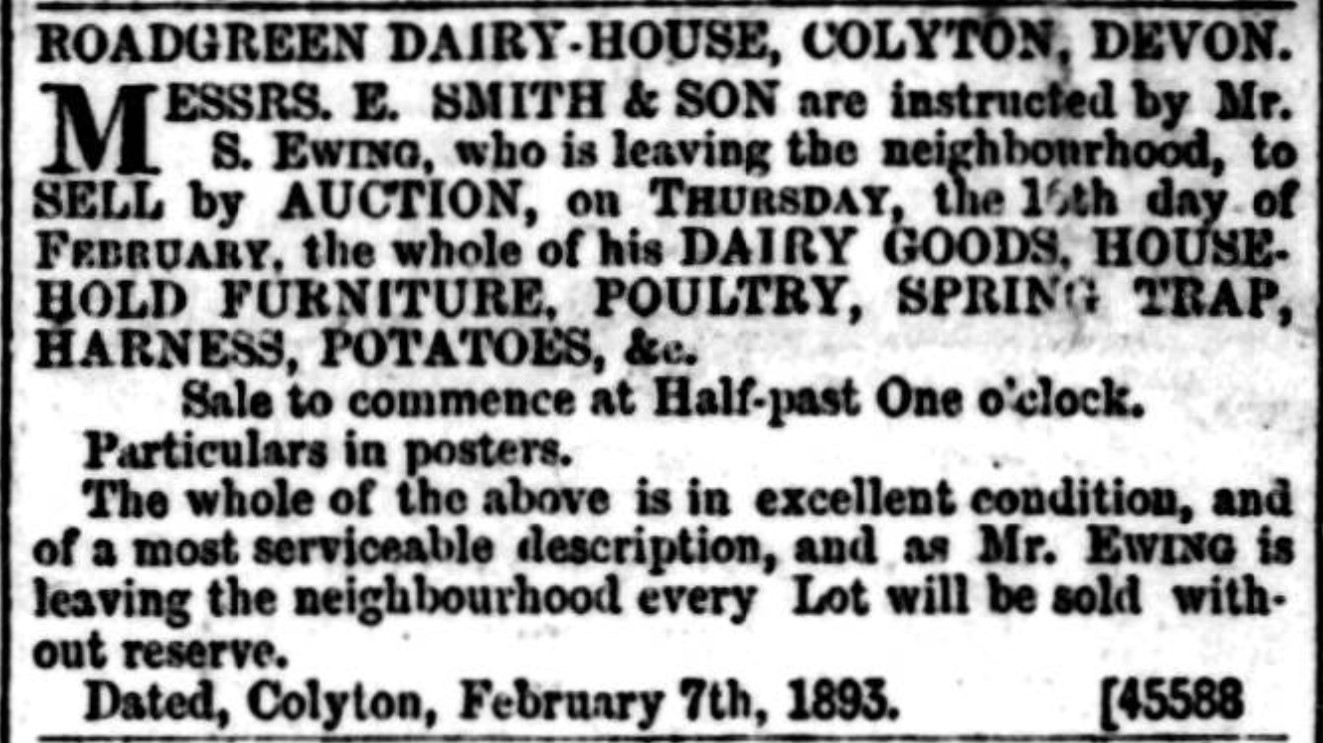
On 16 February 1893, Samuel held a sale at Roadgreen because he was leaving the neighbourhood. The sale included dairy goods, household furniture, poultry, a spring trap, a harness and potatoes.[15] It was probably at this time that the family moved to London.
Samuel probably moved in response to an offer of work from Albert Toley, the husband of Samuel’s sister, Mary. When Samuel died, a local newspaper reported his funeral and stated that he used to work with “the late Mr. Alfred Toley” [sic], “with whom he was related by marriage.”[16] The phrasing suggests that Samuel was not an employee per se, and, indeed, the 1921 census described him as “independent.”[17]
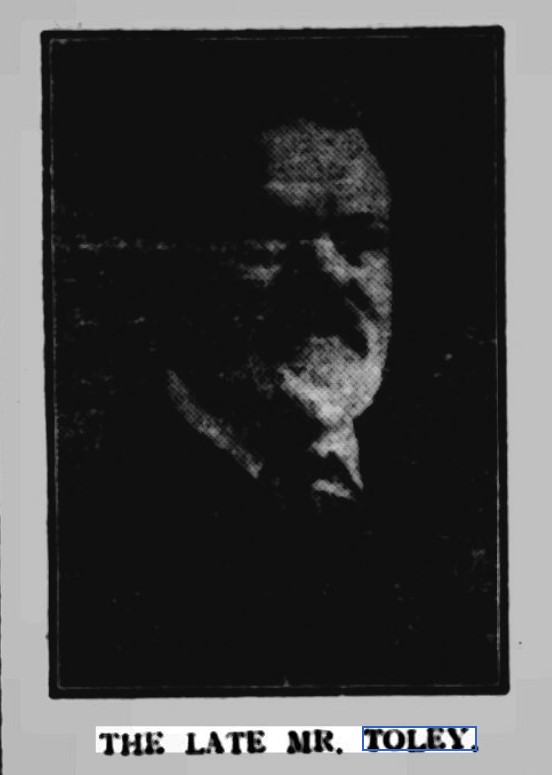
Toley was a self-made man who began working in his father’s bootmaking business in Stockland. At seventeen, he qualified as a pupil teacher and secured a teaching post in London. After passing two examinations, he became assistant master at the United Westminster School, where he served for twenty-one years.[18] After retiring in the mid-1890s, he purchased tracts of land in west London to convert them into golf courses, tennis courts, sports grounds, and playing fields, including Wormholt Farm, Shepherd’s Bush, one of his first acquisitions.[19] He eventually controlled about 1,000 acres and employed a labour force whose wages amounted to £3,000 annually.[20] When Toley died in 1925, he left an estate valued at £59,480.[21]
By March 1901, Samuel and his family were living at Wormholt Farm, Uxbridge Road, Hammersmith, London, and Samuel worked as a domestic gardener.[22] Five of their children still lived at home, while their eldest son attended a Church of England male training college in Cheltenham, preparing to become a schoolmaster. In 1902, Samuel’s daughter, Annie, married Francis Henry Clarke from Yarcombe, who worked as a farm bailiff for Albert Toley at Wormholt Farm.
By 1909, the family had moved to 28 Wilton Road, Shepherd’s Bush, where they remained for at least five years.[23] In April 1911, both Samuel and his son William worked as groundsmen.[24]
Between 1913 and 1917, the remaining four children married and left home. Pamela married a cashier, and Ursula married a schoolmaster. William continued his work as a groundsman, while Sidney became a schoolmaster at Parkstone School in Poole.
By December 1917, Samuel and Sarah had moved to 68 St Elms Road, Hammersmith.[25] In June 1921, Samuel was an independent groundsman working at Wormholt Farm.[26] In about 1923, Samuel and Sarah moved to Greenford.[27]
Death
Sarah died in the Brentford area in 1927 at the age of 69. Samuel died at Dublin House, Greenford Road, Greenford, Middlesex, on 26 April 1933 at the age of 76. Probate was granted in London on 17 May to his son Samuel Ewins and his son-in-law Edgar Harold Nelthorpe, both of whom were schoolmasters. His estate was valued at £266 6s and divided equally among his six children.[28]
Children
Samuel and Sarah had three sons and three daughters. According to the 1911 census, they had a seventh child, but the lack of further evidence suggests the child died in infancy. Their eldest son, Samuel, graduated from the University of London in 1904 with a B.Sc. and later became a head teacher at Kingsbridge; William became a groundsman and golf course keeper; while Sidney became a grammar school teacher at Poole. Annie, Pamela and Daisy all remained in London.
Conclusion
Samuel Ewins’ life fell into two distinct phases. After two decades as a dairyman in Devon and Somerset, he moved to west London, where he worked as a gardener and later as a groundsman near Wormholt Farm. The move and his subsequent activities were closely linked to his brother-in-law, Albert Toley. Although his estate at death was modest, the move set his children’s lives on new courses. This is particularly evident in the careers of his sons, Samuel and Sidney, both of whom became schoolteachers, as well as in the life of his daughter Daisy, who married a schoolteacher.
References
[1] Civil Registration Birth Index; RG9, Clayhidon, enumeration district 9, piece 1612, folio 84, p.5; Hemyock baptism register.
[2] HO107, Hemyock, enumeration district 4b, piece 1921, folio 732, p.1;
HO107, Clayhidon, enumeration district 5b, piece 1921, folio 780 p.7; RG9, Hemyock, enumeration district 10, piece 1612, folio 90, p.2.
[3] RG10, Stockland, enumeration district 4, piece 2034, folio 47, p.2; Exeter and Plymouth Gazette, 26 March 1891, p.4.
[4] National Probate Calendar; Memorial inscription at Hemyock.
[5] Western Times, 29 October 1872, p.3; Western Times, 21 October 1873, p.7; Western Times, 27 October 1874, p.5.
[6] Chard and Ilminster News, 2 March 1878, p.3.
[7] Halstock baptism register; 1939 Register.
[8] RG11, Hardington Mandeville, enumeration district 10, piece 2389, folio 128, p.8.
[9] Civil Registration Birth Index; 1939 Register, Hardington Baptism Register.
[10] Civil Registration Birth Index; RG12, Colyton, enumeration district 5, piece 1669, folio 54, p. 7; RG13, North Hammersmith, enumeration district 13, piece 41, folio 138, p.56.
[11] Exeter and Plymouth Gazette, 24 October 1890, p.3.
[12] RG12, Stockland, enumeration district 5, piece 1668, folio 41, p.3.
[13] Exeter and Plymouth Gazette, 12 April 1889, p.2
[14] The will of Nancy Clarke, dated 28 March 1882, proved in Exeter on 26 April 1889.
[15] Pulman’s Weekly News and Advertiser, 14 February 1893, p.1.
[16] West Middlesex Gazette, 6 May 1933, p.9.
[17] RG15, Hammersmith, enumeration district 17, schedule 38.
[18] RG14, Stockland enumeration district 5, piece 2034, folio 61, p.15; Acton Gazette, 11 September 1925, p.7.
[19] Acton Gazette, 11 September 1925, p.7; West Middlesex Gazette, 12 September 1925, p.5.
[20] Buckinghamshire Advertiser, 11 September 1925, p.3; Acton Gazette, 11 September 1925, p.7.
[21] National Probate Calendar.
[22] RG13, North Hammersmith, enumeration district 13, piece 41, folio 138, p.56.
[23] Voters’ Lists.
[24] RG14, North Hammersmith, enumeration district 12, piece 206.
[25] The will of Samuel Ewins, dated 3 December 1917, proved in London on 17 May 1933.
[26] RG15, Hammersmith, enumeration district 17, schedule 38.
[27] West Middlesex Gazette, 6 May 1933, p.9.
[28] The will of Samuel Ewins, dated 3 December 1917, proved in London on 17 May 1933.