Introduction
Walter Haggett was serving with the army in India when World War I broke out. He was redeployed to Mesopotamia in November 1914, where he was wounded in action in December 1915. Unfortunately, he succumbed to disease in May 1916. Walter is the only man from the village who died in a theatre of war other than the Western Front.
Early life in Hardington
Walter Haggett was born at Hardington Marsh on 21 July 1882.[1] He was the oldest of five children born to Walter Haggett and his wife, Martha (née Eastment). His father worked as a railway platelayer, while his mother was the daughter of Reuben Eastment, a farm labourer.
Walter’s parents married in 1882 and lived at Hardington Marsh until about 1888, when they moved to Pendomer. By 1891, they resided at Pen Dary House. After about four years at Pendomer, they returned to Hardington, where they first lived in Barry Lane and, from about 1909, in Rectory Lane.[2]
In 1901, Walter’s father was still working as a platelayer, but by 1911 he had left the railway for health reasons and was working as a farm labourer. Walter’s first job was general farm work.[3]
Enlistment
Walter enlisted in the Dorset Regiment on 19 November 1906.[4] He gave his age as 21 years 3 months, but he was three years older. He was medically examined the next day and found fit for service. The examination records show that he was five feet four and a half inches tall, weighed 124 lbs, had brown hair, hazel eyes, a fresh complexion, a “fair” physical development and a scar on his right buttock. He joined the 1st Battalion of the Dorset Regiment at Dorchester on 22 November 1906 and was given the regimental number 8180.
He enlisted under a standard short-service engagement of seven years with the Colours (Active Service) followed by five years in the Army Reserve. Walter served at Dorchester until 5 February 1907, gaining a 3rd class certificate of education. He was then posted to Gosport.
Service in India
On 5 January 1909, Walter disembarked with the 2nd Battalion for India, travelling on the SS Rohilla and the Royal Indian Marine Ship Dufferin. He landed at Madras on 1 February 1909. He received his first inoculation in March 1911 and a second in April 1911 while stationed in Poona.
On 5 March 1913, while still in India, he extended his active service to twelve years. In December 1913, Walter suffered a reduction in pay after failing to reach the required standard in the army’s annual musketry test. Although the reduction was initially reversed under the provisions of the Royal Warrant, he was reduced to Class II pay from March 1914.
Service in Mesopotamia
Two months after Great Britain entered the First World War, the 2nd Battalion of the Dorset Regiment was included in the Mesopotamian Expeditionary Force. Walter departed India for Lower Mesopotamia on 13 October 1914, landing there on 6 November 1914. He spent ten days in hospital at Basra from 25 May to 3 June 1915, due to gastritis and an additional seven days in a hospital at Amara suffering from the effects of heat.
In April 1915, Major-General Charles Townshend took command of the 6th (Poona) Division, which included the 2nd Dorsets. With the original objective of protecting Basra and the nearby oilfields secured, British forces advanced further up the Tigris towards Baghdad, dangerously extending their supply lines. After encountering stiff resistance near Baghdad and losing a quarter of his men, Townshend retreated to Kut-al-Amara to await relief. On 7 December 1915, Ottoman forces surrounded the town, cutting off the British-Indian garrison.
Walter was wounded in action on 29 December, possibly while the 2nd Dorsets held the front-line perimeter. He was admitted to hospital, where he suffered severe deprivation and hardship. Food, water, and medical supplies dwindled, while the number of sick and wounded requiring medical attention grew due to enemy action, malnutrition and endemic disease. Conditions at the hospital were also made worse by bitter cold, torrential rain and repeated enemy bombardments from both Ottoman artillery and German planes. Despite four relief attempts by British forces, they were unable to break through, and Townshend was ultimately forced to surrender on 29 April 1916, leaving 13,300 men at the mercy of the Ottoman forces.
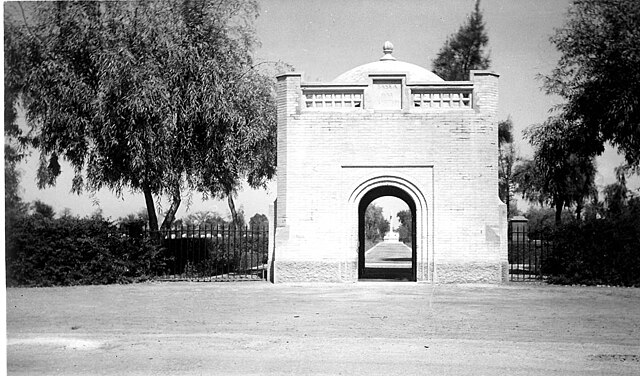
Under arrangements made with the Ottoman authorities, 1,306 severely sick and wounded soldiers, along with about 700 medical staff, were exchanged for Ottoman prisoners and evacuated down the Tigris on British medical river steamers. Walter was among those evacuated. He reached the British base hospital at Basra, but died from beriberi on 10 May 1916, just eleven days after the surrender. The disease, caused by severe vitamin B1 deficiency, was consistent with the prolonged malnutrition suffered by the garrison during the siege. [5] His body lies in Basra War Cemetery.[6]
Walter remained a private throughout his service, and the record of soldiers who died in the First World War described him as a drummer.[7]
After his death
On 30 May 1916, Walter’s father wrote to the army requesting his personal effects, following up with a second letter on 23 October 1916 after receiving no reply. A note appended to the second letter says “No effects.”
However, his father did receive a substantial sum, probably including pay that had accumulated while Walter was cut off during the Siege of Kut. He received £35 11s 2d on 14 December 1916 and a further £1 10s on 10 October 1917. On 11 December 1919, he received a war gratuity of £10.[8] He also received Walter’s medals: the Victory Medal, British War Medal, and the 1914-1915 Star.[9]
Conclusion
Walter spent nearly ten years in the regular army, most of them overseas. He survived being wounded during the siege of Kut and was among the sick and wounded evacuated after the surrender, but he died from the effects of disease and malnutrition just eleven days later.
References
[1] Birth certificate of Walter Haggett.
[2] Hardington voters’ lists; guardian valuations; Pendomer baptism register.
[3] RG13, piece 2297, folio 43, page 5.
[4] British Army World War I Service Records, 1914-1920.
[5] UK, Commonwealth War Graves, 1914-1921.
[6] Find a Grave.
[7] Soldiers Died in the Great War, 1914-1919.
[8] Army Registers of Soldiers’ Effects, 1901-1929.
[9] British Army World War I Medal Rolls Index Cards, 1914-1920.