Introduction
This study of William George Delamont and his wife, Florence, traces his transition from farm labourer’s son to skilled bricklayer, his service in the First World War, and their later life as smallholders at Hill End. It also highlights the role of the village chapel in shaping their social and religious world.
Childhood
William was born on 26 March 1887, the first child of George and Mary Ann Delamont. He had one sibling, Annie Eliza, who was born on 19 February 1889. His father was a farm labourer, while his mother worked as a general servant at Manor Farm before her marriage.
George and Mary Ann married at Hardington in 1884, but the early years of their marriage were overshadowed by the mental health issues of Mary Ann’s father, William Chester. He survived a suicide attempt by cutting his throat in 1885, but hanged himself the following year. George found William’s dead body hanging from a beam in an outhouse.[1]
More misfortune befell the family two years later when George died on 9 June 1888 at the age of 28 due to pneumonia for eight days and cerebral congestion for two days.[2] After his death, Mary supported her family by working as a charwoman. In April 1891, she and her two children lived at the lower end of the High Street, sharing their home with George’s sister, Eliza Delamont.
In late 1899, Mary Ann married Frank Eastment, a widower whose first wife had died earlier that year, leaving him with a two-year-old son. Frank was also a farm labourer. In 1901, the family lived in a four-room cottage near the New Inn (number 333). William was at that time working as a farm labourer.
In about 1907, they moved to a six-room cottage at Hill End, where they took in the railway pensioner, Stephen Allcock, as a boarder. Around that time, Annie Eliza moved to Repton to work as a housemaid at Repton School, a position she almost certainly owed to Henry Vassall, a housemaster at the school whose father had been the rector of Hardington from 1856 to 1883. The fact that she secured the position suggests that her family was regarded as respectable.
Marriage
On 4 April 1910, William married Florence Frances May White at Hardington parish church. William was 23, and Florence was 17. They established their home in North Lane, and their son, Ralph, was born on 25 August 1910. By this time, William was working as a bricklayer.
Florence was born on 10 June 1892 at Hardington, the youngest daughter of George and Jane White.[3] Her father initially worked as a carpenter and later became a builder. Her mother died on 9 April 1898 from a cerebral embolism.[4] After her sister, Jane, died of tuberculosis in 1907, Florence became the only child left at home.[5]
The family were active members of the village chapel, where Florence, often called Flossie, performed in chapel concerts from the age of nine.[6] When she was only ten years old, she subscribed 7s 6d to a missionary society.[7] This chapel background formed an important part of her life after her marriage to William.
First World War
On 24 January 1916, William enlisted at Yeovil and transferred to the reserves. He passed his medical examination at Taunton on 8 April 1916, where it was noted that he required dental treatment. At that time, he was five feet six inches tall and weighed 133 pounds (60.3 kilograms).
While William was in the reserves, his sister married Edwin Thomas Sanders, the son of a Repton builder, at Hardington parish church on 6 June 1916. She was given away by her stepfather, Frank Eastment, and Florence was a bridesmaid.[8] At that time, Edwin was a trooper in the Lincolnshire Yeomanry, but he later served as 2nd Lieutenant with the Royal Field Artillery. After the war, he returned to his civilian role, working in the Official Receiver’s Office.
In September 1916, William received a call-up notice for army service, requiring him to report to the Drill Hall in Yeovil on 2 October 1916 by 11 a.m. He joined the 2nd Army Signal Corps as a sapper. In April 1918, he was deployed to France and served until March 1919. He returned to the UK for leave from 27 January 1918 to 9 February 1918 and from 26 July 1918 to 9 August 1918.[9] The second period may have been compassionate leave, as his mother died on 17 July 1918 from heart disease.[10]
Smallholders
After the end of the war, William returned to Hardington and resumed his work as a bricklayer, employed by Bird & Pippard of Middle Street, Yeovil. In 1921, he and his family lived in Barry Lane.
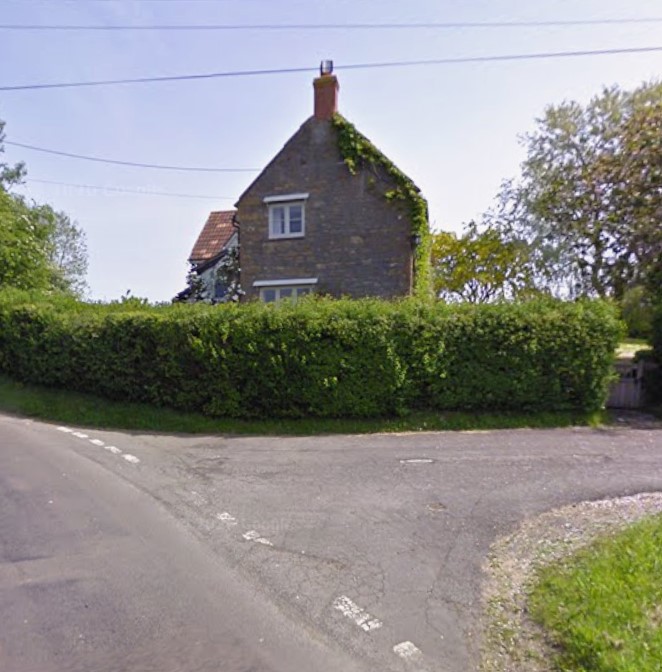
Over the next couple of years, he bought a cottage and some land, establishing himself as a smallholder while continuing to work as a bricklayer. The parish rate book for 31 December 1923 recorded him as the owner-occupier of a cottage, garden and orchard of 3 roods 11 perches and four acres 24 perches of land, both at Hill End. The cottage, then known as Ivy Cottage, is situated at the top of Bridge Close Hill on the eastern side.
At this time, William’s stepfather, Frank Eastment, also ran a smallholding, but in 1924, he succumbed to financial pressures and was forced out of business, in contrast to William’s more sustainable arrangement.[11]
In 1932, Ralph married Rose Adams in the South Manchester registration district. They later returned to Somerset, as their son, Paul, was born at Crewkerne Hospital in 1947.[12] By 1953, Ralph was living in Barry Lane, Hardington, before moving to Yeovil.[13] He passed away in 2008 at the age of 98.
In September 1936, a chimney fire ignited the thatch roof of a nearby cottage. When attempts to extinguish the fire proved useless, Florence ran a mile to the Post Office to telephone the Yeovil Fire Brigade.[14]
By June 1937, Florence’s father, George White, lived with them.[15] Upon his death on 17 December 1938, he left an estate valued at £930 14s 6d, which he divided among his three children: George Walter White, Susan Emma Hawkins and Florence.[16]
In the late 1930s, William and Florence became friends with William and Charlotte Keen, who had retired to the village and had become supporters of the village chapel. William Delamont witnessed William Keen’s will and served as his executor.
William Delamont died on 19 April 1966 at the age of 79, leaving an estate valued at £4,630. Florence continued living at Hill End until her death on 19 January 1979 at the age of 86. She left an estate valued at £43,214.
Conclusion
William and Florence lived together at Hardington for fifty-six years, their lives shaped by early hardship, wartime service, and the economic uncertainties of the interwar period. Through a combination of skilled labour and small-scale landholding, William secured a degree of independence that eluded others, including his stepfather. Their attachment to the village chapel formed an important part of their social and religious life, and in later years, they settled into a quieter existence at Hill End, sustained by their long-standing familiarity with the place and community.
References
[1] Echo (London), 16 June 1885, p.1; Western Gazette, 26 June 1885, p.6; Salisbury Times, 13 May 1886, p.3.
[2] Death certificate of George Delamont.
[3] Civil Registration Birth Index; 1939 Register.
[4] Death certificate of Jane White.
[5] Death certificate of Jane Elizabeth White.
[6] Western Chronicle 3 January 1902 p. 5.
[7] Western Chronicle 13 February 1903 p.5
[8] Western Chronicle, 16 June 1916, p.5.
[9] British Army World War I Service Records, 1914-1920.
[10] The death certificate of Mary Ann Eastment.
[11] Western Chronicle 8 February 1924, p. 2.
[12] Western Gazette, 7 November 1947, p.6.
[13] Bristol Evening Post, 30 December 1953, p.8.
[14] Western Morning News 9 September 1936. 5; Daily Mirror 9 September 1936 p. 11; Belfast Telegraph 9 September 1936 p. 11; Sunderland Daily Echo and Shipping Gazette 9 September p.7; Exeter and Plymouth Gazette 11 September 1936 p. 15.
[15] The will of George White, June 1937, proved at Bristol on 24 March 1939.
[16] The will of George White, June 1937, proved at Bristol on 24 March 1939.