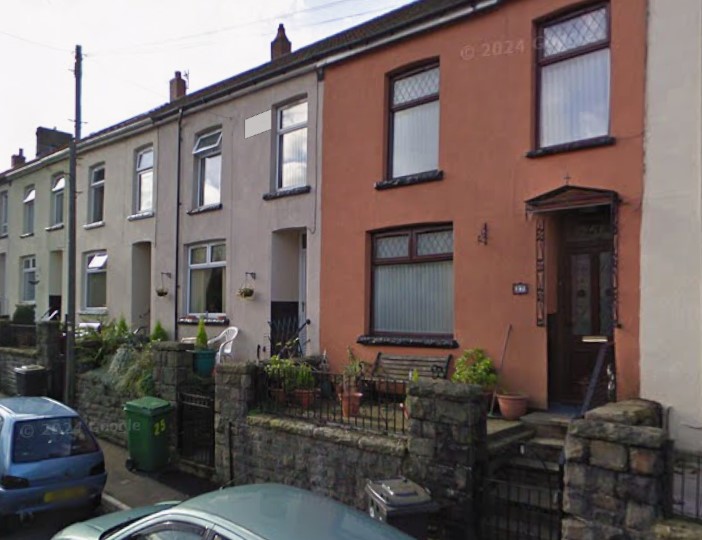
Introduction
After losing his father in childhood, Albert Marsh sought work in the South Wales coalfield before returning to Hardington to establish a family. His military service interrupted this settled life, but he survived the war and shortly after became the owner of his own home.
Early life
Albert was born on 11 December 1877 at Hardington Mandeville, the youngest of ten children born to Albert Marsh and his wife Hester (née Eastment).[1] His father worked as a farm labourer, and the family lived in North Lane.
When Albert was seven, his father died from a malignant tumour on his tongue.[2] Following his death, the family remained at North Lane, and Hester worked as a charwoman. The 1891 census recorded four sons living at home, including thirteen-year-old Albert, all of whom were working as labourers.
Move to South Wales
Albert later moved to the Rhondda Valley in South Wales. By 1901, he boarded with a coal miner’s family at 21 Woodfield Terrace, Ystradyfodwg, and worked as a colliery labourer above ground, likely involved in coal handling, wagon work, and other surface operations.
Return to Hardington and marriage
Albert probably returned to Hardington to attend his brother Robert‘s wedding in April 1903.[3] It was likely at this occasion that he met the bride’s sister, Emma, which led to their marriage six weeks later, on June 1. They established their home in the High Street, where they had five children: Frederick John, Albert George, Sidney Jesse, Kenneth Ernest and Kathleen Ivy.
After returning to Somerset, Albert again worked as a farm labourer. However, by June 1916, he was employed by Herbert Hodder, a builder.[4]
First World War
The First World War interrupted Albert’s settled family life. He enlisted in the army at Yeovil on December 1915.[5] His service record noted that he was five feet three inches tall at that time. However, he was not mobilised until 21 June 1916. Initially, he served in the 13th Battalion of the Devon Regiment, a labour and construction unit formed in Saltash in June 1916. On 30 June 1917, he was transferred to 449 Agricultural Company. While in that company, he spent time at Ivythorn Farm, Street.
During his service, the evidence suggests that he defied regulations to rejoin his family on two occasions. While stationed at Bovington in April 1917, he was absent without leave for thirteen and a half hours. The evidence against him included a railway ticket. In March 1918, he was again absent without leave while on an agricultural furlough at Street and received three days’ punishment.
Later life
After being demobilised on 3 March 1919, he returned to his family. By October 1920, he occupied a cottage and paddock at the top of the High Street on a monthly tenancy. The cottage was purchased by George Goldring, a local farmer, in the estate sale of that month for £320.[6] Shortly afterwards, Goldring attempted to gain possession of the cottage but failed. The newspaper reports do not explain why, although he was successful in recovering Albert’s brother Robert’s cottage after obtaining a certificate from the Agricultural Committee.[7]
In 1921, Albert was recorded as an unemployed bricklayer’s labourer after leaving his most recent employer, Hodder of Chilthorne Domer, but he later found further work.
The Hardington rate book for 31 December 1923 shows Albert owning a house and garden of 20 perches and land of one rood in the High Street, suggesting he had moved to a new property. Later records identify this property as 342 High Street, where he remained for the rest of his life.
In 1928, Albert and Emma lost their son Albert George in a drowning accident. Albert had to travel to Tisbury to identify his son’s body and provide evidence at the inquest.[8]
The 1939 Register recorded Albert as a builder’s labourer, living with his wife, daughter and a thirteen-year-old evacuee named Faith Honor Girling from Lambeth.[9]
Albert probably retired during the 1940s. His daughter, Kathleen, married Donald William Margetts in 1947 and they initially lived with Albert and Emma before moving to Hardington Moor. Emma died in 1952 at the age of seventy-six. Albert survived her by ten years, passing away on 8 October 1962 at the age of eighty-four. He left an estate valued at £746 14s 1d, which he divided among his four surviving children. His will, dated 4 December 1944, was witnessed by the Rev. Sawyer and Bertram Leonard Watts, and may have been drafted by Sawyer, who had previously worked as a barrister.[10]
Conclusion
Although work and military service took Albert away from Hardington for many years, he repeatedly returned to the village and ultimately spent most of his life there.
References
[1] Civil registration birth index; 1939 Register; family reconstitution.
[2] Death certificate of Albert Marsh.
[3] Western Chronicle, 17 April 1903, p.5.
[4] British Army World War I Service Records, 1914-1920.
[5] British Army World War I Service Records, 1914-1920.
[6] Eddy Colin Turner’s copy of the estate sale catalogue.
[7] Western Chronicle, 13 May 1921, p.6; 17 June 1921, p.6.
[8] Salisbury Times, 21 September 1928, p.7.
[9] Kathleen’s name is redacted and has been inferred.
[10] The will of Albert Marsh, dated 4 December 1944, proved at Winchester on 26 November 1962.